

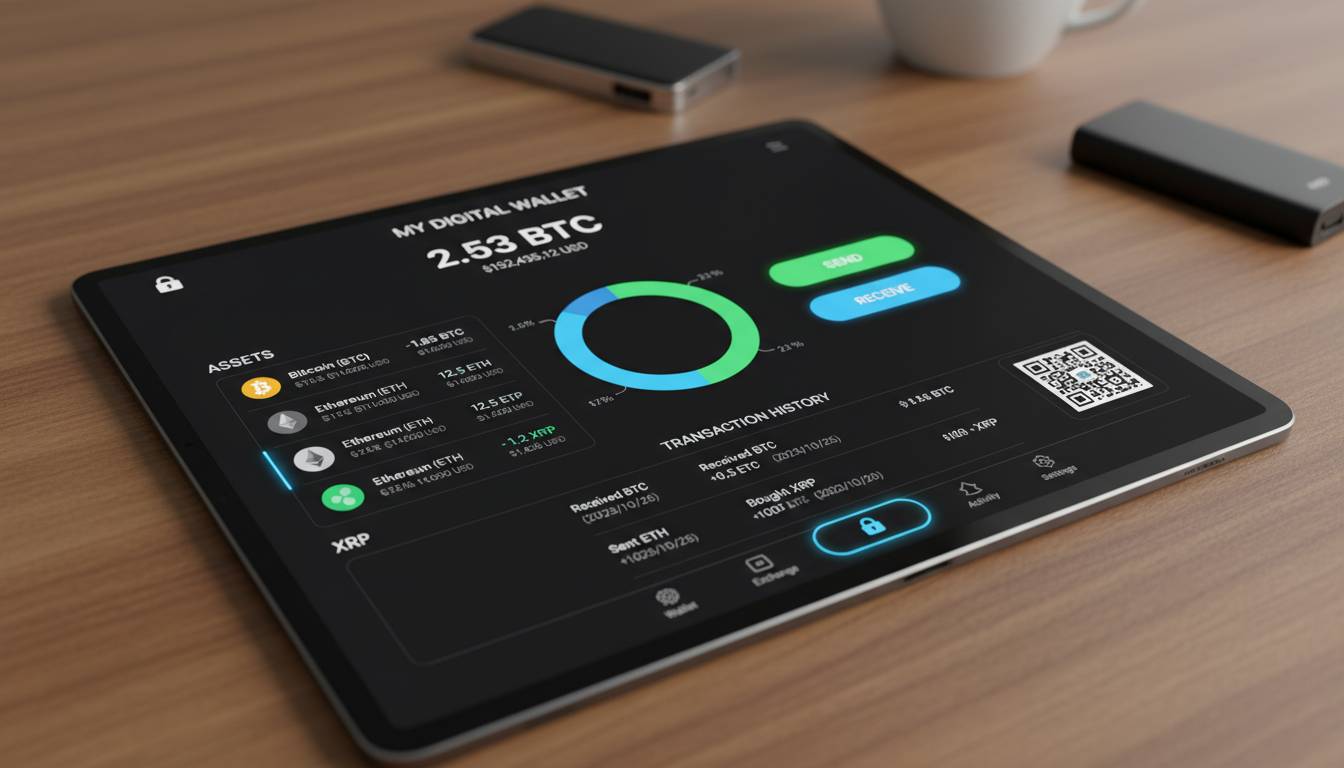
If you’re holding cryptocurrency on an exchange because you think that’s where wallets live, you’re taking unnecessary risk with your digital assets. The distinction between crypto wallets and exchanges isn’t just technical jargon—it directly impacts the security of your funds and your ability to use cryptocurrency for what it was designed: decentralized, peer-to-peer transactions without intermediaries.
A crypto wallet is software or hardware that stores your private keys and allows you to send, receive, and manage cryptocurrency. An exchange is a platform where you buy, sell, and trade crypto with other users. These are fundamentally different tools serving different purposes, and understanding the difference is the first step to securing your digital wealth.
Key Insights
– Centralized exchanges held approximately 94% of all Bitcoin in circulation as of late 2023, making them prime targets for hackers
– Hardware wallets have never been successfully hacked in transit, according to security researchers
– 46% of crypto investors store their holdings on exchanges despite 78% expressing concern about exchange security
– Self-custody wallets give you complete control but require you to manage your own security
This guide breaks down exactly what each option offers, when to use which, and how to choose based on your trading habits, security preferences, and investment timeline.
What Is a Crypto Wallet?
A crypto wallet is a tool that doesn’t actually store your cryptocurrency—it stores your private keys, which are the cryptographic passwords that prove you own your crypto and authorize transactions. Your cryptocurrency lives on the blockchain; your wallet gives you access to it.
Types of Crypto Wallets
Hot Wallets
Hot wallets connect to the internet and include mobile apps, browser extensions, and desktop software. They’re convenient for frequent transactions but present a larger attack surface for hackers.
| Wallet Type | Connectivity | Best For | Security Level |
|---|---|---|---|
| Mobile Wallet | Always online | Daily spending, small amounts | Medium |
| Desktop Wallet | Always online | Medium-term holding | Medium |
| Browser Extension | Always online | DeFi interactions | Medium |
Cold Wallets
Cold wallets store your private keys offline, making them immune to online attacks. Hardware wallets like Ledger and Trezor devices store keys in secure elements that never expose them to your computer’s operating system.
| Wallet Type | Cost | Primary Use | Security Level |
|---|---|---|---|
| Hardware Wallet | $50-250 | Long-term storage, large amounts | Very High |
| Paper Wallet | Free (printing cost) | Cold storage, gifts | High (if generated securely) |
| Steel Wallet | $30-100 | Fire/ disaster proofing | High |
Custodial vs. Non-Custodial
The critical distinction in wallet security is whether you control your private keys:
- Custodial wallets (like those built into exchanges) hold your keys for you. If you forget your password, the platform can reset it—you don’t have direct control.
- Non-custodial wallets give you sole control over your keys. Lose your recovery phrase, and no one can recover your funds. This is the philosophy behind “not your keys, not your crypto.”
How Wallets Work
When you set up a wallet, it generates a seed phrase (typically 12 or 24 words) that serves as a master key to your crypto. This phrase must be written down and stored securely—never digitally, never shared.
When you want to send crypto, your wallet uses your private key to create a digital signature that validates the transaction on the blockchain. The network confirms the transaction, and the crypto moves. This process happens directly between wallets, without needing a middleman.
What Is a Crypto Exchange?
A cryptocurrency exchange is a marketplace where you can buy, sell, and trade cryptocurrency for fiat money (like USD) or other digital assets. Exchanges act as intermediaries—they hold your funds and match your buy orders with sell orders from other users.
Types of Crypto Exchanges
Centralized Exchanges (CEXs)
These are companies that operate trading platforms. They hold your funds in their custody and facilitate all transactions.
| Exchange Type | Examples | Best For |
|---|---|---|
| Large Retail | Coinbase, Kraken, Gemini | Beginners, fiat on-ramps |
| Trading Platforms | Binance, KuCoin | Active trading, variety |
| Brokerage Services | Robinhood, PayCrypto | Simplicity, familiar interfaces |
Decentralized Exchanges (DEXs)
DEXs like Uniswap and dYdX allow peer-to-peer trading without a central authority. You connect your wallet directly to the protocol—no account needed, no identity verification.
| Feature | Centralized Exchange | Decentralized Exchange |
|---|---|---|
| Custody | Exchange holds funds | You hold funds |
| Verification | KYC required | No KYC (wallet only) |
| Speed | Faster (internal matching) | Slower (blockchain confirmations) |
| Control | Limited | Full |
| Privacy | Low (identity linked) | High |
Hybrid Exchanges
Some platforms attempt to combine CEX and DEX features, offering the security of self-custody with the usability of centralized platforms. These are still evolving and represent a smaller market share.
How Exchanges Work
When you buy crypto on an exchange, you’re not receiving crypto into your personal wallet—you’re receiving an IOU from the exchange. Your balance is a database entry showing how much the platform owes you. The actual crypto might be in cold storage, or the exchange might be using it for other purposes.
This matters because when you want to withdraw your crypto to a personal wallet, you initiate an on-chain transfer from the exchange’s wallets to yours. This is when you receive actual blockchain assets with your private keys controlling them.
Direct Comparison: Wallet vs Exchange
The choice between holding on an exchange vs. in a personal wallet isn’t either/or for most users—it’s a spectrum based on your needs.
Security Comparison
Exchange Security
Major exchanges invest heavily in security, but history shows the stakes:
- In 2014, Mt. Gox lost 850,000 Bitcoin (worth approximately $450 million then, over $35 billion at current prices) due to security failures
- The Ronin Bridge hack in 2022 resulted in $625 million in losses
- Most major exchanges now use cold storage for the majority of funds and maintain insurance funds
Wallet Security
Self-custody wallets shift the security burden to you:
- Hardware wallets keep private keys in isolated secure elements
- Software wallets are only as secure as your device and practices
- The biggest risk is human error: phishing attacks, malware, or losing your seed phrase
Functionality Comparison
| Feature | Exchange | Personal Wallet |
|---|---|---|
| Buy crypto with fiat | ✅ | ❌ (needs integration) |
| Sell crypto for fiat | ✅ | ❌ (needs integration) |
| Trade crypto-crypto | ✅ | ⚠️ (via DEX or transfer) |
| Earn yield/staking | ✅ (limited options) | ✅ (more options) |
| DeFi access | Limited | Full |
| Cross-chain bridging | Built-in | Manual |
| Privacy | Low | High |
Cost Comparison
Exchanges typically charge:
– Trading fees: 0.1% to 1% per transaction
– Withdrawal fees: Vary by crypto, $1-$50+
– Spread: The difference between buy and sell prices
Personal wallets typically charge:
– Network fees: Paid to miners/validators, varies by congestion
– No account fees
– No trading spread (you get market rate)
When to Use Each: Use Case Analysis
Use a Crypto Exchange When:
You’re New to Crypto
Exchanges provide the easiest on-ramps for converting fiat currency to cryptocurrency. Coinbase, for example, allows you to link a bank account and buy crypto within minutes. This simplicity is valuable when you’re learning.
You Trade Frequently
If you’re day trading or making multiple transactions weekly, keeping funds on an exchange eliminates transfer delays and reduces network fees. The convenience of instant execution outweighs the security trade-off for active traders.
You Need Fiat Off-Ramps
When you want to convert crypto back to USD, exchanges are your primary option. Withdrawing to your bank from a personal wallet requires selling on an exchange first anyway.
You’re Learning the Ropes
Exchanges provide familiar interfaces, customer support, and educational resources. Making your first crypto purchase through a reputable exchange lets you understand the basics before managing your own keys.
Use a Personal Wallet When:
Holding Long-Term
If you’re investing for years rather than days, personal wallets eliminate exchange counterparty risk. You don’t need to trust that an exchange will still exist—and be solvent—when you want to access your funds.
Storing Significant Amounts
Security researcher Alex Stamos noted in a 2022 industry panel that “anyone holding more than $10,000 in cryptocurrency should seriously consider hardware wallet storage.” The math is simple: your potential loss from an exchange hack scales with your holdings.
Using DeFi Protocols
Decentralized finance applications require you to connect a wallet directly. You can’t interact with Uniswap, Aave, or NFT marketplaces from an exchange-held account.
Valuing Privacy
Exchange accounts are linked to your identity. Personal wallets, especially when not KYC’d through a service, offer significantly more privacy. Transactions can still be traced on public blockchains, but there’s no account tying your identity to your addresses.
Common Mistakes to Avoid
Mistake #1: Storing Everything on an Exchange Long-Term
The Problem: In 2022, Celsius Network, Three Arrows Capital, and FTX all froze or lost customer funds. Users who kept their entire portfolio on these platforms lost access to their assets for months or permanently.
The Solution: Keep only the crypto you actively trade on exchanges. Transfer the rest to a personal wallet you control.
Mistake #2: Not Enabling Two-Factor Authentication
The Impact: According to Google’s 2023 threat analysis, account takeovers through compromised credentials account for the majority of exchange breaches.
The Fix: Enable 2FA on every exchange account—preferably with a hardware security key or authenticator app, not SMS (which can be SIM-swapped).
Mistake #3: Losing Your Seed Phrase
The Impact: Chainalysis estimates that approximately 3.7 million Bitcoin (worth over $150 billion) has been lost due to forgotten keys or lost wallets.
The Solution: Write your seed phrase on paper or metal, store it in a secure physical location, and consider a backup in a separate secure location. Never store it digitally or take photos of it.
Mistake #4: Not Testing Small Transfers First
The Problem: Sending crypto to the wrong address (wrong network, typos) typically results in permanent loss.
The Solution: Always send a small test amount first (like $10) to verify the address works before sending larger amounts.
How to Choose: A Decision Framework
Choose Exchange-Dominated Holding If:
– You’re a new investor still learning the ecosystem
– You trade more than once per week
– You value convenience over maximum security
– You’re investing small amounts you’re comfortable potentially losing
Choose Personal Wallet If:
– You’ve held crypto for more than 6 months and understand the basics
– You’re holding for more than 1 year
– You value self-custody and privacy
– You’re investing amounts where loss would be meaningful
The Hybrid Approach (Recommended):
Most experienced crypto users employ a hybrid strategy:
- Keep 5-10% of your crypto on exchanges for trading
- Store the rest in a hardware wallet for security
- Use a mobile hot wallet with limited funds for day-to-day transactions
This approach gives you flexibility for trading while protecting your long-term holdings.
Frequently Asked Questions
Can I transfer crypto from an exchange to my personal wallet?
Yes, all exchanges support withdrawals to external wallets. You initiate a withdrawal from your exchange account, provide your personal wallet address, and pay a network fee. The process typically takes 10 minutes to several hours depending on the cryptocurrency and network congestion.
What happens to my crypto if the exchange gets hacked?
With a custodial exchange account, you become an unsecured creditor. If the exchange is hacked or goes bankrupt, you may lose your funds. This is why most experienced users recommend keeping only trading funds on exchanges and storing long-term holdings in personal wallets.
Do I need both a wallet and an exchange?
For most users, yes. You need an exchange to acquire cryptocurrency with fiat money, and you need a wallet to store it securely. The exception is if you’re only trading small amounts you’re comfortable keeping on the exchange.
Which is safer: a hardware wallet or an exchange?
Hardware wallets are mathematically safer for long-term storage because your private keys never touch an internet-connected device. However, they’re only as safe as your physical security practices. Major exchanges have professional security teams and insurance, but you still face counterparty risk—the exchange could be hacked, go bankrupt, or restrict your access.
Can I use a wallet to buy and sell crypto?
Some wallets integrated with services like MoonPay or Wyre allow you to buy crypto directly, but the selection is limited and prices often include premiums. For selling, you typically need to transfer to an exchange anyway. Wallets are best for storing and transacting, while exchanges are optimized for buying and selling.
What’s the best crypto wallet for beginners?
For beginners, Coinbase Wallet (mobile/app) offers a user-friendly interface while teaching key concepts. Ledger devices are the most recommended hardware wallets for anyone storing significant amounts. Both provide good security without overwhelming complexity.
Conclusion
The wallet vs. exchange decision ultimately comes down to understanding trade-offs. Exchanges offer convenience, fiat on-ramps, and ease of trading—but you sacrifice control and accept counterparty risk. Personal wallets offer security, privacy, and true ownership—but require you to manage your own security and can’t directly convert fiat.
For most people entering cryptocurrency, starting with an exchange is reasonable. As your holdings grow and your understanding deepens, migrating to self-custody wallets becomes increasingly important. The goal isn’t to choose one exclusively, but to use each tool for its strengths: exchanges for buying and selling, wallets for storing and transacting.
Remember the core principle: if you don’t hold your private keys, you don’t truly own your crypto. Start with whatever lets you begin your journey, but plan to eventually take self-custody of assets you intend to hold. Your future self will thank you.





Leave a comment