

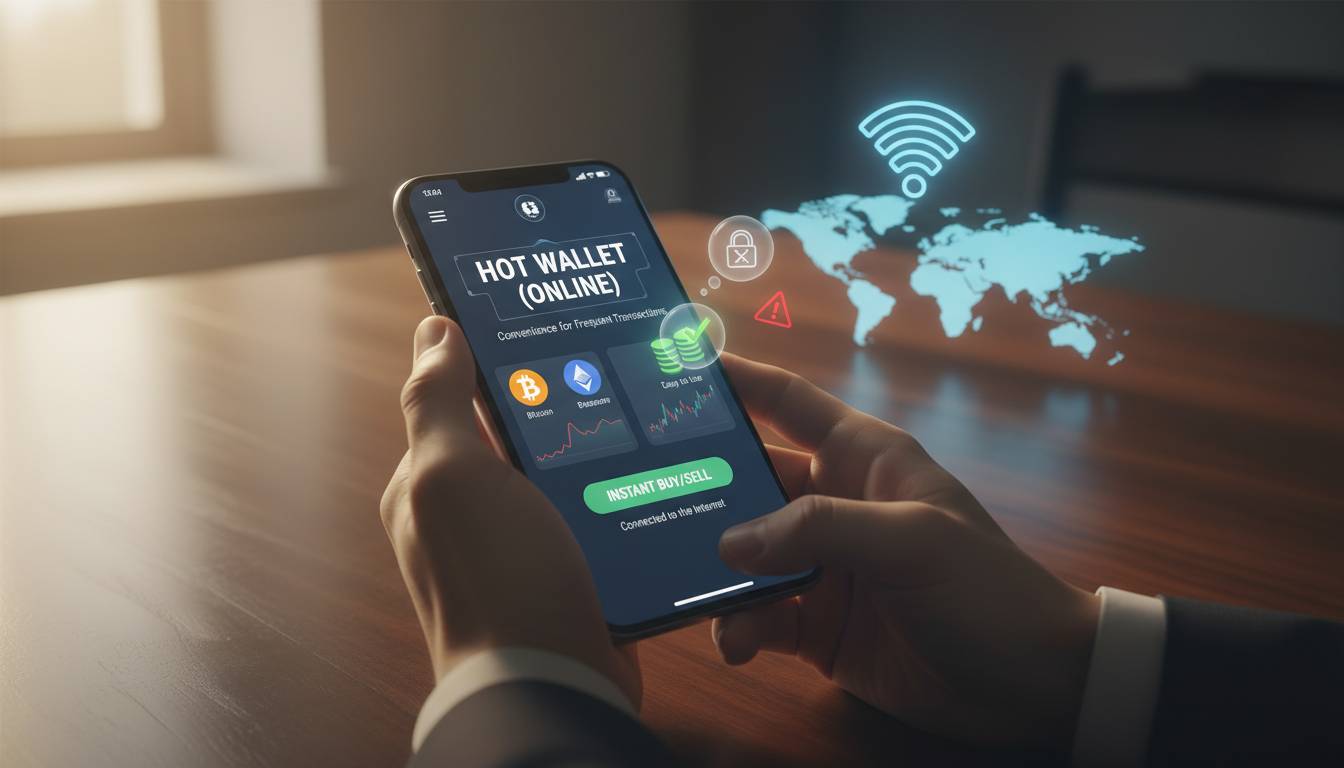
A cryptocurrency wallet is a digital tool that allows you to store, send, and receive cryptocurrencies like Bitcoin, Ethereum, and thousands of other digital assets. Unlike a traditional wallet that holds physical cash, a crypto wallet doesn’t actually store your coins—it stores the cryptographic keys that prove you own your cryptocurrency and enable transactions on the blockchain. Think of it as the combination of a bank account (where your money lives on the blockchain) and a debit card (the wallet that lets you access and manage those funds).
In this comprehensive guide, you’ll learn exactly how crypto wallets function, the different types available, how to choose the right one for your needs, and security best practices that protect your digital assets. Whether you’re planning your first cryptocurrency purchase or looking to understand the technology better, this article covers everything you need to know.
What Is a Cryptocurrency Wallet and How Does It Work?
A cryptocurrency wallet is a software program or hardware device that interacts with the blockchain to manage your digital assets. At its core, every wallet generates and stores your private keys—the secret codes that authorize transactions and prove ownership of your cryptocurrencies. Without your private keys, you cannot access your crypto, regardless of what anyone tells you.
The Public Key and Private Key System
Every cryptocurrency wallet operates on a public key cryptography system. Your public key is like your bank account number—you can share it freely so others can send you cryptocurrency. Your private key is like your PIN or password—it must remain secret because anyone with access to it can control your funds.
When someone sends you cryptocurrency, they broadcast a transaction to the blockchain using your public key as the destination. This transaction remains pending until miners or validators confirm it. The transaction is then recorded on the blockchain permanently, and your wallet balance updates to reflect the new balance associated with your private key.
📊 KEY STATS
– $2.8 trillion in cryptocurrency was held in wallets globally as of 2024
– 420 million people worldwide use cryptocurrency wallets
– 68% of cryptocurrency holders store their assets in non-custodial wallets
Types of Cryptocurrency Wallets: Understanding Your Options
Cryptocurrency wallets fall into several categories based on their connectivity, custody model, and physical form. Understanding these distinctions helps you choose the right wallet for your security needs and usage patterns.
Hot Wallets vs. Cold Wallets
Hot wallets are connected to the internet and include mobile apps, browser extensions, and web-based platforms. They offer convenient access for frequent trading and transactions but present a larger attack surface for hackers. Popular hot wallet examples include MetaMask, Coinbase Wallet, and Trust Wallet.
Cold wallets remain offline and store your private keys on physical devices. They provide superior security against online threats but require more effort to access and use. Hardware wallets like Ledger and Trezor represent the gold standard for cold storage.
Custodial vs. Non-Custodial Wallets
| Feature | Custodial Wallet | Non-Custodial Wallet |
|---|---|---|
| Private Key Control | Third party holds keys | You hold your keys |
| Security Responsibility | Provider secures funds | You secure your funds |
| Recovery Options | Account recovery possible | Seed phrase is only backup |
| Ease of Use | Beginner-friendly | Requires more knowledge |
| Typical Examples | Coinbase, Binance, Kraken | MetaMask, Ledger, Exodus |
Custodial wallets are provided by exchanges and platforms that hold your private keys on your behalf. This arrangement mirrors traditional banking—you can recover your account if you lose your password because the provider maintains backup copies of your keys. However, you don’t have true ownership, and your funds could be at risk if the provider faces financial difficulties or hacks.
Non-custodial wallets give you complete control over your private keys and, consequently, your cryptocurrency. You alone are responsible for remembering your seed phrase (a list of 12 or 24 words that regenerates your keys). If you lose this phrase, no one—not even the wallet developer—can recover your funds. This ownership model aligns with the fundamental principle of cryptocurrency: be your own bank.
Software Wallets and Hardware Wallets
Software wallets include desktop applications, mobile apps, and browser extensions. They range from simple mobile apps for everyday transactions to sophisticated desktop applications for managing complex DeFi portfolios. Examples include Electrum (desktop), Mycelium (mobile), and Rabby (browser extension).
Hardware wallets are specialized physical devices that store your private keys offline. These devices connect to your computer or phone only when you need to sign a transaction, remaining completely isolated from the internet during storage. Leading hardware wallet manufacturers include Ledger, Trezor, and ShapeShift’s KeepKey.
Benefits of Using Cryptocurrency Wallets
Understanding why cryptocurrency wallets matter helps you appreciate their role in the broader digital asset ecosystem. Whether you’re a casual holder or an active trader, wallet selection significantly impacts your experience.
Financial Sovereignty and Control
Non-custodial wallets provide what cryptocurrency advocates call “financial sovereignty”—complete control over your money without relying on banks or intermediaries. You can send funds to anyone, anywhere, without asking permission or waiting for approval. This proves particularly valuable for individuals in regions with unstable banking systems or limited financial access.
According to the World Bank, approximately 1.4 billion adults globally lack access to traditional banking services. Cryptocurrency wallets offer these individuals a viable alternative for storing and transferring value.
Enhanced Security Features
Modern cryptocurrency wallets incorporate sophisticated security features that protect your digital assets. Hardware wallets utilize secure elements (specialized chips designed to resist tampering) that keep your private keys isolated from potentially compromised computers. Many wallets also support multi-signature transactions, requiring multiple approvals before funds can move.
📈 SECURITY COMPARISON
| Wallet Type | Primary Security Feature | Risk Level |
|————-|————————-|————|
| Hardware Wallet | Offline key storage | Low |
| Paper Wallet | Physical isolation | Medium |
| Desktop Wallet | Encrypted local storage | Medium |
| Mobile Wallet | Biometric access | Medium-High |
| Web Wallet | Cloud-based security | High |
Portfolio Management and Integration
Contemporary cryptocurrency wallets do far more than simple storage. Many integrate with decentralized finance (DeFi) protocols, enabling you to lend, borrow, earn interest, and trade directly from your wallet. WalletConnect, for example, allows you to connect your wallet to hundreds of decentralized applications seamlessly.
How to Choose the Right Cryptocurrency Wallet
Selecting the appropriate wallet depends on your experience level, security requirements, and how you plan to use your cryptocurrency. Consider these factors before making your decision.
Assess Your Needs
Frequency of transactions: If you trade frequently, a hot wallet provides necessary convenience. If you plan to hold for years, a cold wallet offers better security.
Amount at stake: Beginners holding small amounts might accept custodial wallet risks for easier recovery options. Large holders should prioritize cold storage solutions.
Technical comfort level: Non-custodial wallets require understanding seed phrase backup and basic security practices. If this seems overwhelming, start with a reputable custodial wallet while learning.
Supported assets: Not all wallets support every cryptocurrency. Verify that your chosen wallet supports the specific assets you intend to hold.
Recommended Wallets by User Type
| User Type | Recommended Wallet | Reasoning |
|---|---|---|
| Complete Beginner | Coinbase Wallet (custodial) | Easy recovery, familiar interface |
| Intermediate User | MetaMask + Ledger combination | DeFi access + cold storage security |
| Active Trader | Multiple hot wallets by exchange | Quick access, integrated trading |
| Long-term Holder | Hardware wallet (Ledger/Trezor) | Maximum security, minimal access needs |
| DeFi Enthusiast | Multi-chain wallet (Rabby) | Cross-chain support, DApp integration |
Setting Up Your First Cryptocurrency Wallet
Setting up a wallet requires careful attention to security from the very beginning. Follow these steps to establish a secure foundation for your cryptocurrency holdings.
Step 1: Research and Select Your Wallet
Before downloading anything, verify you’re getting the legitimate wallet application. Scammers frequently create fake wallet apps that steal your information. Only download from official websites or app stores, and double-check the developer’s social media presence for verification links.
Step 2: Create Strong Security Credentials
When setting up your wallet, use a strong, unique password that you haven’t used anywhere else. Enable two-factor authentication whenever available, even for hot wallets. This extra layer protects against unauthorized access even if your password becomes compromised.
Step 3: Understand and Secure Your Seed Phrase
For non-custodial wallets, you’ll receive a seed phrase—a recovery phrase typically containing 12 or 24 words. This phrase regenerates your private keys if you lose access to your wallet.
Critical seed phrase security rules:
– Never share your seed phrase with anyone
– Never enter your seed phrase into websites or apps
– Write it down on paper and store it in a secure location
– Consider dividing the phrase into parts stored in different locations
– Never take digital screenshots or store it in cloud services
Step 4: Verify Your Setup
Before transferring significant funds, send a small test transaction to verify everything works correctly. Confirm you can access your wallet, that transactions process properly, and that you can successfully recover your wallet using your seed phrase if needed.
Common Cryptocurrency Wallet Mistakes to Avoid
New cryptocurrency users frequently make preventable errors that lead to lost funds. Understanding these mistakes helps you avoid becoming another cautionary tale.
| Mistake | Consequence | Solution |
|---|---|---|
| Losing seed phrase | Permanent fund loss | Multiple secure backups |
| Sharing seed phrase | Immediate theft | Never share with anyone |
| Using weak passwords | Account compromise | Unique, complex passwords |
| Storing seed digitally | Hacking vulnerability | Paper backup only |
| Ignoring software updates | Security vulnerabilities | Enable auto-updates |
| Not verifying addresses | Permanent transfer loss | Always double-check recipient address |
The Importance of Address Verification
One of the most costly mistakes involves sending cryptocurrency to the wrong address. Unlike bank transfers, cryptocurrency transactions cannot be reversed once confirmed. Always verify the recipient address character by character, and when dealing with new addresses, send a small test transaction first.
The Future of Cryptocurrency Wallets
Cryptocurrency wallet technology continues evolving rapidly, with innovations addressing current limitations while introducing new capabilities.
Multi-Chain and Cross-Chain Evolution
Early wallets supported single blockchains, but modern wallets increasingly support multiple networks. Projects like Rabby and Portfolio Dashboard aggregate assets across Ethereum, Solana, Polygon, and dozens of other chains, simplifying portfolio management as the multi-chain ecosystem expands.
Account Abstraction and Smart Contract Wallets
Ethereum’s ERC-4337 standard introduces “account abstraction,” enabling smart contract wallets that offer features impossible with traditional externally-owned accounts. These include social recovery (trusted contacts can help recover your wallet), automatic transactions, and customizable security rules. Argent and Soul Wallet pioneer this technology.
Institutional Adoption
Growing institutional interest drives wallet infrastructure improvements. Custodial solutions from companies like Fidelity and BNY Mellon cater to institutional clients requiring regulatory compliance, insurance coverage, and enterprise-grade security—features individual users increasingly expect from sophisticated platforms.
Frequently Asked Questions
What happens if I lose my cryptocurrency wallet?
If you lose access to a non-custodial wallet, you can recover your funds using your seed phrase on any compatible wallet software. If you’ve lost both your device and your seed phrase, your cryptocurrency is permanently inaccessible. With custodial wallets, you can typically recover access through the provider’s account recovery process, though this requires proper identity verification.
Can cryptocurrency wallets be hacked?
All wallets carry some security risk, though the degree varies significantly. Hardware wallets have never been compromised through remote attacks, while centralized exchanges have suffered numerous breaches. Your security practices—strong passwords, two-factor authentication, seed phrase protection—matter as much as the wallet type you choose.
Do I need a wallet to buy cryptocurrency?
You don’t need your own wallet to purchase cryptocurrency—you can hold funds in your exchange account. However, keeping significant amounts on exchanges exposes you to counterparty risk. Best practice involves transferring funds to your personal wallet after purchase, keeping only trading amounts on exchanges.
How much does a cryptocurrency wallet cost?
Non-custodial software wallets are typically free to download and use. Hardware wallets cost between $50-$250 depending on features and brand. Custodial wallets are free but may charge trading or withdrawal fees. Always consider the full cost of ownership, including transaction fees charged by the wallet or associated network.
Which cryptocurrency wallet is safest?
Hardware wallets from reputable manufacturers like Ledger and Trezor offer the highest security for individual users. These devices keep private keys offline and require physical button confirmation for transactions. However, “safest” depends on your threat model—if you’re worried about physical theft, consider safe deposit box storage for your recovery phrase.
Can I have multiple cryptocurrency wallets?
Yes, you can and often should use multiple wallets for different purposes. Many experienced users maintain separate wallets for trading (hot wallet), medium-term holdings (mobile wallet), and long-term storage (hardware wallet). This practice, sometimes called “wallet segregation,” limits exposure if any single wallet is compromised.
Conclusion
Cryptocurrency wallets represent your gateway to the digital asset economy, providing the tools needed to store, manage, and transact with cryptocurrencies securely. Understanding the distinction between custodial and non-custodial options, hot and cold storage, and software versus hardware solutions empowers you to make informed decisions aligned with your security requirements and usage patterns.
The right wallet for you depends on your specific circumstances—a beginner might reasonably start with a reputable custodial wallet while learning the ropes, then transition to a hardware wallet as their holdings grow. Regardless of your choice, prioritizing security practices like seed phrase protection and address verification protects your digital assets from common pitfalls that have cost users billions of dollars.
As the cryptocurrency ecosystem matures, wallet technology continues improving, offering more features, better security, and smoother user experiences. Whether you’re holding your first fraction of Bitcoin or managing a diverse portfolio, taking time to understand wallet fundamentals provides lasting benefits for your cryptocurrency journey.





Leave a comment