

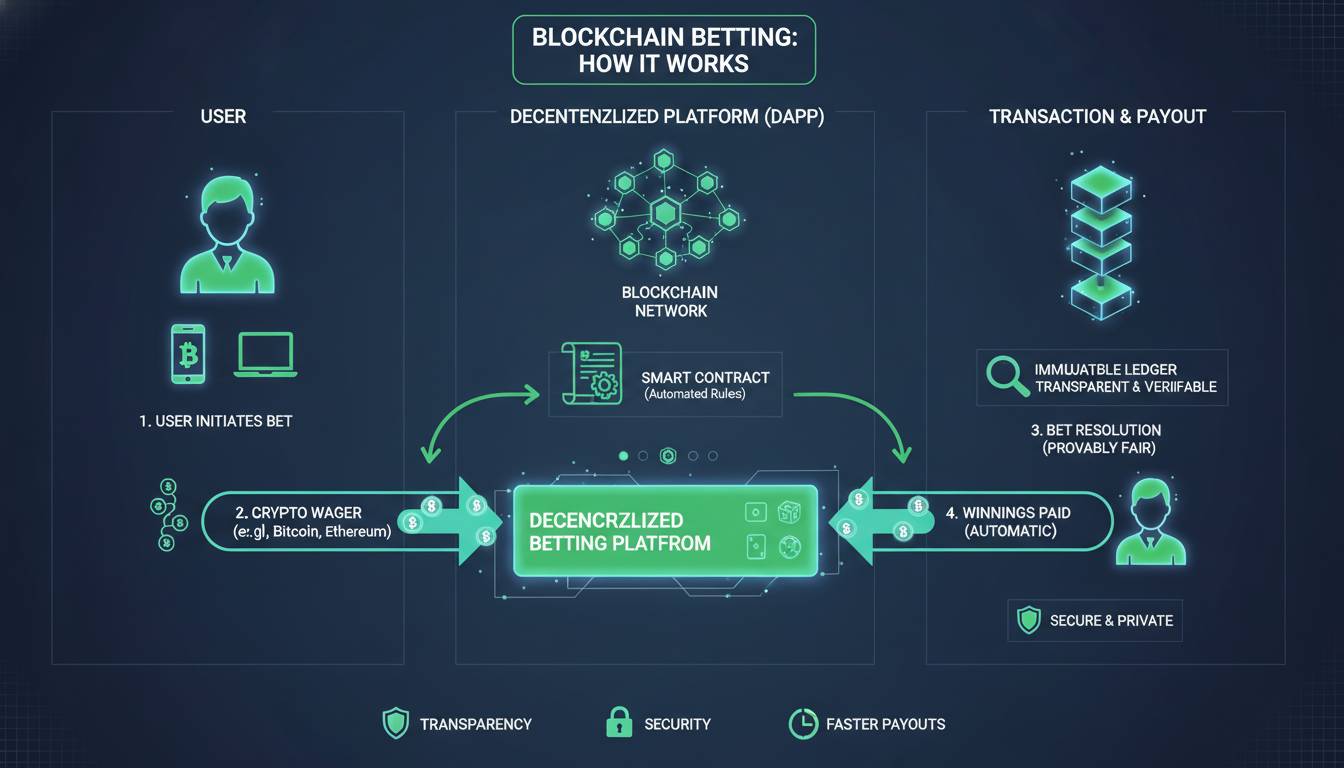
Blockchain betting represents a fundamental shift in how people place wagers on sporting events, casino games, and other outcomes. At its core, blockchain betting is the use of decentralized cryptocurrency technology to facilitate gambling transactions—replacing traditional payment methods and centralized bookmaker systems with transparent, peer-to-peer wagering mechanisms powered by distributed ledger technology.
Unlike conventional online betting platforms where the house controls all transactions, blockchain betting operates through smart contracts that automatically execute payouts when conditions are met. This eliminates the need for intermediaries, reduces transaction costs, and provides unprecedented transparency into how odds are set and bets are settled.
For beginners in the United States, understanding this technology requires examining both the technical infrastructure and the practical implications for bettors seeking alternatives to traditional sportsbooks.
How Blockchain Betting Works
The technology underlying blockchain betting consists of three interconnected systems working in concert: cryptocurrency networks, smart contracts, and decentralized oracles.
Cryptocurrency Networks serve as the payment infrastructure. Bettors fund their accounts by depositing Bitcoin, Ethereum, or other supported cryptocurrencies into digital wallets connected to betting platforms. These transactions occur on public blockchains that record every transfer permanently and transparently.
Smart Contracts are self-executing programs stored on the blockchain that contain the rules of each wager. When a bettor places a wager, the smart contract locks the cryptocurrency and automatically releases the winnings to the correct party once the outcome is determined. This eliminates human intervention in payout processing and prevents manipulation of results after the fact.
Decentralized Oracles provide external data to smart contracts. Since blockchains cannot access information outside their network, oracles feed real-world data—such as game scores, election results, or casino outcomes—into the system to trigger contract execution. Reputable blockchain betting platforms use multiple oracle sources to prevent single-point-of-failure manipulation.
The typical user journey involves creating a cryptocurrency wallet, purchasing digital currency through an exchange, connecting that wallet to a blockchain betting dApp (decentralized application), and placing wagers directly against other users or against algorithmically determined odds.
Traditional Betting vs. Blockchain Betting
Understanding what makes blockchain betting distinct requires direct comparison with established betting models.
| Factor | Traditional Online Betting | Blockchain Betting |
|---|---|---|
| Payment Methods | Bank transfers, credit cards, e-wallets | Cryptocurrencies, stablecoins |
| Transaction Speed | 2-5 business days for withdrawals | Minutes to hours |
| Transparency | Closed systems, audited internally | Public ledger, verifiable by anyone |
| Anonymity | Requires identity verification | Pseudonymous (wallet addresses only) |
| Minimum Bets | Typically $1-5 | Often fractions of cents |
| Geographic Restrictions | State-by-state regulation | Varies by platform, often international |
| House Edge | Hidden in odds | Often lower, sometimes published |
| Account Control | Platform holds funds | User controls private keys |
Traditional bookmakers operate as centralized intermediaries. They set odds, hold customer funds, and determine payouts. This model has served the industry for decades but creates inherent conflicts of interest—the bookmaker profits when customers lose, creating incentives that don’t always align with bettor interests.
Blockchain betting inverts this relationship. Since smart contracts hold funds and execute automatically based on predetermined rules, the platform operator cannot manipulate outcomes or withhold legitimate winnings. The code itself becomes the bookmaker, running exactly as written regardless of how the outcome affects either party.
Key Benefits for Bettors
The technical architecture of blockchain betting delivers concrete advantages that matter to actual users.
Provably Fair Gaming represents perhaps the most significant advancement. In traditional online casinos, players trust that the platform’s random number generators produce fair results. Blockchain casinos can publish cryptographic proofs that demonstrate game outcomes were calculated fairly and weren’t manipulated after the fact. This transparency is verifiable by anyone with technical knowledge, not just trusted to corporate auditors.
Lower House Edges emerge from reduced operational costs. Traditional online betting platforms maintain expensive infrastructure: customer service teams, marketing departments, compliance officers, and profit margins. Blockchain platforms operate with significantly smaller teams since smart contracts handle most functions automatically. These savings translate to better odds for users. Some decentralized betting exchanges offer commission structures below 2%, compared to traditional sportsbooks that may retain 5-10% on losing bets.
Instant Withdrawals solve one of the most frustrating aspects of traditional online betting. Conventional platforms process withdrawal requests through banking systems that take days or weeks, particularly for international transactions. Blockchain betting platforms transfer winnings directly to user wallets within minutes or hours, regardless of geographic location or time of day.
Global Access bypasses some geographic restrictions. While US federal and state laws still apply to American users, blockchain betting platforms operate without the same licensing requirements as state-licensed sportsbooks, creating options for users in jurisdictions with limited legal alternatives. However, users must understand that this does not make such activities legal in all contexts.
Complete Transaction Privacy provides an alternative for users uncomfortable with sharing personal financial data. Blockchain betting requires only a wallet address, not the extensive identity documentation demanded by traditional Know Your Customer (KYC) regulations.
Popular Blockchain Betting Platforms
The ecosystem has developed distinct platform types serving different user needs.
Decentralized Prediction Markets allow users to bet on real-world events ranging from election outcomes to weather patterns to stock prices. Augur and Polymarket represent leading platforms where users create markets, set initial liquidity, and bet against each other rather than against a house.
Blockchain Sportsbooks like BetU, Wagerr, and SportCrypt offer traditional sports betting markets—NFL, NBA, MLB, international soccer—with cryptocurrency deposits and blockchain-settled wagers. These platforms attempt to replicate the familiar sportsbook experience while adding blockchain benefits.
Decentralized Casinos provide blockchain-based alternatives to slot machines, table games, and poker. Platforms like BitSpin, BC.Game, and others offer provably fair games where players can verify each spin or hand’s fairness through cryptographic hashing.
Betting Exchanges like BetDEX (currently in development) aim to create peer-to-peer betting where users set their own odds and bet against each other directly, similar to traditional betting exchanges like Betfair but built entirely on blockchain infrastructure.
Getting Started with Blockchain Betting
Entering the blockchain betting space requires several sequential steps, each with important considerations.
Step 1: Acquire Cryptocurrency. Before engaging with any blockchain betting platform, you need cryptocurrency in a personal wallet. Major US exchanges including Coinbase, Kraken, and Gemini allow US residents to purchase Bitcoin, Ethereum, and various altcoins with traditional payment methods after completing identity verification.
Step 2: Set Up a Wallet. A cryptocurrency wallet stores your digital assets and provides the credentials needed to interact with blockchain applications. MetaMask serves as the most popular browser and mobile wallet for Ethereum-based platforms, while other wallets support different blockchain networks. Security is paramount—never share private keys and consider hardware wallets for significant holdings.
Step 3: Research Platforms Thoroughly. Unlike regulated US sportsbooks that face state gaming commission oversight, blockchain betting platforms may operate with minimal regulation. Investigate platform history, community reputation, smart contract audits, and user experiences before depositing funds. The irreversibility of blockchain transactions means mistakes cannot be reversed.
Step 4: Start Small. Begin with minimal amounts to understand how the platform operates, how bets are placed, and how winnings are collected. The blockchain learning curve is genuine, and it’s wiser to make mistakes with small stakes.
Step 5: Understand Tax Implications. The IRS treats cryptocurrency as property, meaning gambling wins are taxable income whether received in dollars or digital currency. Similarly, losses may be deductible. Maintain detailed records of all blockchain betting transactions.
Common Mistakes to Avoid
Newcomers to blockchain betting frequently encounter preventable issues.
Ignoring Smart Contract Risks leads to losses when platforms use poorly coded or intentionally malicious contracts. Always verify that platforms undergo third-party security audits and consider the platform’s track record before significant deposits.
Failing to Understand Volatility catches many users off guard. Cryptocurrency prices fluctuate dramatically—a winning bet denominated in Bitcoin might lose significant dollar value before withdrawal if the market turns. Some platforms offer stablecoin betting to mitigate this risk.
Overlooking Gas Fees creates confusion for newcomers. Every blockchain transaction—including placing bets and withdrawing winnings—incurs network fees called “gas” on Ethereum and similar systems. These fees can be substantial during periods of network congestion, making small bets economically impractical.
Trusting Unverified Platforms results in lost funds with no recourse. The pseudonymity that protects user privacy also enables scammers to operate anonymously. Only engage with platforms that have established reputations and transparent ownership.
Neglecting Legal Considerations exposes users to potential legal risk. Blockchain betting’s legal status varies significantly by jurisdiction and continues to evolve. US residents should understand that while some blockchain activities are legal, others may violate state or federal regulations. Consultation with legal professionals familiar with gambling and cryptocurrency law is advisable.
The Future of Blockchain Betting
Several developments indicate where this technology heading.
Mainstream Integration accelerates as established gaming companies explore blockchain applications. The 2022 FIFA World Cup saw several major betting companies announce blockchain integration or cryptocurrency betting options, signaling potential normalization.
Regulatory Clarity emerges gradually as governments develop frameworks for cryptocurrency gambling. Several US states now explicitly address cryptocurrency in their gaming regulations, creating more predictable operating environments.
Improved User Experience addresses current friction points. Newer platforms abstract much of the technical complexity, offering interfaces familiar to anyone who has used traditional betting apps while retaining blockchain benefits underneath.
Cross-Chain Compatibility expands options as blockchain networks increasingly communicate with each other. Future platforms may allow betting across multiple blockchain networks, accessing the best odds and features from various sources.
Frequently Asked Questions
Is blockchain betting legal in the United States?
The legal status depends on specific activities and locations. The Unlawful Internet Gambling Enforcement Act (UIGEA) prohibits certain online gambling transactions, but cryptocurrency’s legal classification creates ambiguity. Some blockchain betting activities may violate state laws while others fall into gray areas. Users should consult legal counsel and understand their specific state’s regulations before participating.
How do I know if a blockchain betting platform is fair?
Look for platforms that publish “provably fair” systems allowing you to verify game outcomes through cryptographic proofs. Additionally, seek third-party security audits from reputable firms, check community reviews and histories, and prefer platforms with established track records over newly launched services.
What happens if I lose access to my wallet?
Losing access to your cryptocurrency wallet typically means losing your funds permanently. Unlike bank accounts with password recovery options, blockchain wallets are designed without central control—meaning there’s no institution that can reset your credentials. Always backup your recovery phrase in secure locations and consider hardware wallets for significant holdings.
Can blockchain betting help me win more money?
Blockchain technology provides transparency and potentially better odds, but it does not change the fundamental mathematics of gambling. The house generally maintains an edge regardless of the technology used. Better odds and lower fees can improve expected returns slightly, but successful betting still requires skill, discipline, and understanding of the markets you wager on.
Blockchain betting represents a meaningful technological evolution in wagering, offering transparency, reduced costs, and user control that traditional platforms cannot match. For American users willing to navigate the learning curve and understand the legal landscape, these platforms provide legitimate alternatives to conventional betting options. The technology continues maturing, and informed users who understand both the advantages and risks are best positioned to benefit from this developing space.







Leave a comment