


Cryptocurrency has transformed from a niche technological experiment into a mainstream asset class worth over $2 trillion globally. Yet the question that echoes through every investor’s mind remains: is crypto safe? The answer isn’t straightforward—cryptocurrency safety depends on multiple factors including your security practices, platform choices, understanding of risks, and regulatory environment. This comprehensive guide examines the genuine risks, proven protection strategies, and expert-backed approaches to safeguarding your digital assets in 2024 and beyond.
The Current State of Cryptocurrency Security
The cryptocurrency industry has experienced remarkable evolution in security infrastructure over the past decade. What began as an Wild West environment with frequent exchange collapses and hacks has matured into a space with sophisticated security protocols, institutional-grade custody solutions, and increasingly clear regulatory frameworks. However, this maturation hasn’t eliminated risk—it has shifted it.
According to blockchain analytics firm Chainalysis, cryptocurrency-related crimes totaled $4.1 billion in 2022, though this represents less than 1% of total crypto transaction volume—a significant improvement from earlier years. The industry has also seen major advances in security technology, with hardware wallet adoption growing substantially and centralized exchanges implementing bank-grade security measures including multi-signature protocols, cold storage systems, and insurance coverage for digital assets.
Understanding crypto safety requires distinguishing between the security of the underlying blockchain technology and the security of how you interact with cryptocurrencies. The Bitcoin network, for instance, has operated continuously since 2009 without being compromised—the cryptographic principles underlying most cryptocurrencies remain theoretically unbreakable with current computing technology. The vulnerabilities typically exist at the user level: exchanges, wallets, and individual security practices.
Major Security Risks Every Investor Must Understand
Before exploring protection strategies, investors must recognize the specific threats that make cryptocurrency investing risky. These risks fall into several distinct categories, each requiring different mitigation approaches.
Exchange and Platform Risks
Centralized cryptocurrency exchanges remain the primary target for hackers because they hold customer funds in hot wallets connected to the internet. The 2014 Mt. Gox collapse, which resulted in 850,000 Bitcoin (worth approximately $450 million at the time) being stolen, established a pattern that has repeated across the industry. More recently, the FTX collapse in 2022 demonstrated that internal fraud and mismanagement pose equal or greater threats than external hacking—$8 billion in customer funds vanished amid allegations of misuse.
Even reputable exchanges carry counterparty risk. When you hold cryptocurrency on an exchange, you don’t actually control your private keys—you’re trusting the exchange to maintain security and solvency. This arrangement creates vulnerability to both technical breaches and business failures.
Wallet Security Vulnerabilities
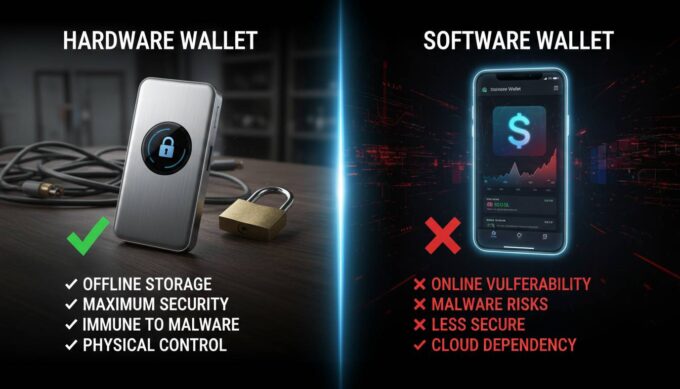
Digital wallets present their own risk profile. Hot wallets connected to the internet offer convenience but remain susceptible to phishing attacks, malware, and remote hacking. Cold wallets—offline storage devices—provide substantially better security but introduce risks of physical theft, loss, or damage. The decentralized nature of cryptocurrency means there’s no password reset option: if you lose access to your private keys, your funds are irretrievable.
Social engineering attacks have become increasingly sophisticated, with criminals using pretexting, impersonation, and psychological manipulation to trick investors into transferring funds or revealing credentials. The FBI reported that cryptocurrency investment fraud resulted in losses exceeding $2.5 billion in 2022 alone, with victims often actively participating in transferring their own funds to scammers.
Smart Contract and DeFi Risks
The decentralized finance (DeFi) ecosystem introduces additional security considerations. Smart contracts—self-executing code that automates transactions—have experienced numerous exploits due to programming errors. According to DeFi analytics platform DeFiLlama, exploits resulted in approximately $3.8 billion in losses from DeFi protocols in 2022. These attacks exploit vulnerabilities in code that may not be apparent until funds are at risk, and the anonymous nature of many DeFi projects can make recovery impossible.
Essential Protection Strategies for Crypto Investors
With risks clearly defined, the path toward safer cryptocurrency investment becomes apparent. These strategies, endorsed by security professionals and demonstrated through industry best practices, substantially reduce your vulnerability.
Hardware Wallets: Your First Line of Defense
For any cryptocurrency holdings you don’t actively trade, hardware wallets provide the highest security standard available. These physical devices store your private keys offline, requiring physical button confirmation to authorize transactions. Leading manufacturers including Ledger and Trezor have sold millions of devices, and no major hardware wallet has been compromised through remote attack when properly used.
The investment in a hardware wallet—typically $50 to $250—represents a small fraction of the value it protects. When selecting a device, purchase exclusively from the manufacturer (not resale marketplaces) to avoid tampered devices. Enable all security features including PIN protection, passphrase protection, and recovery seed backup. Store your recovery phrase in multiple secure physical locations, never digitally.
Cold Storage Best Practices
Beyond dedicated hardware wallets, cold storage strategies include paper wallets (printed private keys) and air-gapped computers that never connect to the internet. These approaches suit large holdings where convenience is secondary to security. The principle underlying all cold storage: your private keys exist only in places attackers cannot reach digitally.
When implementing cold storage, consider geographic distribution—storing all backups in one location creates single points of failure from fire, theft, or natural disaster. Metal backup solutions designed to survive physical disasters provide additional protection for recovery phrases. Some investors use multi-signature arrangements requiring multiple keys to authorize transactions, distributing control across different locations and trusted parties.
Exchange Security Protocols
When using centralized exchanges—which remain necessary for convenient trading—implement every available security measure. Enable two-factor authentication (2FA) using hardware security keys or authenticator apps rather than SMS, which remains vulnerable to SIM-swapping attacks. Use unique, complex passwords stored in password managers rather than reused credentials.
Withdrawal whitelists—limiting which addresses can receive your funds—provide protection against account takeover. Many exchanges now offer insurance or reserves covering hack losses, though coverage terms vary significantly. Understanding your exchange’s security features and enabling all available protections dramatically reduces your exposure to common attack vectors.
Regulatory Landscape and Investor Protection
The regulatory environment surrounding cryptocurrency continues developing, creating both protections and uncertainties for investors. Understanding your legal position matters considerably for safety.
Current Regulatory Framework
The Securities and Exchange Commission (SEC) has taken aggressive enforcement action against cryptocurrency issuers and exchanges, arguing that most digital assets constitute securities requiring registration. The Commodity Futures Trading Commission (CFTC) claims jurisdiction over Bitcoin and Ether as commodities. This regulatory fragmentation creates compliance uncertainty, though it also establishes consequences for fraudulent actors.
Several states have enacted cryptocurrency-specific regulations, with New York’s BitLicense representing the most stringent framework. Kraken, Coinbase, and other major platforms maintain licenses allowing operation in regulated markets, providing customers with some recourse through regulatory oversight. However, unlike bank accounts protected by FDIC insurance, cryptocurrency holdings typically lack government protection.
Investor Recourse and Due Diligence
When selecting platforms, regulatory compliance provides meaningful safety signals. Licensed exchanges undergo regular audits, maintain reserved funds, and face consequences for misconduct. The bankruptcy proceedings following the FTX collapse have established precedent for customer treatment during platform failures—though customers experienced significant losses and extended recovery timelines.
Professional custody services offered by regulated financial institutions represent an emerging option for larger investors. These services provide institutional-grade security, insurance coverage, and regulatory compliance that individual platforms may not match. As traditional financial institutions like Fidelity and BNY Mellon expand cryptocurrency custody offerings, investor protection options continue improving.
Building a Personal Security Framework
Effective cryptocurrency safety requires systematic approach rather than scattered precautions. Building your personal security framework addresses each risk vector comprehensively.
Operational Security Essentials
Your everyday digital practices directly impact cryptocurrency security. Use dedicated devices for significant crypto activities, maintaining updated operating systems and security software. Avoid conducting transactions on public WiFi networks where traffic can be intercepted. Carefully verify all addresses before sending funds—cryptocurrency transactions are irreversible, and typos result in permanent loss.
Email security deserves particular attention because password resets often provide entry to exchange accounts. Use unique email addresses for cryptocurrency activities, enable two-factor authentication on email accounts, and consider email forwarding rules that could indicate compromise. Phishing attempts have become extremely convincing, with attackers creating exact replicas of exchange login pages; always verify URLs manually rather than following email links.
Portfolio Construction for Risk Management
Strategic portfolio construction reduces your exposure to any single point of failure. Diversify across multiple reputable exchanges rather than concentrating all holdings in one location. Consider maintaining sufficient liquid assets on exchanges for trading while keeping majority holdings in personal cold storage. This approach balances convenience against security.
Insurance coverage specifically designed for cryptocurrency holdings has emerged as an industry response to security concerns. Some homeowners insurance policies cover crypto theft, while specialized crypto insurance providers offer policies protecting against both hacking and insider theft. Evaluating insurance options makes sense for significant holdings.
Emergency Response Planning
Prepare for potential security incidents before they occur. Document your security setup, including which exchanges you use, wallet brands, and recovery phrase storage locations. Provide trusted contacts with instructions for accessing your holdings in emergencies—this becomes essential for estate planning.
Monitor your accounts proactively using portfolio trackers that alert you to activity. Many investors use separate email addresses specifically for cryptocurrency accounts, enabling rapid identification of compromise through unexpected communications. Understanding the recovery processes for each platform you use enables faster response if incidents occur.
The Verdict on Crypto Safety
Cryptocurrency safety is achievable but requires active engagement. The underlying blockchain technology has proven remarkably resilient, and the industry has developed sophisticated tools for protecting digital assets. However, investor responsibility remains paramount—security largely depends on individual practices rather than platform guarantees.
The honest assessment: cryptocurrency can be safe when investors implement appropriate protections. Hardware wallets, diversified storage, strong authentication, operational security discipline, and ongoing vigilance collectively create meaningful protection against most threats. The convenience-oriented approach of holding everything on exchanges creates substantial vulnerability; the security-conscious approach of controlling your own keys requires more effort but delivers substantially better protection.
No investment entirely lacks risk, and cryptocurrency’s volatility creates financial risk independent of security considerations. Your crypto holdings can be secure from theft while experiencing significant value fluctuation. Approaching cryptocurrency with realistic expectations—both regarding its potential and its risks—enables informed decisions about appropriate position sizing and protection measures.
Frequently Asked Questions
Is cryptocurrency safer than keeping money in a bank?
Cryptocurrency and bank accounts present different risk profiles. Bank deposits up to $250,000 are FDIC-insured against bank failure, while cryptocurrency lacks equivalent government protection. However, cryptocurrency stored in your personal wallet doesn’t depend on any institution’s solvency. Bank accounts are protected by extensive regulatory oversight and fraud protection laws, while cryptocurrency protection relies primarily on your own security practices.
What is the safest way to store cryptocurrency?
Hardware wallets storing private keys offline represent the safest method for most investors. These devices keep your keys disconnected from the internet, making remote hacking essentially impossible. For maximum security, store hardware wallets in secure physical locations, maintain metal backups of recovery phrases, and consider multi-signature arrangements for large holdings.
Can cryptocurrency be hacked?
The blockchain networks underlying most cryptocurrencies have proven extremely secure—Bitcoin has never been compromised. However, cryptocurrency exchanges, individual wallets, and DeFi protocols have experienced numerous hacks. Individual investors can be hacked through phishing, malware, SIM-swapping, and other attacks targeting user-level security. Protecting yourself requires securing your private keys, using reputable platforms, and maintaining good operational security.
What happens if I lose my crypto wallet?
If you lose access to a cryptocurrency wallet without a recovery phrase (seed phrase), the funds are permanently inaccessible—there’s no central authority that can reset your keys. This is by design in decentralized cryptocurrency systems. However, if you have your recovery phrase, you can restore access using any compatible wallet software. Always maintain secure backups of recovery phrases in multiple physical locations.
Should I keep my crypto on an exchange?
Keeping all cryptocurrency on an exchange creates counterparty risk—you depend on the exchange’s security and solvency. For active trading, keeping some funds on reputable exchanges makes sense for convenience. However, any cryptocurrency you don’t plan to trade soon should be moved to personal wallet control. This approach reduces exposure to exchange hacks, insolvency, or service disruptions.
How do I know if a crypto exchange is safe?
Look for regulated exchanges with strong security features including two-factor authentication, cold storage for customer funds, proof of reserves, and insurance coverage. Research the exchange’s history, including any past security incidents. Major regulated exchanges like Coinbase and Kraken have established track records and regulatory compliance. Avoid platforms promising unrealistic returns or those with limited public information about their operations and security practices.








Leave a comment