

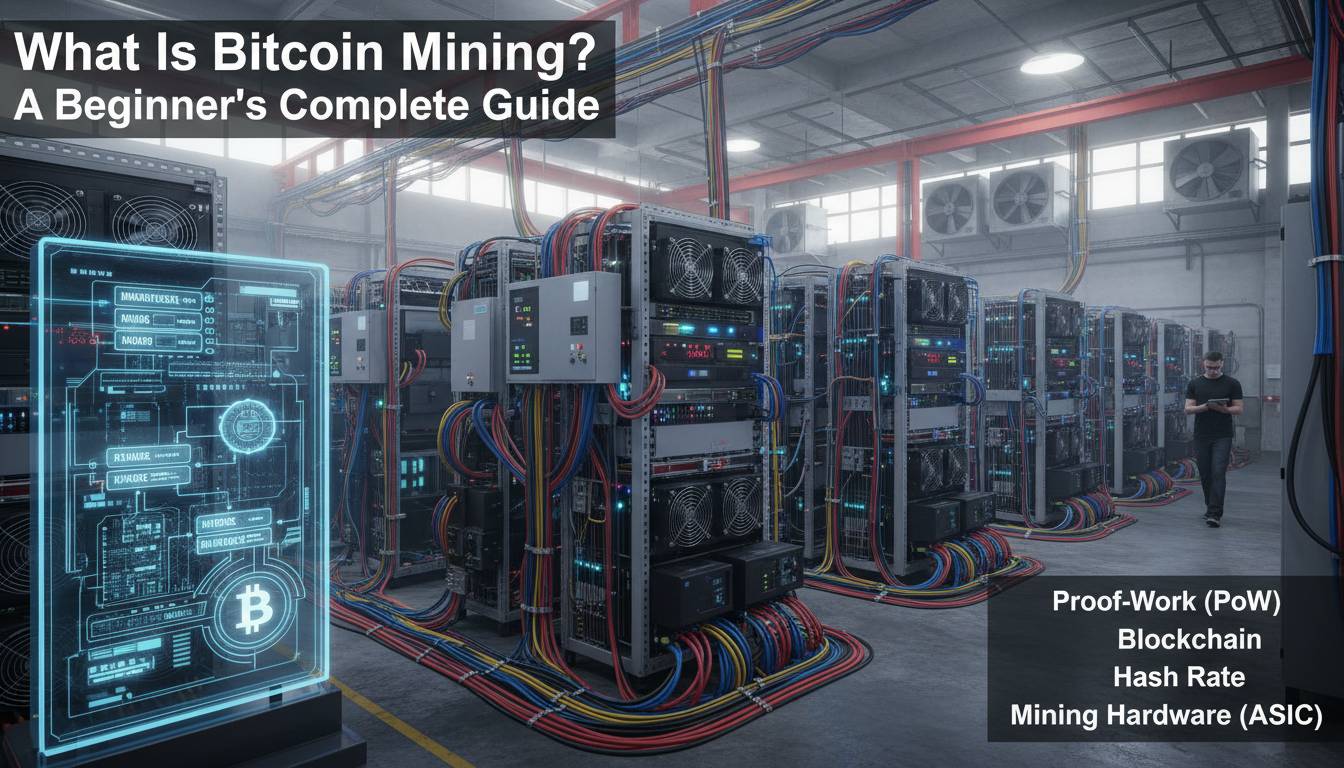
Bitcoin mining is the process by which new Bitcoin tokens are created and transactions are verified and added to the public ledger known as the blockchain. It serves as the backbone of the entire Bitcoin network, ensuring that transactions are legitimate without requiring a central authority like a bank. In simple terms, miners use powerful computers to solve complex mathematical puzzles, and the first one to solve the puzzle gets to add a new block of transactions to the blockchain and receives Bitcoin as a reward.
Key Insights
– Bitcoin mining secures the network by validating transactions through proof-of-work
– Miners compete to solve cryptographic puzzles, with the winner earning block rewards
– The process consumes significant energy but generates new Bitcoin at a predictable rate
– Mining has evolved from simple home computers to massive industrial operations
This comprehensive guide will walk you through everything you need to understand about Bitcoin mining, from the fundamental concepts to the practical realities of how it works today.
The Fundamentals of Bitcoin Mining
To understand Bitcoin mining, you first need to grasp why it exists. Unlike traditional currencies that governments and central banks control, Bitcoin was designed to operate without any single authority. Instead, it relies on a decentralized network of participants who collectively validate transactions. This is where mining comes in.
The term “mining” is somewhat of a metaphor. Just as gold miners dig through earth to find valuable metal, Bitcoin miners expend computational effort to find digital “gold” in the form of new Bitcoin. However, the actual purpose is much more functional than this analogy suggests.
What Bitcoin Miners Actually Do:
When someone sends Bitcoin to another person, that transaction gets broadcast to the network. However, before it can be confirmed, it must be grouped with other transactions into a “block.” Miners then compete to solve a complex mathematical problem based on the transactions in that block. This problem involves finding a specific number called a “nonce” that, when combined with the block’s data and run through a cryptographic hash function, produces a result that meets certain criteria.
The first miner to find a valid solution announces it to the network. Other miners verify the solution, and if correct, the block gets added to the blockchain. This process is called “proof of work” because the miner has demonstrably spent computational resources to solve the puzzle. This mechanism ensures that anyone trying to manipulate the system would need to control more than 50% of the network’s total computing power, making such attacks economically impractical.
The Bitcoin network automatically adjusts the difficulty of these puzzles approximately every 2,016 blocks (roughly every two weeks) to ensure that new blocks are added roughly every 10 minutes, regardless of how many miners are competing. This maintainable rate is crucial for the cryptocurrency’s monetary policy and transaction processing capabilities.
How the Mining Process Works
The technical implementation of Bitcoin mining involves several key components working together. Understanding these elements will give you a complete picture of how the system functions.
The Hash Function: At the heart of Bitcoin mining is SHA-256, a cryptographic hash function developed by the National Security Agency (NSA). This function takes any input and produces a 64-character hexadecimal output. The beauty of this system is that it’s virtually impossible to reverse-engineer the input from the output, but incredibly easy to verify if a given input produces the required output.
The Target and Difficulty: The network sets a “target” hash value. Miners must find a nonce (a random number) that, when added to the block data and hashed, produces a hash that is numerically less than or equal to the target. Because finding such a number is purely a matter of trial and error (like finding a specific grain of sand in a vast desert), miners must make trillions of attempts before one succeeds.
Block Rewards and Halving: When a miner successfully adds a block to the blockchain, they receive a block reward consisting of newly created Bitcoin plus transaction fees paid by users. When Bitcoin launched in 2009, the block reward was 50 BTC. This reward halves approximately every four years in an event called “halving.” As of 2024, after three halving events, the block reward stands at 3.125 BTC. The final Bitcoin is expected to be mined around the year 2140, when the block reward will approach zero and miners will rely solely on transaction fees.
Transaction Fees: In addition to the block reward, miners collect transaction fees from the transactions included in their block. As the block reward decreases over time, these fees become increasingly important for maintaining miner profitability and network security.
Types of Mining Hardware
Bitcoin mining hardware has evolved dramatically since the cryptocurrency’s inception. The type of equipment you use significantly impacts your chances of success and your operational costs.
| Era | Hardware | Hashrate | Energy Efficiency |
|---|---|---|---|
| 2009-2010 | CPU (Computer Processor) | 1-10 MH/s | Very Low |
| 2010-2012 | GPU (Graphics Card) | 10-100 MH/s | Low |
| 2012-2013 | FPGA (Field-Programmable Gate Array) | 1-10 GH/s | Moderate |
| 2013-Present | ASIC (Application-Specific Integrated Circuit) | 10-200+ TH/s | Very High |
ASIC Miners: Today’s Bitcoin mining is dominated by Application-Specific Integrated Circuit (ASIC) miners. These machines are designed specifically for Bitcoin mining and offer vastly superior performance compared to general-purpose hardware. Leading manufacturers include Bitmain, MicroBT, and Canaan. Modern ASIC miners like the Antminer S21 Pro can achieve hash rates exceeding 200 terahashes per second while being significantly more energy-efficient than older models.
GPU Mining: While graphics processing units were once competitive for Bitcoin mining, they are now used primarily for mining other cryptocurrencies that require different algorithms. Ethereum, before its 2022 transition to proof-of-stake, was the most popular GPU-mined cryptocurrency.
Mining Farms: The industrialization of Bitcoin mining has led to the emergence of massive data centers, often called “mining farms.” These facilities house thousands of ASIC miners in locations with cheap electricity, optimal climate conditions, and robust internet connectivity. Countries including the United States, China, Russia, and Kazakhstan have become major mining hubs.
Mining Pools: Collaboration Among Miners
Individual mining has become extremely competitive, with large operations dominating the network. For average miners, joining a mining pool offers a more practical approach to earning Bitcoin rewards.
How Mining Pools Work:
Instead of competing against massive mining farms, individual miners contribute their computational power to a pool. When the pool successfully mines a block, the reward gets distributed among all participants proportional to the hash power they contributed. This approach provides more consistent, smaller payments rather than the rare, large rewards of solo mining.
Popular mining pools include Foundry USA, AntPool, ViaBTC, and Poolin. These pools aggregate hash power from thousands of individual miners, making them significant contributors to Bitcoin’s total hashrate.
Pool Reward Distribution Methods:
- Pay-Per-Share (PPS): Miners receive a fixed payment for each valid share submitted, regardless of whether the pool finds a block
- Full Pay-Per-Share (FPPS): Similar to PPS but also includes transaction fees
- Pay-Per-Last-N-Shares (PPLNS): Payments depend on the last N shares submitted, incentivizing consistent participation
The Economics of Bitcoin Mining
Understanding the financial aspects of Bitcoin mining is crucial for anyone considering participating in the network, whether individually or through investment.
Operational Costs:
The primary expenses in Bitcoin mining include:
- Electricity: Mining hardware consumes substantial power. The International Energy Agency estimates that Bitcoin mining consumes approximately 110-170 TWh annually, comparable to some mid-sized countries
- Hardware: ASIC miners cost anywhere from $2,000 to $15,000 depending on model and availability
- Cooling: Large operations require significant cooling systems to prevent equipment overheating
- Maintenance: Regular maintenance and occasional repairs are necessary to keep equipment running optimally
- Internet: Reliable, low-latency internet connectivity is essential
Profitability Factors:
Several variables determine whether Bitcoin mining is profitable:
- Bitcoin Price: Higher BTC prices make mining more profitable, but also increase competition
- Network Difficulty: As more miners join, finding blocks becomes harder, reducing individual profitability
- Electricity Costs: Operations in regions with cheap power have significant competitive advantages
- Hardware Efficiency: Newer, more efficient miners consume less electricity per unit of hash power
| Location | Avg. Electricity Cost ($/kWh) | Mining Viability |
|---|---|---|
| United States (National Avg.) | $0.14 | Moderate |
| Texas | $0.10 | Good |
| China (Sichuan – Hydro) | $0.03-0.05 | Very Good (historically) |
| Russia | $0.05-0.08 | Good |
| Iceland | $0.05-0.07 | Good (cooling advantage) |
| Middle East (Natural Gas) | $0.02-0.04 | Excellent |
The Energy Debate: Bitcoin mining’s energy consumption has attracted significant criticism from environmental advocates. However, proponents argue that mining can serve as a grid stabilization service and increasingly relies on renewable energy sources. The Bitcoin Mining Council estimates that approximately 50-60% of mining operations utilize sustainable energy sources, though figures vary by source and methodology.
Environmental Considerations and Sustainability
The environmental impact of Bitcoin mining has become one of the most debated aspects of the cryptocurrency. Understanding both sides of this controversy is essential for a complete picture.
Criticisms:
- Energy consumption exceeds that of some countries
- Often relies on fossil fuels in certain regions
- Contributes to carbon emissions and climate change
- Can strain local power grids
Counterarguments:
- Mining can utilize stranded energy resources (excess renewable energy that would otherwise be wasted)
- The network operates 24/7, providing consistent demand that can support energy infrastructure
- Many operations increasingly shift to renewable sources
- The energy intensity is comparable to traditional banking systems when considering all infrastructure
Sustainable Mining Initiatives:
Several companies and countries are pioneering more sustainable approaches. In Texas, mining operations have partnered with energy companies to provide demand-response services, helping balance the grid during peak periods. Meanwhile, some Icelandic operations utilize geothermal and hydroelectric power exclusively.
How to Start Mining Bitcoin
For those interested in entering Bitcoin mining, several pathways exist, each with different requirements and expectations.
Solo Mining:
Running your own mining operation offers complete independence but requires substantial investment. You’ll need to purchase ASIC hardware (starting around $3,000-5,000 for entry-level models), configure the equipment, and maintain it yourself. While possible, solo mining for average individuals has become largely impractical due to competition from industrial operations.
Cloud Mining:
Cloud mining services allow you to rent hash power from remote data centers. You pay a contract fee and receive Bitcoin based on the hash power you’ve purchased. While this eliminates the need for hardware management, cloud mining contracts often prove unprofitable due to contract terms, price volatility, and the inherent structure of these services. Caution is advised, as many cloud mining platforms have proven fraudulent.
Mining Pools:
As mentioned earlier, joining a mining pool provides the most practical path for individual miners. Most ASIC hardware can be easily configured to connect to a pool through the device’s web interface. You’ll need a Bitcoin wallet to receive your earnings.
Steps to Begin:
- Research and Education: Understand the costs, risks, and technical requirements
- Calculate Profitability: Use online calculators considering electricity costs and hardware expenses
- Acquire Hardware: Purchase a suitable ASIC miner from authorized distributors
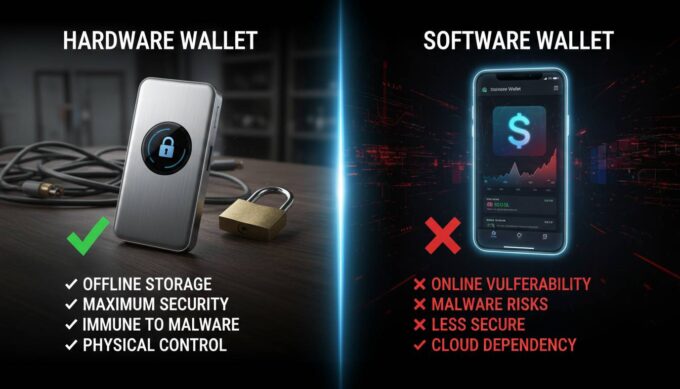
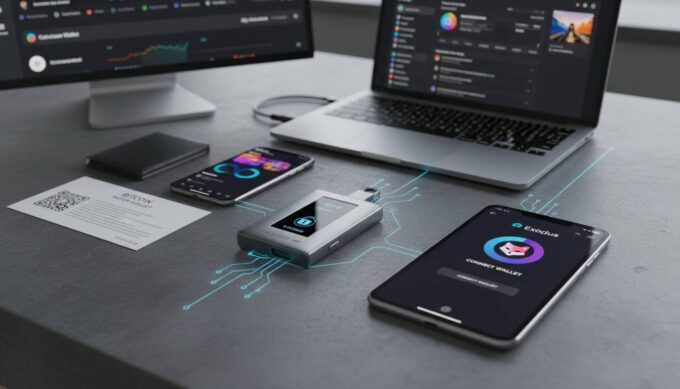
- Set Up Wallet: Create a secure Bitcoin wallet to receive payments
- Configure Software: Connect your miner to a pool following manufacturer instructions
- Monitor Performance: Track hashrate, temperature, and earnings regularly
The Future of Bitcoin Mining
Bitcoin mining continues to evolve, with several trends shaping its future trajectory.
Technological Advancements: Hardware manufacturers continue developing more efficient ASICs. The introduction of 3nm and 5nm chip technologies promises improved performance and reduced energy consumption. Additionally, immersion cooling technology—submerging miners in specialized liquids—offers potential for higher hash rates with better heat management.
Regulatory Developments: Governments worldwide are developing frameworks for cryptocurrency mining operations. Some jurisdictions have embraced mining, while others have imposed restrictions or bans. The United States has emerged as a leading mining destination, with Texas, Georgia, and North Dakota hosting significant operations.
Network Evolution: While the proof-of-work consensus mechanism remains controversial, it continues to provide robust security for the Bitcoin network. Debates about potential future changes to the mining algorithm persist within the community, though major changes require broad consensus and are considered unlikely in the near term.
Geographic Shifts: Following China’s 2021 mining ban, the geographic distribution of Bitcoin hash rate has diversified significantly. The United States now leads in Bitcoin mining, followed by other countries with favorable regulatory environments and abundant energy resources.
Frequently Asked Questions
How much Bitcoin do you get for mining one block?
As of 2024, the block reward is 3.125 Bitcoin per block. This amount halves approximately every four years, with the next halving expected in 2028. By 2140, all 21 million Bitcoin will have been mined, after which miners will earn only transaction fees.
Is Bitcoin mining legal in the United States?
Yes, Bitcoin mining is legal in the United States. However, regulations vary by state, and miners must comply with local laws regarding energy consumption, noise (for home mining), and financial regulations. Some municipalities have specific zoning requirements for mining operations.
How long does it take to mine one Bitcoin?
There’s no fixed time to mine “one Bitcoin” because miners earn rewards per block, not per token. With the current 3.125 BTC block reward and approximately 144 blocks mined daily (one every 10 minutes), the network creates about 450 BTC daily. Individual miners typically earn fractions of Bitcoin depending on their contribution to a mining pool.
Can I mine Bitcoin on my home computer?
No, mining Bitcoin on a standard home computer is not profitable and hasn’t been since around 2013. The network’s difficulty is so high that CPU and GPU mining cannot compete with specialized ASIC hardware. You would spend more in electricity costs than you’d earn in Bitcoin.
What determines Bitcoin mining profitability?
The primary factors are Bitcoin’s price, network difficulty, electricity costs, hardware efficiency, and hardware costs. When BTC prices rise, more miners join, increasing difficulty and reducing individual profitability. Similarly, falling electricity costs improve margins, while equipment advances can provide competitive advantages.
Does mining Bitcoin use more energy than traditional banking?
Comparisons are complex, but research suggests Bitcoin’s energy consumption is comparable to some traditional banking infrastructure when accounting for data centers, branch networks, and ATM systems. However, unlike traditional finance, Bitcoin’s energy consumption is transparent and verifiable on-chain.
Conclusion
Bitcoin mining represents a fascinating intersection of cryptography, economics, and distributed computing. What began as a niche activity performed by enthusiasts on home computers has evolved into a sophisticated industrial sector worth billions of dollars. Understanding how mining works is essential for anyone seeking to comprehend Bitcoin’s economic model, security mechanisms, and environmental implications.
While individual mining has become increasingly impractical for most people, the broader ecosystem offers various participation options through mining pools or simply by purchasing Bitcoin on exchanges. The technology continues to advance, with more efficient hardware and increasingly sustainable practices emerging.
As with any investment or technological endeavor, thorough research is essential before participating in Bitcoin mining. Consider your local regulations, electricity costs, and risk tolerance. While Bitcoin mining has made many people wealthy, it has also caused significant losses for those who entered without proper understanding of the costs and competition involved.
The future of Bitcoin mining will likely be shaped by technological innovation, regulatory developments, and the ongoing debate about energy consumption. What remains certain is that mining will continue to play a vital role in securing the Bitcoin network and introducing new tokens into circulation until the final Bitcoin is mined around the year 2140.





Leave a comment