

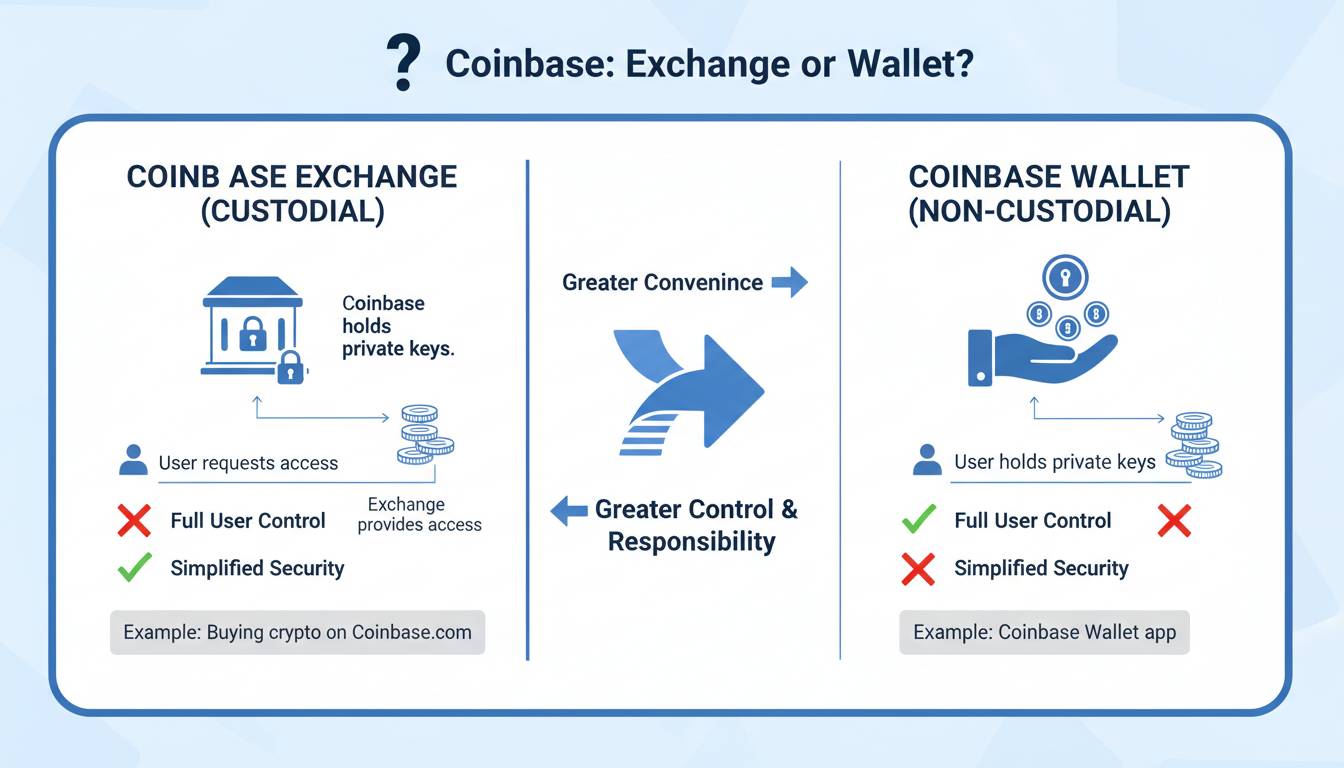
The short answer: Coinbase is primarily a cryptocurrency exchange, not a wallet. However, Coinbase does offer a separate product called Coinbase Wallet, which is a fully functional non-custodial cryptocurrency wallet. Understanding the distinction between these two products is crucial for managing your crypto safely and effectively.
If you’re new to cryptocurrency, this distinction can feel confusing. After all, both products come from the same company and both allow you to hold cryptocurrency. But the differences between them have significant implications for security, control, and how you interact with the broader crypto ecosystem. This guide breaks down everything you need to know about Coinbase’s wallet offerings, how they work, and which option best suits your needs.
What Is Coinbase Actually?
Coinbase is one of the largest cryptocurrency exchanges in the United States, founded in 2012 by Brian Armstrong and Fred Ehrsam. The company went public on NASDAQ in April 2021 under the ticker symbol COIN, making it the first major U.S. cryptocurrency exchange to list on a traditional stock exchange.
As an exchange, Coinbase functions as a platform where users can buy, sell, and trade cryptocurrencies. When you create a Coinbase account and purchase Bitcoin, Ethereum, or other cryptocurrencies, those assets are held in a custodial account controlled by Coinbase. This means Coinbase holds the private keys to your crypto assets, not you.
Key characteristics of Coinbase the exchange:
- Users can buy and sell cryptocurrencies using fiat currency (USD, EUR, etc.)
- The platform acts as an intermediary, holding user funds
- Coinbase manages security, accounts, and private keys
- Users can withdraw funds to external wallets
- The exchange supports hundreds of cryptocurrencies
- It operates under strict U.S. regulatory oversight
When you keep crypto on Coinbase’s exchange platform, you’re essentially trusting Coinbase to secure your assets. This is known as a custodial arrangement, where a third party (in this case, Coinbase) controls access to your funds.
Understanding Coinbase Wallet
Coinbase Wallet is a separate product from the Coinbase exchange. Launched as a standalone application, Coinbase Wallet is a non-custodial cryptocurrency wallet that gives users complete control over their private keys and, consequently, their funds.
Unlike the Coinbase exchange, Coinbase Wallet does not hold your cryptocurrency. Instead, it stores your private keys locally on your device, allowing you to maintain full ownership and control of your digital assets. When you use Coinbase Wallet, you’re interacting directly with the blockchain, not through Coinbase’s servers.
Coinbase Wallet features include:
- Non-custodial design: You and only you control your private keys
- Support for multiple blockchains: Ethereum, Bitcoin, Solana, Polygon, and others
- Decentralized application (dApp) browser: Access DeFi protocols and NFT marketplaces
- Integration with hardware wallets: Compatible with Ledger and other hardware wallets
- Token management: Hold thousands of different tokens and NFTs
- Seed phrase backup: Recovery phrase to restore access if you lose your device
The wallet is available as a mobile app (iOS and Android) and as a browser extension for Chrome, Brave, and Edge. It’s important to note that Coinbase Wallet can be used independently—you don’t even need a Coinbase account to download and use it.
Custodial vs. Non-Custodial Wallets Explained
To fully understand whether Coinbase is a wallet, you need to grasp the fundamental difference between custodial and non-custodial solutions.
What Is a Custodial Wallet?
A custodial wallet is a type of cryptocurrency wallet where a third party holds your private keys on your behalf. When you use Coinbase’s exchange platform, you’re using a custodial wallet. You can log in, view your balance, and execute transactions, but you cannot directly access the blockchain or control your private keys.
Advantages of custodial wallets:
- Easier for beginners to use
- Password recovery through customer support
- No risk of losing access due to lost seed phrases
- Built-in insurance coverage (for USD balances on Coinbase)
- Simpler buying and selling process
Disadvantages of custodial wallets:
- You don’t truly own your crypto—you’re an IOU from the custodian
- Your account can be frozen or limited
- You’re exposed to counterparty risk (if Coinbase is hacked or goes bankrupt)
- Limited interaction with decentralized applications
- Privacy concerns—transactions can be monitored
What Is a Non-Custodial Wallet?
A non-custodial wallet gives you complete control over your private keys and, therefore, your cryptocurrency. When you use Coinbase Wallet, your private keys are generated and stored on your device. Only you can authorize transactions, and no third party can access your funds.
Advantages of non-custodial wallets:
- True ownership of your crypto assets
- No counterparty risk—you don’t rely on any company
- Direct interaction with the blockchain and dApps
- Enhanced privacy—no third party monitors your transactions
- Access to DeFi protocols, NFTs, and Web3 applications
Disadvantages of non-custodial wallets:
- If you lose your device and seed phrase, your funds are gone forever
- No customer support to recover lost accounts
- More responsibility on the user to secure their assets
- Potentially more complex user interface
Key Differences Between Coinbase Exchange and Coinbase Wallet
Understanding the practical differences between these two products helps you make informed decisions about where to store your cryptocurrency.
| Feature | Coinbase Exchange | Coinbase Wallet |
|---|---|---|
| Type | Custodial exchange/wallet | Non-custodial wallet |
| Private Keys | Held by Coinbase | Held by user |
| Control | Coinbase controls funds | User controls funds |
| Recovery | Password reset available | Seed phrase required |
| Supported Assets | Coinbase-listed assets | Multiple blockchains |
| dApp Access | Limited | Full access |
| Insurance | USD balance insured | Not insured |
| Ease of Use | Beginner-friendly | Intermediate-friendly |
When you buy crypto on Coinbase’s exchange, you’re purchasing through their platform, and your assets are held in your Coinbase account. When you use Coinbase Wallet, you’re setting up a self-custody wallet where you manage everything independently.
Many experienced crypto users employ both: keeping funds they actively trade on the Coinbase exchange while moving long-term holdings to Coinbase Wallet or other non-custodial solutions.
When to Use Each Product
Use Coinbase Exchange When:
You’re new to cryptocurrency. The Coinbase exchange offers an intuitive interface, easy bank transfers, and straightforward purchasing options. If you’re just starting and want to buy your first Bitcoin or Ethereum, the exchange is the simpler choice.
You want to trade frequently. If you’re actively buying and selling crypto, the exchange’s liquidity and integrated trading features make more sense than constantly transferring between wallets.
You want customer support. With a custodial account, you can contact Coinbase support if you encounter problems—something impossible with non-custodial wallets.
You prefer convenience over control. For many users, the tradeoff of not controlling private keys is worth the simplicity and support access.
Use Coinbase Wallet When:
You want true ownership. If you believe in the principle of “not your keys, not your crypto,” Coinbase Wallet gives you direct control.
You’re interacting with DeFi. Decentralized finance applications, NFT marketplaces, and Web3 dApps require a non-custodial wallet to sign transactions directly.
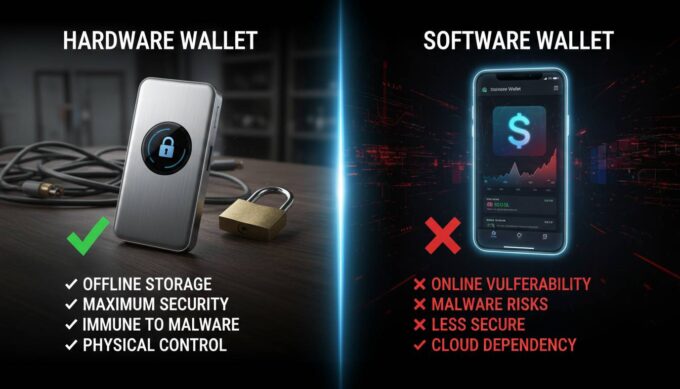
You’re storing crypto long-term. Hardware wallets and software wallets like Coinbase Wallet are generally considered safer for assets you don’t plan to trade frequently.
You value privacy. Non-custodial wallets offer more privacy since transactions aren’t processed through a centralized entity that knows your identity.
Security Considerations
Both Coinbase exchange and Coinbase Wallet have security features, but their threat models differ significantly.
Coinbase Exchange Security
Coinbase invests heavily in security infrastructure. The platform stores the majority of user funds offline in cold storage, uses two-factor authentication, and carries crime insurance that covers digital currency stored on their systems. However, you’re still exposed to risks like account takeover through phishing or SIM swapping.
The company has also faced regulatory scrutiny and has experienced outages during high-volatility periods, preventing users from accessing their funds when they needed to. This centralized risk is inherent to custodial platforms.
Coinbase Wallet Security
With Coinbase Wallet, security responsibility falls entirely on you. Your private keys exist only on your device—if someone gains access to your device or your seed phrase, they can transfer all your funds. There is no customer support to call, no insurance to claim, and no way to reverse a transaction.
Best practices for Coinbase Wallet include:
- Never share your 12-word seed phrase with anyone
- Store your seed phrase offline (paper, metal backup)
- Enable biometric authentication on your device
- Only connect to trusted dApps
- Consider using a hardware wallet for large holdings
- Never enter your seed phrase into any website or app that asks for it
Which Should You Choose?
The answer depends on your experience level, goals, and philosophy around cryptocurrency ownership.
Beginners should start with Coinbase’s exchange. The ability to easily buy crypto with a bank account, the intuitive interface, and access to customer support make it the right choice when you’re learning the ropes.
Intermediate users who want to explore DeFi, NFTs, or Web3 applications should set up Coinbase Wallet. It provides the necessary bridge to the decentralized crypto ecosystem while maintaining a familiar brand.
Advanced users often use both products strategically—keeping trading funds on the exchange while securing long-term holdings in non-custodial wallets. Many also add hardware wallets for maximum security.
The most important thing is understanding that these are fundamentally different products serving different purposes. Coinbase the exchange is a custodian that holds your crypto. Coinbase Wallet is a tool that lets you hold your own crypto. Both have legitimate use cases, and many cryptocurrency holders use both in their overall strategy.
Frequently Asked Questions
Can I use Coinbase Wallet without a Coinbase account?
Yes, you can download and use Coinbase Wallet completely independently. You don’t need a Coinbase exchange account to use the wallet. However, you can link the two if you want to easily transfer funds between the exchange and your non-custodial wallet.
Is Coinbase Wallet the same as Coinbase?
No. Coinbase is a centralized cryptocurrency exchange where you buy, sell, and trade crypto, and Coinbase holds your funds. Coinbase Wallet is a separate non-custodial wallet application where you control your own private keys. Both are products offered by Coinbase, but they function differently.
Which is safer: Coinbase exchange or Coinbase Wallet?
Neither is universally “safer”—they have different security models. Coinbase exchange has professional security infrastructure and insurance but exposes you to counterparty risk. Coinbase Wallet gives you complete control but places full security responsibility on you. For long-term storage of significant amounts, hardware wallets are generally considered the safest option.
Can I transfer crypto from Coinbase to Coinbase Wallet?
Yes, you can transfer cryptocurrency from your Coinbase exchange account to your Coinbase Wallet. Both support the same cryptocurrencies, so you can send assets between them using standard blockchain transactions. Just make sure to use the correct blockchain network when transferring.
Does Coinbase Wallet have fees?
Coinbase Wallet itself doesn’t charge fees for holding crypto or receiving transfers. However, when you make transactions on the blockchain (sending funds, swapping tokens, interacting with dApps), you’ll pay network fees (gas fees) to the blockchain. Additionally, if you use certain swap features within the wallet, there may be a spread or facilitation fee.
What happens to my crypto if Coinbase goes out of business?
If Coinbase (the exchange) were to go bankrupt, your funds held in your Coinbase account would become part of the bankruptcy estate, and you would be a creditor. This is a key reason many experienced crypto holders use non-custodial wallets like Coinbase Wallet for funds they don’t actively trade—you eliminate this counterparty risk entirely.








Leave a comment