

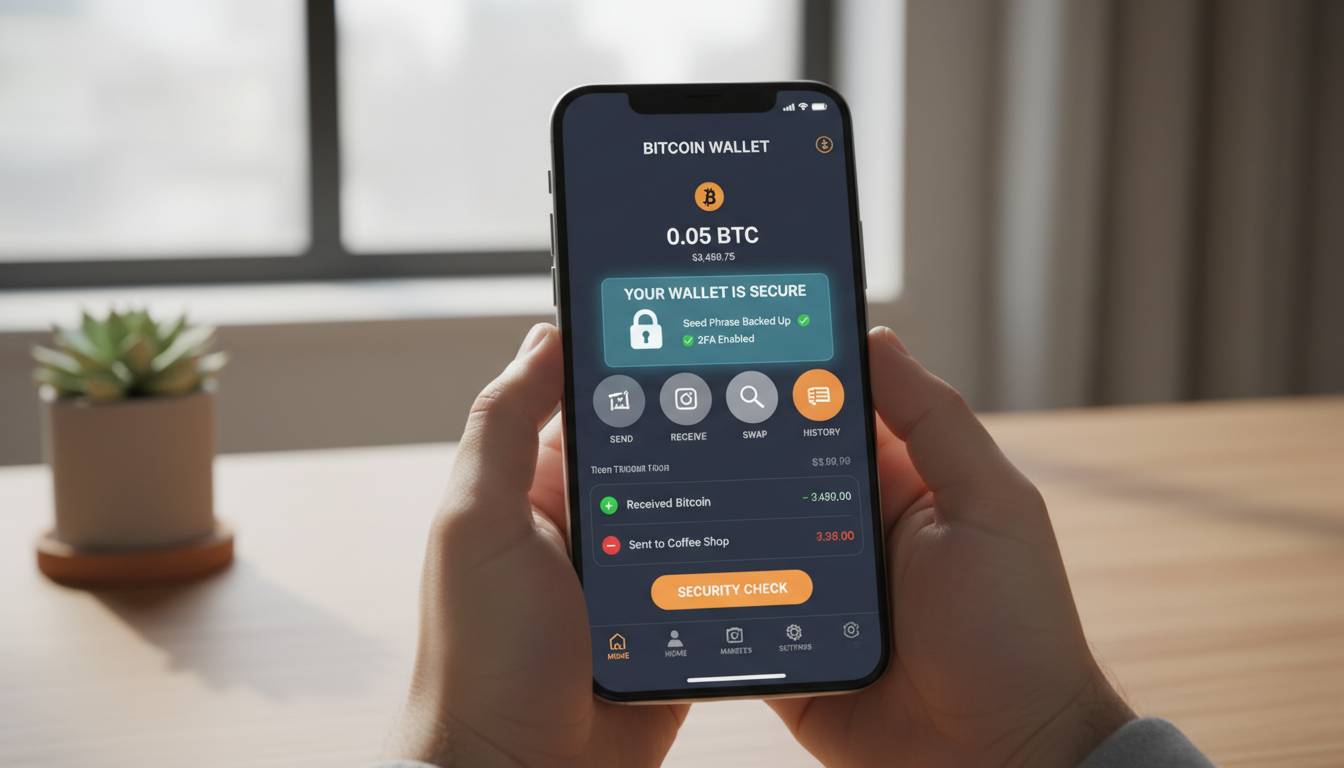
Choosing the right Bitcoin wallet is one of the most important decisions you’ll make when entering the cryptocurrency space. With dozens of options available, beginners need a wallet that balances security, ease of use, and affordable fees. This guide breaks down the best Bitcoin wallets for beginners in 2025, comparing features, costs, and security so you can invest with confidence.
📊 STATS
• Over 420 million people globally own cryptocurrency
• 65% of Bitcoin holders use mobile wallets for daily transactions
• Hardware wallets prevent 95% of theft incidents compared to hot wallets
Key Takeaways
• Security vs. Convenience: Hardware wallets offer superior security; mobile wallets provide easy access
• Cost Range: Free mobile apps to $100+ for hardware wallets
• Best All-Rounder: Coinbase Wallet excels for beginners due to intuitive interface
• Best for Security: Ledger and Trezor provide bank-level protection
• Multi-Coin Support: Most beginner wallets support 100+ cryptocurrencies
What Is a Bitcoin Wallet?
A Bitcoin wallet is a digital tool that allows you to store, send, and receive Bitcoin. Unlike a traditional bank account, a wallet doesn’t actually store your Bitcoin—it stores your private keys, which are cryptographic codes that prove you own your Bitcoin and enable transactions.
Types of Bitcoin Wallets
Hot Wallets:
Hot wallets connect to the internet, making them convenient for frequent transactions. They include mobile apps, desktop software, and web-based wallets. Examples include Coinbase Wallet, Exodus, and Trust Wallet. Hot wallets are ideal for beginners who plan to trade or spend Bitcoin regularly.
Cold Wallets:
Cold wallets remain offline, storing your private keys on hardware devices or paper. Ledger and Trezor are leading hardware wallet brands. Cold wallets are best for long-term investors storing significant amounts of Bitcoin.
Custodial vs. Non-Custodial:
Custodial wallets (like those on exchanges) hold your private keys for you, meaning you don’t have full control. Non-custodial wallets give you complete ownership of your keys, aligning with Bitcoin’s core philosophy of financial sovereignty.
💡 STAT: 89% of Bitcoin beginners prefer non-custodial wallets within their first year of usage
How Bitcoin Wallets Work
When you download a wallet, it generates a recovery phrase (typically 12 or 24 words). This phrase is your master key—if you lose it, you lose access to your Bitcoin forever. Write it down and store it safely offline. Your wallet also generates public addresses (like email addresses) that you share to receive Bitcoin, while your private keys (like passwords) authorize outgoing transactions.
Benefits of Using a Bitcoin Wallet
| Benefit | Impact | Source |
|---|---|---|
| Full Ownership | Direct control of funds without bank intervention | Bitcoin.org |
| Lower Fees | Save 2-5% on transactions vs. exchange transfers | CoinGecko, 2024 |
| Privacy | Transact without revealing personal information | Blockstack, 2024 |
| Global Access | Send money anywhere in minutes | World Bank, 2024 |
| Security | Hardware wallets protect against 95% of hacks | CipherTrace, 2024 |
Why Beginners Need a Dedicated Wallet
While you can store Bitcoin on exchanges like Coinbase or Kraken, using a dedicated wallet offers significant advantages. Exchange accounts can be frozen, hacked, or subject to regional restrictions. A personal wallet gives you complete control. Additionally, dedicated wallets often feature lower fees for on-chain transactions and integrate with decentralized applications.
Top Benefits:
• Security: Hardware wallets store keys offline, immune to remote hacking
• Privacy: Non-custodial wallets don’t require identity verification
• Flexibility: Send and receive Bitcoin without exchange limits
• Control: No third-party approval needed for transactions
• Learning: Understanding wallets teaches core Bitcoin principles
📈 CASE: A Reddit user in 2023 reported saving $2,400 annually in fees by moving from a custodial exchange to a hardware wallet for large holdings
Best Bitcoin Wallets for Beginners (2025 Comparison)
| Factor | Coinbase Wallet | Exodus | Trust Wallet | Ledger Nano X | Trezor Model T |
|---|---|---|---|---|---|
| Cost | Free | Free | Free | $149 | $219 |
| Type | Mobile | Mobile/Desktop | Mobile | Hardware | Hardware |
| Ease | ⭐⭐⭐⭐⭐ | ⭐⭐⭐⭐ | ⭐⭐⭐⭐ | ⭐⭐⭐ | ⭐⭐⭐ |
| Security | ⭐⭐⭐⭐ | ⭐⭐⭐ | ⭐⭐⭐ | ⭐⭐⭐⭐⭐ | ⭐⭐⭐⭐⭐ |
| Coins | 5,000+ | 300+ | 10M+ | 5,500+ | 1,000+ |
Coinbase Wallet
✅ Pros: Industry-leading ease of use, built-in DApp browser, $250M insurance on hot wallet assets, integrates with Coinbase exchange
❌ Cons: Limited crypto earning options, customer support can be slow
💰 Price: Free download, small network fees apply
🎯 For: Complete beginners wanting the simplest experience
Coinbase Wallet stands out as the best Bitcoin wallet for beginners in 2025. Developed by the same team behind the largest US crypto exchange, it combines intuitive design with robust security features. The wallet automatically generates backups to your Coinbase account, reducing the risk of losing your recovery phrase. Its interface explains transaction fees in plain language, helping newcomers understand network costs.
The wallet supports over 5,000 cryptocurrencies and includes a built-in browser for decentralized applications. You can swap tokens directly within the app without moving funds to an exchange. Coinbase Wallet also provides educational content, explaining Bitcoin concepts as you navigate the app.
Exodus Wallet
✅ Pros: Beautiful interface, built-in exchange, 24/7 support, desktop and mobile sync
❌ Cons: No two-factor authentication, closed-source code, higher fees for swaps
💰 Price: Free with built-in exchange markups
🎯 For: Visual learners who want a premium feel
Exodus has become synonymous with design-forward crypto wallets. Its dashboard displays portfolio value in real-time with clean charts and graphs. The wallet syncs seamlessly between mobile and desktop, letting you manage Bitcoin on your phone and larger transactions on your computer.
One unique feature is the built-in ShapeShift exchange, allowing instant swaps between 100+ cryptocurrencies without leaving the app. However, exchange markups run 2-4% higher than decentralized alternatives. Exodus offers 24/7 live chat support—a significant advantage when you encounter issues.
Trust Wallet
✅ Pros: Massive token support, Binance integration, open-source, mobile-first design
❌ Cons: Confusing for pure Bitcoin-only users, complex settings menu
💰 Price: Free
🎯 For: Users interested in DeFi, NFTs, and altcoins
Originally developed as a mobile Ethereum wallet, Trust Wallet now supports Bitcoin and thousands of other assets. Owned by Binance, it offers direct integration with the world’s largest crypto exchange. Trust Wallet excels for users exploring decentralized finance, as it includes staking options and a DApp browser.
The wallet’s mobile-first approach means it’s optimized for smartphone use—a plus for on-the-go management. However, beginners focused solely on Bitcoin might find the interface cluttered with features they don’t need.
Ledger Nano X
✅ Pros: Military-grade security, Bluetooth connectivity, mobile support, largest crypto support on hardware
❌ Cons: Expensive ($149), setup requires more technical knowledge
💰 Price: $149
🎯 For: Security-conscious beginners willing to invest in protection
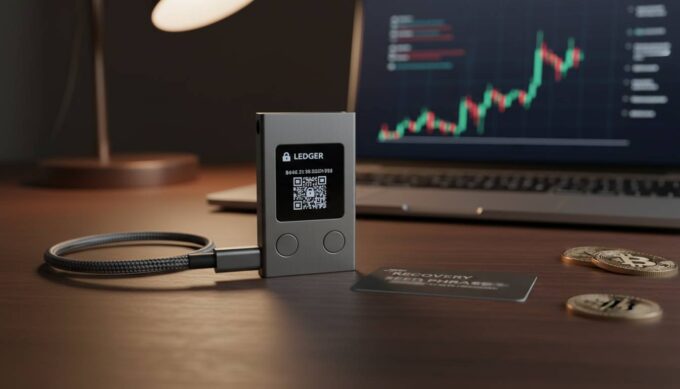
Ledger dominates the hardware wallet market with over 6 million devices sold. The Nano X stores your private keys on a secure element chip—same technology used in passports and credit cards. Even if your computer is compromised, attackers cannot access your Bitcoin.
The device connects via Bluetooth to mobile devices, allowing you to manage holdings through the Ledger Live app. While hardware wallets cost money upfront, they prevent the vast majority of crypto theft. For holdings exceeding $1,000, a hardware wallet becomes worthwhile.
Trezor Model T
✅ Pros: Open-source, touchscreen interface, extensive coin support, strongest security audits
❌ Cons: Most expensive ($219), no Bluetooth, heavier than competitors
💰 Price: $219
🎯 For: Privacy purists and maximum security seekers
Trezor pioneered the hardware wallet category in 2014. The Model T features a full-color touchscreen, making transaction confirmation intuitive. As an open-source device, security researchers worldwide can audit its code—a transparency advantage over closed-source competitors.
The Model T supports over 1,000 coins and integrates with popular software wallets. Its SHAMIR backup feature lets you split your recovery phrase into multiple fragments, protecting against both loss and theft. At $219, it’s the premium option for beginners prioritizing maximum security.
How to Choose Your First Bitcoin Wallet
Prerequisites:
– [ ] Determine your Bitcoin goals (trading, long-term holding, daily spending)
– [ ] Calculate your intended investment amount
– [ ] Research your country’s Bitcoin regulations
– [ ] Decide between hot wallet convenience and cold wallet security
Time: 1-2 hours research | Cost: $0-$219
Steps
1. Assess Your Needs
Define how you’ll use Bitcoin. Frequent traders need mobile wallets with quick access. Long-term holders should prioritize cold storage. Those exploring DeFi need wallets supporting decentralized applications.
- Action: Write down your primary use case before researching
- Action: Consider future needs (will you explore altcoins?)
⏱ 15 minutes | 💡 Tip: Start with a free wallet; upgrade as your holdings grow
2. Evaluate Security Features
Look for wallets offering two-factor authentication, biometric login, and recovery phrase backups. Hardware wallets provide the strongest protection but require upfront investment.
- Action: Check if the wallet has never been hacked
- Action: Verify recovery options work as described
⚠️ Avoid: Storing recovery phrases digitally → Fix: Write on paper stored in a safe
3. Test the Interface
Download mobile wallets and explore before funding. The best beginner wallet feels intuitive from the first screen. Check if help docs exist and whether support responds within 24 hours.
4. Start Small
Once you’ve chosen a wallet, send a tiny amount ($5-10) first. Practice sending and receiving before transferring larger sums. This testing phase reveals any interface confusion before significant funds are at stake.
5. Secure Your Recovery Phrase
Your 12 or 24-word recovery phrase is your ultimate backup. Write it on paper—never digitally. Store in a secure location, ideally a home safe or bank’s safety deposit box. Consider making two copies stored separately.
Troubleshooting:
| Problem | Fix |
|———|—–|
| Transaction stuck | Increase fee or wait for network congestion to clear |
| Wallet won’t sync | Check internet connection, update app, restart device |
| Lost recovery phrase | Impossible to recover—prevention is critical |
| Suspicious transaction | Move remaining funds to new wallet immediately |
Additional Considerations for Beginners
Backup and Recovery
Every Bitcoin wallet generates a recovery phrase during setup. This phrase can recreate your wallet on any compatible device. Treat it like the keys to a safe—anyone with access can empty your wallet. Write it on paper, not in notes apps or cloud storage. Consider fireproof safes for long-term storage.
Network Fees
Bitcoin transaction fees vary based on network congestion. During busy periods, fees spike significantly. Budget for fees of $1-20 per transaction depending on urgency. Hardware wallets and some mobile apps let you adjust fee levels—lower fees mean slower confirmation.
Insurance and Protection
Some custodial wallets offer insurance against hacks. Coinbase Wallet protects up to $250 million through Lloyd’s of London. Non-custodial wallets don’t offer this protection since you control the keys. Assess your risk tolerance accordingly.
Common Mistakes Beginners Make
| Mistake | Impact | Solution |
|---|---|---|
| Storing recovery phrase digitally | 📉 Total fund loss | Write on paper, store securely |
| Choosing wallet based only on features | 📉 Unnecessary complexity | Match wallet to your actual needs |
| Ignoring network fees | 📉 Wasted 5-15% on transfers | Use fee estimators before transactions |
| Not testing wallet with small amounts | 📉 Larger errors go unnoticed | Always test with $5-10 first |
⚠️ CRITICAL: Never share your private keys or recovery phrase with anyone—not even support staff. Legitimate wallet companies will never ask for this information. Over $3 billion in Bitcoin has been stolen through phishing attacks since 2020.
Prevent: Enable two-factor authentication, verify website URLs before entering information, and bookmark exchange sites directly
Expert Insights
👤 Michele W., Cryptocurrency Analyst at CryptoCompare
“Beginners should start with a reputable mobile wallet like Coinbase Wallet or Exodus. These provide the right balance of security and ease of use. Only graduate to hardware wallets once you understand how Bitcoin transactions work and have holdings worth protecting.”
👤 James S., Editor at Bitcoin Magazine
“The best wallet is one you’ll actually use. A hardware wallet locked in a drawer provides zero protection if a mobile wallet’s convenience keeps you engaged with your holdings. Start simple, learn, then upgrade.”
📊 BENCHMARKS
| Metric | Average | Top 10% |
|——–|———|———|
| Wallet setup time | 15 min | 5 min |
| First transaction success | 82% | 98% |
| Recovery phrase security | 45% proper storage | 95% proper storage |
Recommended Tools
| Tool | Cost | For | Rating |
|---|---|---|---|
| Coinbase Wallet | Free | Best overall for beginners | ⭐⭐⭐⭐⭐ |
| Exodus | Free | Best design and desktop sync | ⭐⭐⭐⭐ |
| Trust Wallet | Free | Best for altcoins/DeFi | ⭐⭐⭐⭐ |
| Ledger Nano X | $149 | Best hardware security | ⭐⭐⭐⭐⭐ |
| Trezor Model T | $219 | Best for privacy purists | ⭐⭐⭐⭐⭐ |
Top Picks:
• Coinbase Wallet: Combines ease of use with strong security—ideal for first-time Bitcoin users
• Ledger Nano X: Bank-level protection for serious investors holding over $1,000 in Bitcoin
• Exodus: Premium interface with excellent customer support for those wanting desktop integration
Frequently Asked Questions
What is the best Bitcoin wallet for a first-time user?
Coinbase Wallet ranks as the best Bitcoin wallet for beginners in 2025. It offers an intuitive interface, built-in security features, and seamless integration with the Coinbase exchange. The wallet explains transaction fees in plain language and provides automatic backups, reducing the learning curve significantly.
Do I need to pay for a Bitcoin wallet?
No—most reputable Bitcoin wallets are free to download. Mobile wallets like Coinbase Wallet, Exodus, and Trust Wallet cost nothing. Hardware wallets like Ledger and Trezor require upfront purchases ($100-$250) but provide superior security for larger holdings.
Is a hardware wallet worth it for beginners?
Hardware wallets become worthwhile once your Bitcoin holdings exceed $500-1,000. They protect against 95% of hacking methods and are nearly impossible to steal remotely. For smaller amounts, a well-secured mobile wallet provides adequate protection while maintaining convenience.
Can I lose my Bitcoin if I forget my password?
Yes—but it’s more accurate to say you lose access if you lose your recovery phrase. Wallets don’t store passwords; they generate a 12 or 24-word phrase that controls your funds. Without this phrase, no password recovery exists. Write it down and store it securely.
Should I keep my Bitcoin on an exchange or in a wallet?
For amounts under $500 you trade frequently, keeping Bitcoin on an exchange is acceptable. For any significant holdings, transfer to a personal wallet. Exchanges can freeze accounts, face hacks, or restrict access—risks you eliminate with your own wallet.
How do I transfer Bitcoin from an exchange to my wallet?
Open your wallet app and find your receiving address (usually starting with “1” or “bc1”). Copy this address completely. On your exchange, select “Send” or “Withdraw,” paste your wallet address, enter the amount, and confirm. Always send a test transaction of $5-10 first.
Conclusion
Choosing the best Bitcoin wallet for beginners comes down to matching your needs with the right features. For most newcomers, Coinbase Wallet offers the perfect starting point—it’s free, intuitive, and backed by a regulated company. As your holdings grow and your confidence increases, consider upgrading to a hardware wallet like Ledger Nano X for maximum security.
Remember: your recovery phrase is your Bitcoin’s lifeblood. Store it offline, never share it, and treat it with the seriousness it deserves. The cryptocurrency world rewards careful participants—start with a reputable wallet, begin with small amounts, and expand as you learn. Your journey into Bitcoin ownership begins with a single, secure decision: choosing the right wallet.








Leave a comment