

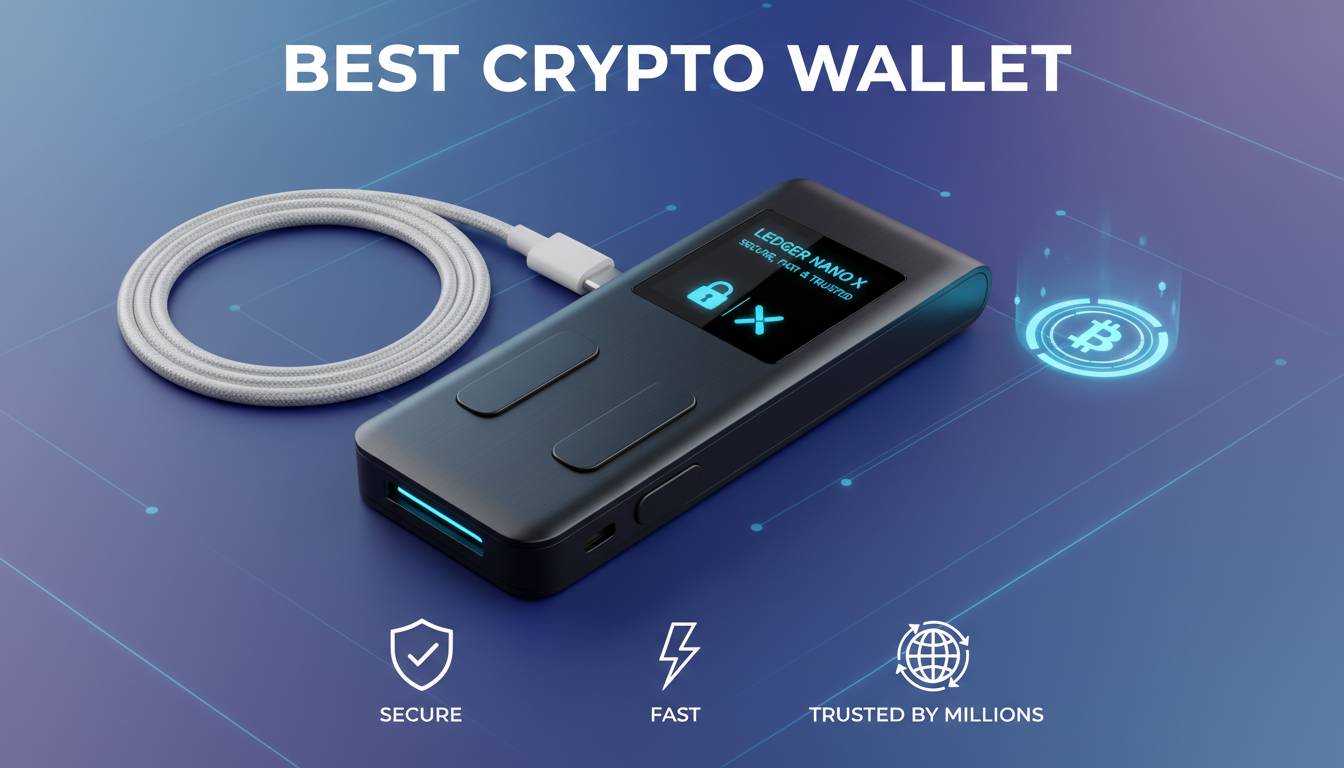
A crypto wallet is your gateway to the cryptocurrency ecosystem—it stores your private keys, allows you to send and receive digital assets, and serves as the interface between you and the blockchain. Whether you’re holding Bitcoin, Ethereum, or thousands of altcoins, choosing the right wallet determines not just convenience but the security of your entire portfolio. The best crypto wallet for you depends on your experience level, the assets you hold, and how you plan to use them.
Key Insights
– Over 420 million people worldwide use cryptocurrency wallets as of 2024
– Hardware wallets prevent approximately 90% of hacking-related theft compared to hot wallets
– The US cryptocurrency market accounts for roughly 15% of global crypto ownership
– Mobile wallets now process over $50 billion in monthly transactions
This guide examines the leading crypto wallets available in the US market, breaking down their security features, fee structures, supported assets, and ideal use cases so you can make an informed decision.
Understanding Crypto Wallet Types
Before examining specific products, it’s essential to understand the fundamental distinction between wallet types. Crypto wallets don’t actually store your coins—they store your private keys, which are mathematical codes that prove ownership of your cryptocurrency and authorize transactions.
Hot Wallets vs. Cold Wallets
Hot wallets connect to the internet and include mobile apps, browser extensions, and desktop software. They offer convenience for frequent trading and transactions but carry inherent security risks from constant internet connectivity. Popular hot wallets include MetaMask, Coinbase Wallet, and Exodus.
Cold wallets remain offline until needed, storing your private keys on physical devices. This air-gapped approach provides superior security against hacking attempts and is recommended for holding significant crypto holdings. Ledger and Trezor dominate this category.
Custodial vs. non-custodial represents another critical distinction. Custodial wallets (like those offered by exchanges such as Coinbase or Kraken) hold your private keys on your behalf, similar to a bank holding your money. Non-custodial wallets give you complete control over your keys, meaning you alone can access your funds—but you also bear full responsibility for security and losing access if you forget your recovery phrase.
Best Hardware Wallets for Maximum Security
Hardware wallets cost between $79 and $249 but provide peace of mind that software solutions cannot match. These devices store your private keys in secure chips isolated from your computer or phone, making them resistant to malware and remote attacks.
Ledger Nano X
The Ledger Nano X represents the current standard for consumer hardware wallets, featuring Bluetooth connectivity that allows you to manage your portfolio from your mobile device while maintaining security. The device supports over 5,500 cryptocurrencies and tokens, including all major coins and most ERC-20 tokens.
Security features include:
– Secure Element (SE) chip with CC EAL5+ certification
– PIN code protection with brute-force protection
– Recovery phrase encryption
– Physical confirmation required for transactions
The Ledger Live software provides an intuitive interface for staking, swapping, and checking your portfolio, though some advanced DeFi features require connecting to third-party interfaces. At $149, the Nano X sits in the mid-range category, offering Bluetooth functionality that the cheaper Ledger Nano S Plus lacks.
Trezor Model T
Trezor’s flagship Model T (priced at $199) takes a different approach by prioritizing open-source transparency. Unlike Ledger’s proprietary operating system, Trezor’s firmware is fully open-source, allowing security researchers to audit the code independently. The device features a full-color touchscreen that simplifies navigation and transaction verification.
The Model T supports approximately 8,000 cryptocurrencies and integrates with popular software wallets including MetaMask and Exodus. Its Shamir Backup feature allows you to split your recovery phrase into multiple shares, providing redundancy against loss without compromising security.
One trade-off: Trezor devices lack Bluetooth connectivity, meaning all transactions require physical connection to a computer via USB. This limitation actually enhances security by eliminating another potential attack vector.
Best Software Wallets for Daily Use
Software wallets excel for users who trade frequently, interact with DeFi protocols, or need quick access to their funds. These wallets prioritize convenience while offering varying degrees of security.
MetaMask
MetaMask has become the de facto standard for Ethereum and EVM-compatible chains, with over 30 million monthly active users. Available as a browser extension and mobile app, MetaMask serves as your portal to decentralized exchanges, NFT marketplaces, and Ethereum-based applications.
The wallet is free to download and use, though network fees (gas) apply to transactions. MetaMask’s strength lies in its ecosystem integration—you can connect to Uniswap to trade, Opensea to buy NFTs, and thousands of dApps without leaving the wallet interface.
Key considerations:
– Non-custodial: you control your keys and recovery phrase
– Browser extension available for Chrome, Firefox, Brave, and Edge
– Mobile app includes biometric authentication (Face ID, fingerprint)
– No built-in fiat on-ramp; requires separate exchange account to buy crypto
MetaMask works excellently for Ethereum, Polygon, Arbitrum, and other EVM chains, but offers limited support for Bitcoin and non-EVM cryptocurrencies.
Coinbase Wallet
Despite its name, Coinbase Wallet is a separate product from the Coinbase exchange—it’s a non-custodial wallet that gives you complete control over your private keys. The wallet integrates seamlessly with the Coinbase exchange, allowing you to easily move funds between your exchange account and personal wallet.
Coinbase Wallet supports over 100,000 cryptocurrencies and tokens, making it one of the most comprehensive options for holding diverse portfolios. Its streamlined interface appeals to beginners while offering advanced features like Web3 browsing and dApp integration.
The wallet is free, though standard network fees apply to transactions. One standout feature is the ability to buy crypto directly with fiat using a connected bank account or debit card—a convenience that distinguishes it from purely non-custodial alternatives.
Exodus
Exodus differentiates itself through design excellence—a polished interface that makes crypto management feel approachable rather than technical. The wallet supports over 350 cryptocurrencies and includes built-in exchange features, allowing you to swap assets without leaving the application.
Desktop users benefit from the most complete experience, while mobile apps provide on-the-go access. Exodus charges a 1% fee on in-wallet exchanges, which is competitive with decentralized exchanges while offering superior convenience.
The wallet operates on a subscription model for some premium features, though basic functionality remains free. A unique feature is the Exodus Trezor integration, allowing you to use a Trezor hardware wallet with Exodus software for enhanced security.
Security Best Practices Regardless of Wallet Choice
Your wallet’s security depends as much on your practices as the wallet itself. Even the most expensive hardware wallet provides little protection if you fall for a phishing scam or mishandle your recovery phrase.
Critical security principles:
Never share your recovery phrase with anyone. Legitimate wallets will never ask for your seed phrase. Store your recovery phrase offline—write it on paper and keep it in a secure location, or consider a metal backup designed to survive fires and floods.
Verify transaction addresses carefully. Malware can modify copied addresses, so always verify the first and last few characters match before sending. Hardware wallets display addresses on their physical screens, providing an additional verification layer.
Use separate wallets for different purposes. Keep the majority of your holdings in cold storage while using a hot wallet for daily transactions. This compartmentalization limits your exposure if the hot wallet is compromised.
Enable all available security features. Biometric authentication, PIN codes, and multi-factor authentication add layers of protection. Review your wallet’s security settings and enable everything available.
Comparing Costs and Features
| Wallet | Type | Cost | Supported Assets | Best For |
|---|---|---|---|---|
| Ledger Nano X | Hardware | $149 | 5,500+ | Long-term holding, high-value portfolios |
| Trezor Model T | Hardware | $199 | 8,000+ | Open-source enthusiasts, maximal security |
| MetaMask | Software (hot) | Free | 1,000+ | DeFi users, Ethereum ecosystem |
| Coinbase Wallet | Software (hot) | Free | 100,000+ | Beginners, Coinbase users |
| Exodus | Software (hot) | Free (1% swap fee) | 350+ | Design-conscious users, casual holders |
Hardware wallets require a one-time purchase but save money on fees for large portfolios. Software wallets are free but carry ongoing security trade-offs.
Making Your Final Decision
Choosing the best crypto wallet ultimately depends on your specific situation. Beginners who want simplicity and easy fiat on-ramps might prefer Coinbase Wallet. DeFi enthusiasts and NFT collectors will find MetaMask indispensable. Those holding substantial crypto assets should seriously consider investing in a hardware wallet like Ledger or Trezor.
Consider these decision factors:
Holding size matters. If you hold more than a few thousand dollars in cryptocurrency, a hardware wallet’s cost is justified by the security it provides. The potential loss from hacking far exceeds the $150 investment in a quality hardware wallet.
Usage patterns influence choice. Frequent traders need hot wallet convenience. Long-term holders benefit from cold storage security. Many experienced users maintain both—a hardware wallet for savings and a software wallet for active trading.
Chain compatibility narrows options. If you primarily interact with Ethereum and EVM chains, MetaMask or Coinbase Wallet serve well. Bitcoin holders need wallets explicitly supporting BTC. Those with diverse portfolios across many chains benefit from multi-chain support.
Frequently Asked Questions
What is the safest crypto wallet for beginners?
For beginners holding moderate amounts, Coinbase Wallet offers an excellent balance of security and ease of use. It provides non-custodial control while maintaining an intuitive interface. However, anyone holding more than $1,000 in crypto should eventually migrate to a hardware wallet for enhanced security.
Can I use one wallet for Bitcoin and Ethereum?
Yes, but it depends on the wallet. Hardware wallets like Ledger and Trezor support both Bitcoin and Ethereum along with many other chains. Software wallets like Exodus and Coinbase Wallet also support multiple blockchains. MetaMask primarily focuses on Ethereum and EVM-compatible chains, though it can display ERC-20 representations of Bitcoin.
What happens if I lose my hardware wallet?
Nothing—your crypto remains safe as long as you have your 24-word recovery phrase. You can purchase a new Ledger or Trezor device, enter your recovery phrase during setup, and restore complete access to your funds. This is why securely storing your recovery phrase is absolutely critical.
Are crypto wallets legal in the United States?
Yes, using crypto wallets is completely legal in the United States. However, you must report cryptocurrency transactions to the IRS for tax purposes. The IRS treats cryptocurrency as property, not currency, meaning capital gains taxes apply when you sell, trade, or use crypto to make purchases.
How do I transfer crypto between wallets?
To transfer crypto, open your sending wallet, select the cryptocurrency and amount, and enter the recipient’s wallet address. Always double-check the address—cryptocurrency transactions are irreversible. For hardware wallets, confirm the address on the device’s screen before approving the transaction.
Do I need to verify my identity to use a crypto wallet?
Non-custodial software wallets like MetaMask, Exodus, and Trezor do not require identity verification because they don’t hold your funds. Custodial wallets offered by exchanges (like the Coinbase exchange wallet, not Coinbase Wallet the separate product) require identity verification due to banking regulations.
Conclusion
The best crypto wallet is the one that matches your specific needs, experience level, and holdings. For most users, a combination approach works best—maintain a hardware wallet for the majority of your holdings while using a software wallet for daily transactions and DeFi interactions.
Hardware wallets from Ledger and Trezor represent the gold standard for security, and the investment is justified for anyone serious about cryptocurrency. Software wallets continue improving their security features while offering unmatched convenience for active users.
Remember that wallet security ultimately rests on your practices. No device protects against phishing, careless address copying, or losing your recovery phrase. Take time to understand how your wallet works, enable all security features, and treat your recovery phrase with the importance it deserves.
The cryptocurrency ecosystem offers unprecedented financial freedom—but with that freedom comes personal responsibility. Choose your wallet wisely, follow security best practices, and your digital assets will remain safely under your control.




Leave a comment