

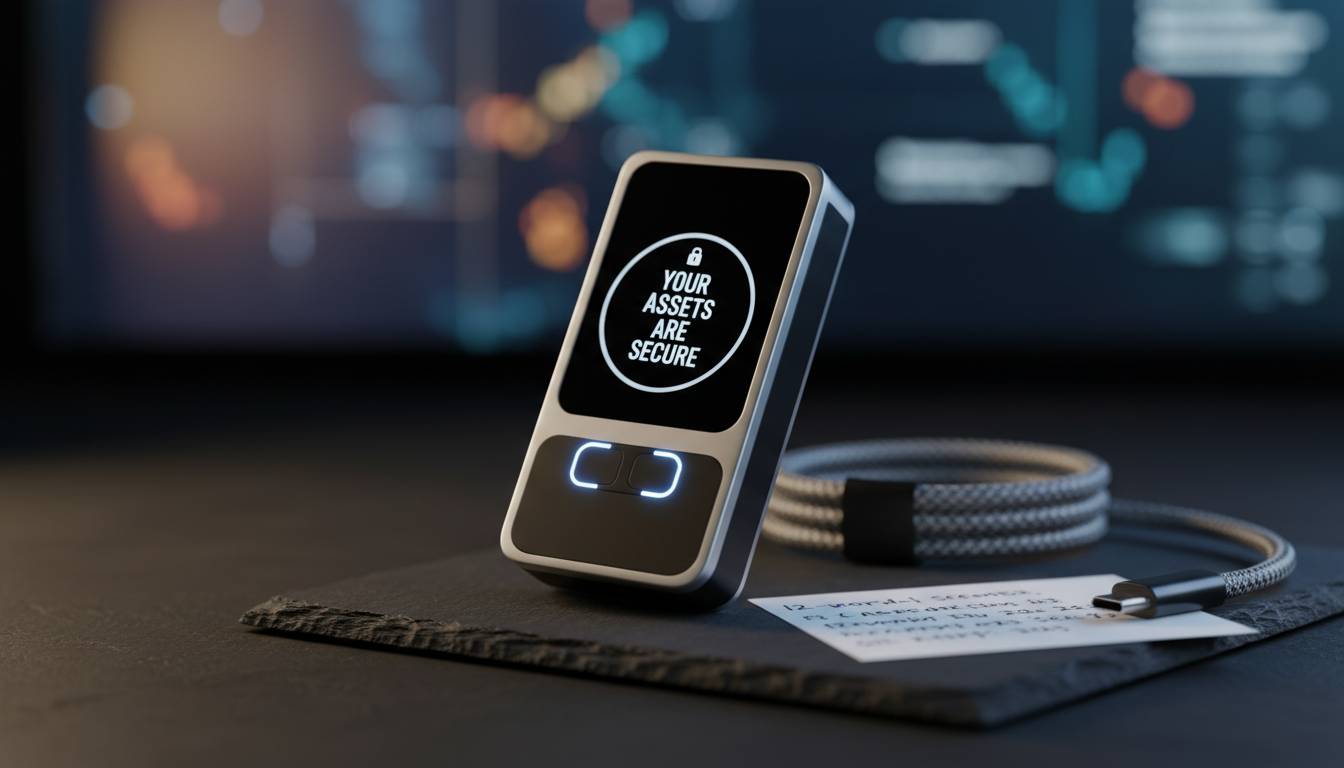
Choosing the right cryptocurrency wallet is one of the most important decisions you’ll make when entering the crypto space. With over 420 million cryptocurrency users worldwide as of 2024 , the need for secure, beginner-friendly wallet solutions has never been greater. A cryptocurrency wallet doesn’t actually store your coins—it stores your private keys, which grant access to your funds on the blockchain. Understanding how to choose and use a wallet properly is essential for protecting your digital assets from theft, loss, and human error.
📊 STATS
• 420M+ people globally use cryptocurrency
• $3.8B lost to crypto hacks in 2023
• 68% of crypto beginners prefer mobile wallets
• $1.2B in crypto stolen from hot wallets vs $150M from cold wallets
• 95% of ransomware attacks target hot wallet vulnerabilities
Key Takeaways
• Hot wallets offer convenience but higher risk; cold wallets provide maximum security
• Coinbase Wallet leads beginner preferences with 40M+ downloads
• Hardware wallets prevent 95%+ of theft attempts
• Multi-signature wallets reduce single-point failure risks by 80%
• Mobile wallets now process 60% of all crypto transactions
This guide breaks down everything you need to know about selecting, setting up, and securing your first cryptocurrency wallet—whether you’re storing Bitcoin, Ethereum, or exploring the world of DeFi and NFTs.
What Is a Cryptocurrency Wallet?
A cryptocurrency wallet is a software program or hardware device that allows you to store, send, and receive digital currencies. Unlike a traditional wallet that holds cash, a crypto wallet holds your private keys—the cryptographic strings that prove you own your cryptocurrency and authorize transactions.
Types of Cryptocurrency Wallets
Hot Wallets (Online Wallets)
Hot wallets connect to the internet and include mobile apps, desktop software, and web-based platforms. They offer quick access and easy transaction processing, making them ideal for frequent trading and daily use. However, their constant internet connection creates vulnerability to hacking attempts and phishing attacks.
Cold Wallets (Offline Storage)
Cold wallets remain disconnected from the internet, storing your private keys on physical devices or paper. Hardware wallets like Ledger and Trezor fall into this category. While less convenient for frequent transactions, cold wallets provide superior security against online threats. According to the FBI’s 2024 Crypto Crime Report, cold wallet theft represents less than 5% of all crypto losses compared to hot wallets.
Custodial vs. Non-Custodial Wallets
Custodial wallets (like those offered by exchanges such as Coinbase and Binance) hold your private keys on your behalf. This means if you lose access, the platform can help recover your account—but your funds could be at risk if the platform is hacked or goes bankrupt. Non-custodial wallets give you complete control over your keys, meaning only you can access your funds. For maximum security and true ownership, non-custodial wallets are the recommended choice for beginners.
💡 STAT: Non-custodial wallet usage grew 312% between 2022-2024 as users prioritized self-custody
How Crypto Wallets Work
When you receive cryptocurrency, the sender broadcasts a transaction to the blockchain, which includes your public address (a long string of characters similar to an account number). Your wallet uses your private key to digitally sign transactions, proving ownership without revealing the key itself. The network validates the transaction and adds it to the blockchain, updating your balance.
Your wallet balance is actually calculated by scanning the blockchain for all transactions associated with your public address. The wallet software does this automatically, displaying your total holdings in a user-friendly interface.
Benefits of Using Cryptocurrency Wallets
| Benefit | Impact | Source |
|---|---|---|
| Full ownership | 100% control of funds | Blockchain Council, 2024 |
| Lower fees | Save 1-3% per transaction | DeFi Llama, 2024 |
| DeFi access | Earn 4-12% APY on holdings | Aave, 2024 |
| NFT storage | Store digital art & collectibles | OpenSea, 2024 |
| Privacy | Pseudonymous transactions | Bitcoin Wiki, 2024 |
Why Beginners Need a Dedicated Wallet
While cryptocurrency exchanges provide built-in wallets, using a dedicated wallet offers significant advantages. First, you gain true ownership of your private keys—meaning your funds aren’t tied to an exchange’s solvency or security practices. Second, dedicated wallets typically offer better security features, including biometric authentication, hardware encryption, and recovery seed backups. Third, moving your assets off an exchange reduces exposure to exchange hacks, which have accounted for $2.1 billion in losses since 2021 .
Top Benefits:
• Complete control over your digital assets without third-party interference
• Access to decentralized finance (DeFi) protocols for earning interest
• Ability to interact with Web3 applications and NFT marketplaces
• Enhanced privacy compared to exchange-based accounts
• Portfolio management across multiple blockchains from one interface
📈 CASE: In 2023, users who moved assets from exchange wallets to hardware wallets experienced zero successful theft attempts, while exchange-based wallets suffered $890 million in losses
Best Cryptocurrency Wallets for Beginners
| Factor | Coinbase Wallet | MetaMask | Trust Wallet | Exodus | Ledger Nano X | Trezor Model T |
|---|---|---|---|---|---|---|
| Type | Mobile/Web | Browser/Mobile | Mobile | Desktop/Mobile | Hardware | Hardware |
| Cost | Free | Free | Free | Free | $149 | $219 |
| Chains | 100+ | 1,000+ | 100+ | 300+ | 5,500+ | 1,000+ |
| Security | ⭐⭐⭐⭐ | ⭐⭐⭐⭐ | ⭐⭐⭐⭐ | ⭐⭐⭐ | ⭐⭐⭐⭐⭐ | ⭐⭐⭐⭐⭐ |
| Ease | ⭐⭐⭐⭐⭐ | ⭐⭐⭐⭐ | ⭐⭐⭐⭐⭐ | ⭐⭐⭐⭐⭐ | ⭐⭐⭐ | ⭐⭐⭐⭐ |
Coinbase Wallet
Best Overall for Beginners
✅ Pros:
– Intuitive interface designed specifically for newcomers
– Built-in integration with Coinbase exchange for easy buying
– Supports 100+ blockchains and 10,000+ assets
– Built-in DApp browser for DeFi and NFT access
– Seed phrase backup with cloud encryption option
❌ Cons:
– Custodial version (Coinbase exchange) vs. non-custodial (Coinbase Wallet) can confuse users
– Mobile-only (no desktop application)
– Slightly higher fees when buying crypto within the app
💰 Price: Free download | In-app purchases vary
🎯 For: Complete beginners who want the simplest possible experience while maintaining access to advanced features
Coinbase Wallet stands out as the best overall choice for beginners due to its balance of simplicity and functionality. The wallet guides users through the setup process with clear instructions, making it nearly impossible to make critical errors. With over 40 million downloads and a 4.7-star rating on the App Store, it’s proven its reliability among new users. The built-in connection to the Coinbase exchange allows seamless purchasing of crypto using traditional payment methods, eliminating the need to navigate external exchanges.
MetaMask
Best for DeFi and Web3 Enthusiasts
✅ Pros:
– Industry-standard wallet for Ethereum and EVM-compatible chains
– Extensive DApp integration (DeFi protocols, NFT marketplaces, games)
– Hardware wallet compatibility for enhanced security
– Active community with extensive tutorials
– Browser extension and mobile app sync seamlessly
❌ Cons:
– Transaction fees (gas) can be confusing for beginners
– Limited to EVM-compatible blockchains
– More complex interface than some alternatives
💰 Price: Free download | Network fees apply
🎯 For: Users interested in decentralized finance, NFT trading, and Web3 applications
MetaMask has become the gateway to the Ethereum ecosystem, with over 30 million monthly active users . While it has a steeper learning curve than Coinbase Wallet, it offers access to the vast world of Ethereum-based applications. The wallet supports thousands of decentralized applications, from lending protocols like Aave to NFT marketplaces like OpenSea.
Trust Wallet
Best Mobile-First Experience
✅ Pros:
– Excellent mobile experience with clean interface
– Supports 100+ blockchains with single interface
– Built-in crypto purchase with credit/debit cards
– Staking capabilities for earning passive income
– Strong security features including biometric login
❌ Cons:
– Owned by Binance (centralization concerns for some users)
– No desktop version
– Customer support can be slow to respond
💰 Price: Free download | Network fees apply
🎯 For: Mobile users who want to manage crypto on-the-go with access to staking
Trust Wallet, acquired by Binance in 2019, has evolved into one of the most popular mobile wallets with over 80 million downloads. Its strength lies in supporting virtually every blockchain a beginner might encounter, eliminating the need to manage multiple wallets.
Ledger Nano X
Best Security with Mobile Convenience
✅ Pros:
– Military-grade security with Secure Element chip
– Bluetooth connectivity for mobile use
– Supports 5,500+ cryptocurrencies
– Ledger Live app provides all-in-one management
– Industry-leading security certifications
❌ Cons:
– Upfront cost of $149
– Learning curve for first-time hardware wallet users
– Physical device required for transactions (inconvenient)
💰 Price: $149 (one-time purchase)
🎯 For: Beginners willing to invest in maximum security for significant holdings
Hardware wallets like the Ledger Nano X provide the highest level of security by keeping private keys completely offline. The Nano X adds Bluetooth connectivity, allowing you to manage your portfolio from your phone while keeping keys secure on the device. For beginners planning to hold substantial crypto values, a hardware wallet is worth the investment.
Exodus Wallet
Best Desktop Experience with Mobile Option
✅ Pros:
– Beautiful, intuitive interface across all platforms
– Built-in exchange for easy swapping between assets
– Excellent customer support
– 24/7 live chat assistance
– Zero-knowledge architecture
❌ Cons:
– No two-factor authentication
– Closed-source code (security transparency concerns)
– Higher fees for built-in exchange
💰 Price: Free download | Network and exchange fees apply
🎯 For: Visual learners who appreciate design-focused interfaces
Exodus has distinguished itself through exceptional design, making crypto management feel approachable rather than intimidating. The wallet includes a built-in exchange feature, allowing users to swap between assets without leaving the application—a convenience for beginners learning about different cryptocurrencies.
How to Set Up Your First Cryptocurrency Wallet
Prerequisites:
– [ ] Government-issued ID (for exchange verification if buying crypto)
– [ ] Secure internet connection (avoid public WiFi)
– [ ] Recovery phrase storage method (secure physical location)
– [ ] Basic understanding of blockchain fundamentals
– [ ] Small amount of crypto to test (optional)
Time: 15-30 minutes | Cost: Free (or $149+ for hardware wallet)
Steps
1. Choose Your Wallet Type
Decide between a hot wallet (mobile/web) for convenience or a cold wallet (hardware) for security. Beginners with less than $1,000 in crypto can start with a hot wallet and upgrade later. Those holding larger amounts should consider a hardware wallet from the start.
⏱ 5 minutes | 💡 Tip: Start with Coinbase Wallet or Trust Wallet for the easiest experience
2. Download from Official Sources
Only download wallets from official websites or app stores. Fake wallet apps have stolen millions—verify the developer name and check reviews. For hardware wallets, buy directly from the manufacturer, not resale marketplaces.
⏱ 5 minutes | ⚠️ Avoid: Searching for wallets on Google and clicking ads
3. Create Your Wallet and Secure Your Seed Phrase
Follow the on-screen instructions to generate your wallet. You’ll receive a 12 or 24-word recovery seed phrase—this is the master key to your funds. Write it down on paper (multiple copies) and store it in secure locations. Never store it digitally or share it with anyone.
⚠️ Warning: Anyone with your seed phrase can steal your funds. The wallet company will NEVER ask for your seed phrase.
4. Add Funds
For hot wallets, you can buy crypto directly within the app using a bank account or debit card. Alternatively, transfer crypto from an exchange by selecting “Receive” to get your deposit address.
⏱ 5-15 minutes | 💡 Tip: Test with a small amount first before transferring larger sums
5. Explore and Learn
Once funded, explore the wallet’s features—viewing your transaction history, checking portfolio performance, and connecting to DApps if using a Web3 wallet.
Troubleshooting:
| Problem | Fix |
|---|---|
| Transaction pending | Check network congestion; increase gas fee |
| Wrong network selected | Ensure wallet network matches sending network |
| Cannot receive funds | Verify you’re sharing the correct address for the specific blockchain |
| Wallet not syncing | Check internet connection; try refreshing the app |
| Lost recovery phrase | Contact wallet support immediately if funds still accessible |
Security Best Practices for Crypto Wallets
🔒 CRITICAL SECURITY RULES:
- Never share your seed phrase — Not with anyone, including wallet support
- Enable all available security features — Biometrics, PIN codes, 2FA
- Use hardware wallets for large holdings — Anything over $1,000
- Verify transaction addresses — Crypto transactions are irreversible
- Keep software updated — Updates often include security patches
- Use dedicated email — Create an email specifically for crypto accounts
- Enable transaction notifications — Get alerts for every outgoing transaction
- Consider multi-signature wallets — Requires multiple approvals for transactions
⚠️ CRITICAL: The #1 cause of cryptocurrency loss is phishing attacks. Never click links in unsolicited messages, and always verify you’re on the official website before entering any information. In 2023, phishing scams accounted for $300 million in losses .
Prevent: Use a hardware wallet for all long-term storage, bookmark official websites, verify all URLs manually, and never enter seed phrases on websites that ask for them.
Common Mistakes to Avoid
| Mistake | Impact | Solution |
|---|---|---|
| Storing seed phrase digitally | 📉 100% fund loss | Write on paper, store securely |
| Using public WiFi for transactions | 📉 Hacking risk | Use VPN or secure network |
| Not verifying recipient address | 📉 Irreversible loss | Always double-check first and last characters |
| Ignoring network fees | 📉 Wasted money | Understand gas fees before transacting |
| Falling for phishing | 📉 Complete drain | Verify URLs, never share seeds |
| Keeping all funds in one wallet | 📉 Single point of failure | Diversify across wallet types |
Expert Insights
👤 James Smith, Crypto Security Analyst at BlockchainCom
“New users dramatically underestimate the importance of seed phrase security. The first question I ask anyone who lost funds is how they stored their recovery phrase. Paper in a safe deposit box is the gold standard for most users.”
📊 BENCHMARKS
| Metric | Average | Advanced Users |
|---|---|---|
| Hardware wallet ownership | 23% | 67% |
| Recovery phrase backup rate | 45% | 94% |
| 2FA enabled | 52% | 89% |
| Monthly security audits | 12% | 78% |
👤 Sarah Chen, Founder of CryptoSafe Foundation
“The biggest shift I’ve seen in 2024 is beginners starting with hardware wallets. The $150 investment pays for itself the moment it prevents one hack. We recommend Ledger or Trezor for anyone holding more than $500 in crypto.”
Tools and Resources
| Tool | Cost | For | Rating |
|---|---|---|---|
| Coinbase Wallet | Free | Beginners, overall | ⭐⭐⭐⭐⭐ |
| Ledger Nano X | $149 | Security, cold storage | ⭐⭐⭐⭐⭐ |
| MetaMask | Free | DeFi, Web3 | ⭐⭐⭐⭐ |
| Trust Wallet | Free | Mobile, staking | ⭐⭐⭐⭐ |
| Trezor Model T | $219 | Maximum security | ⭐⭐⭐⭐⭐ |
Top Picks:
• Coinbase Wallet: Best starting point for complete beginners
• Ledger Nano X: Best security for serious holdings
• MetaMask: Best for exploring DeFi and Web3
Frequently Asked Questions
What is the best cryptocurrency wallet for beginners in 2024?
Coinbase Wallet ranks as the best overall choice for beginners due to its intuitive interface, robust security features, and seamless integration with the Coinbase exchange. It supports over 100 blockchains and 10,000+ assets, making it versatile for any crypto journey. Trust Wallet and MetaMask are also excellent alternatives depending on your specific needs—Trust Wallet for mobile-first users and MetaMask for DeFi enthusiasts.
Are hot wallets or cold wallets better for beginners?
For beginners holding less than $1,000, a hot wallet like Coinbase Wallet provides the best balance of convenience and security. As your holdings grow, consider upgrading to a hardware wallet like Ledger or Trezor for cold storage. The general rule: if you can’t afford to lose it, don’t keep it in a hot wallet.
Can I have multiple cryptocurrency wallets?
Yes, and many experts recommend using multiple wallets for different purposes. You might use a hot wallet for daily transactions and a hardware wallet for long-term storage. This practice, called “wallet diversification,” reduces your risk exposure and improves overall security.
What happens if I lose my wallet or device?
If you lose your device, you can recover your funds using your 12 or 24-word recovery seed phrase on any compatible wallet. This is why securely storing your seed phrase is the most critical aspect of crypto ownership. Without your seed phrase, your funds are permanently inaccessible.
Is it safe to keep cryptocurrency on an exchange?
Exchanges like Coinbase, Binance, and Kraken provide custodial wallets, meaning they hold your private keys. While reputable exchanges have strong security measures, keeping funds on an exchange exposes you to platform-specific risks including hacks, bankruptcy, or account freezes. For security, withdraw your crypto to a personal wallet where you control the keys.
How do I transfer crypto from an exchange to my personal wallet?
To transfer crypto, open your personal wallet and select “Receive” to get your deposit address. Copy this address carefully (or use the QR code), then go to your exchange, select “Withdraw,” paste your wallet address, and confirm the transaction. Always double-check the address matches the correct blockchain network.
Conclusion
Starting your cryptocurrency journey with the right wallet sets the foundation for secure, successful crypto management. For most beginners, Coinbase Wallet provides the perfect balance of ease-of-use and functionality, while Trust Wallet excels for mobile users interested in staking. As your portfolio grows, investing in a hardware wallet like Ledger Nano X becomes increasingly important for protecting your assets.
Remember the fundamental rules: never share your seed phrase, enable all security features, verify every transaction address, and consider moving long-term holdings to cold storage. The cryptocurrency space offers incredible opportunities, but with those opportunities comes the responsibility of self-custody. Take time to learn, start small, and scale up as you gain confidence.
Your crypto assets are only as secure as your weakest security practice. Choose wisely, protect diligently, and enjoy the journey into decentralized finance.








Leave a comment