

The cryptocurrency landscape has transformed dramatically, with over 420 million people worldwide using Bitcoin as of 2024. Yet the single most critical decision every Bitcoin holder faces remains surprisingly complex: choosing the right wallet. Your Bitcoin wallet isn’t merely a storage container—it’s your gateway to the financial sovereignty that makes cryptocurrency revolutionary. Select correctly, and you gain seamless access to your funds with robust security. Choose poorly, and you risk everything from inconvenient delays to catastrophic loss.
This comprehensive comparison examines the leading Bitcoin wallets across every major category, from beginner-friendly mobile apps to enterprise-grade hardware solutions. Whether you’re storing your first fraction of Bitcoin or managing a substantial portfolio, this guide provides the detailed analysis you need to make an informed decision.
Understanding Bitcoin Wallet Types
Before examining specific products, you must understand the fundamental distinction that shapes every other consideration: the difference between hot wallets and cold wallets, and between custodial and non-custodial solutions.
Hot wallets remain connected to the internet at all times. This connection enables convenient features like instant transactions and easy balance checks, but it also creates continuous attack surface for hackers. Mobile apps, browser extensions, and desktop software all qualify as hot wallets. According to Chainalysis research, approximately 73% of cryptocurrency stolen in 2023 originated from hot wallet exploits, highlighting the genuine security trade-off involved.
Cold wallets store your private keys offline, typically on specialized hardware devices or even paper. This disconnection from the internet dramatically reduceshackability but introduces friction into your daily transactions. Cold storage suits long-term holders who prioritize security over convenience—a strategy industry experts increasingly recommend as portfolio values grow.
The custody question presents another critical dimension. Custodial wallets hold your private keys on your behalf, similar to how a bank holds your money. This arrangement provides password recovery options and simplifies user experience, but it means you don’t truly control your Bitcoin. If the custodian experiences technical problems, regulatory issues, or insolvency, you may lose access to your funds. The collapse of prominent exchanges like FTX in 2022 demonstrated this risk with devastating clarity.
Non-custodial wallets give you complete control over your private keys and, consequently, your Bitcoin. While this provides maximum sovereignty, it also places full responsibility on you. Lose your seed phrase, and no customer support representative can recover your funds. Bitcoin’s fundamental promise—that anyone can be their own bank—only materializes with non-custodial solutions.
| Wallet Type | Internet Connection | Private Key Control | Security Level | Best For |
|---|---|---|---|---|
| Hot Wallet | Always online | Usually non-custodial | Lower | Small amounts, frequent trading |
| Cold Wallet | Offline | Always non-custodial | Highest | Long-term storage, large holdings |
| Custodial | Varies | Third party | Depends on provider | Beginners seeking simplicity |
Top Bitcoin Wallets for Beginners
For those new to Bitcoin, the ideal wallet balances security with accessibility. Beginners typically benefit from wallets that offer intuitive interfaces, built-in education, and straightforward backup procedures. Three options consistently rise to the top for this demographic.
Coinbase Wallet stands as the most popular choice for cryptocurrency newcomers, with over 110 million verified users across its parent exchange. The wallet integrates seamlessly with Coinbase’s exchange, allowing easy purchasing of Bitcoin with traditional currency. Its mobile application provides clear transaction notifications and straightforward address book management. However, users should note that Coinbase Wallet is distinct from holding Bitcoin on Coinbase’s exchange—the wallet provides non-custodial control while the exchange remains custodial.
Blockchain.com Wallet offers one of the longest track records in the industry, having processed its first transaction in 2011. With approximately 90 million wallets created, its stability and brand recognition provide reassurance to newcomers. The wallet supports Bitcoin, Ethereum, and various other cryptocurrencies, making it suitable for users exploring the broader crypto ecosystem. Its built-in exchange functionality allows swaps without leaving the application.
BlueWallet delivers an excellent mobile experience specifically optimized for Bitcoin. Its interface simplifies complex concepts like transaction fees and mempool visualization, helping users understand what they’re actually doing when they send Bitcoin. The wallet includes Lightning Network support, enabling near-instant transactions with minimal fees—a feature that becomes valuable as users advance beyond beginners. BlueWallet’s watch-only functionality allows you to monitor cold storage addresses while keeping your private keys completely offline.
All three options provide non-custodial control, meaning you own your private keys. However, beginners must still secure their seed phrases carefully. Writing down your 12 or 24-word recovery phrase and storing it in a secure location—preferably a physical safe or safety deposit box—remains essential regardless of which wallet you choose.
Advanced Bitcoin Wallets for Experienced Users
As your Bitcoin journey progresses, you may require more sophisticated features: advanced privacy options, custom transaction fee management, or integration with your own Bitcoin nodes. These needs point toward wallets designed for experienced users who understand Bitcoin’s technical nuances.
Electrum has maintained its position as the desktop wallet of choice since 2011, beloved by veterans for its speed and configurability. Unlike simpler wallets, Electrum connects to external servers rather than downloading the entire blockchain, allowing full validation while remaining lightweight. Advanced users can set custom fee structures, create multi-signature wallets requiring multiple approvals for transactions, and even integrate with hardware wallets for enhanced security. The learning curve proves steeper than mobile alternatives, but the payoff in control and efficiency justifies the investment for serious Bitcoiners.
Samourai Wallet specializes in privacy-focused Bitcoin management, offering features unavailable in mainstream alternatives. Its STONEWALL technique creates transactions that appear to involve multiple addresses, confusing blockchain analysis companies attempting to trace fund flows. The wallet includes built-in coin mixing through its Whirlpool feature, allowing you to break the link between your current and historical addresses. For users who value financial privacy—a fundamental aspect of Bitcoin’s original design philosophy—Samourai provides capabilities matching or exceeding professional mixing services at a fraction of the cost.
Wasabi Wallet approaches privacy from a different angle, implementing Chaumian coin mixing that allows users to eliminate transaction history tracing. Its WabiSabi protocol enables unlimited mixing with zero-link address association, meaning even the mixing service cannot connect your input addresses to your outputs. While Wasabi’s interface proves less intuitive than consumer-focused alternatives, patient users gain access to powerful privacy tools that significantly enhance fungibility—ensuring your Bitcoin remains equally valuable regardless of its transaction history.
Hardware Wallets: Maximum Security
When significant value is at stake, hardware wallets provide the only solution meeting rigorous security standards. These specialized devices store your private keys in secure elements—isolated chips incapable of revealing their contents even to connected computers. The security architecture ensures that your keys never touch an internet-connected device, eliminating the primary attack vector exploited in hot wallet breaches.
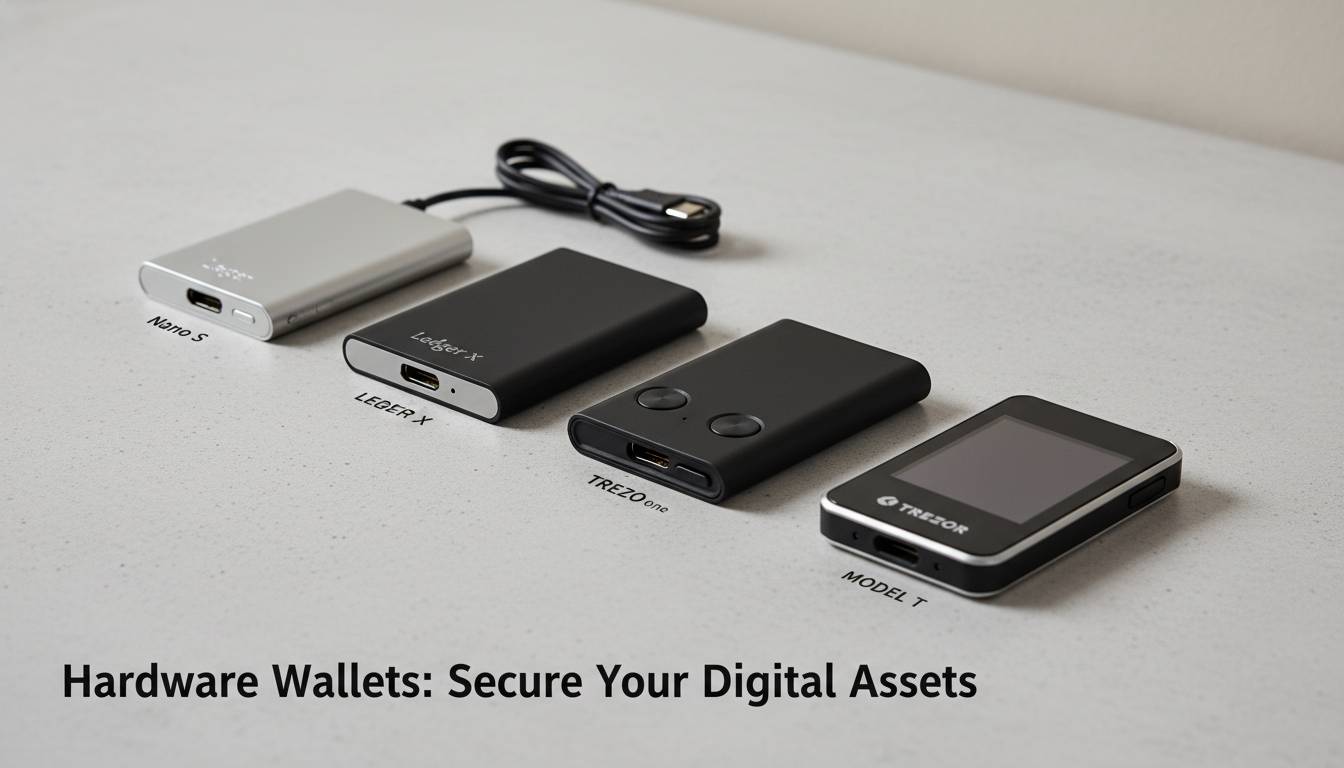
Ledger dominates the hardware wallet market with approximately 6 million devices sold worldwide. The company’s latest devices, the Ledger Stax and Ledger Nano X, support over 5,500 cryptocurrencies and integrate with countless third-party applications. Ledger’s proprietary operating system, BOLOS, creates an isolated environment for each application, preventing malicious software from accessing your private keys. The Ledger Live application provides straightforward portfolio management while maintaining the security boundaries that matter.
The company experienced a significant data breach in 2020 when customer information was leaked, leading to targeted phishing attacks against Ledger owners. This incident prompted important industry-wide discussions about supply chain security and the importance of never trusting a wallet that arrives pre-configured. Legitimate hardware wallets ship in tamper-evident seals and require you to generate your own seed phrase during initial setup.
Trezor, produced by Czech company SatoshiLabs, pioneered the hardware wallet category and maintains a reputation for open-source transparency. Every component of Trezor’s software is publicly auditable, allowing security researchers to verify the absence of vulnerabilities or backdoors. This transparency provides assurance that no secret vulnerabilities exist—a confidence level impossible with closed-source alternatives. Trezor Model T features a touchscreen for direct input of PINs and passphrases, eliminating the potential for keylogging attacks that target keyboard-entry methods.
Coldcard represents the extreme end of security-focused hardware wallets, designed specifically for Bitcoin maximalists who accept no compromises. Produced by Coinkite, a Canadian company specializing in Bitcoin-only security products, Coldcard implements groundbreaking features like duress PINs (which display a fake wallet when entered under coercion), Brickme (which permanently disables the device if tampered with), and air-gapped transaction signing using microSD cards. Its completely open-source firmware invites continuous security auditing, while its Bitcoin-only design eliminates attack surfaces present in multi-currency devices.
| Hardware Wallet | Price | Display | Open Source | Bitcoin-Only |
|---|---|---|---|---|
| Ledger Nano X | $149 | No | Partial | No |
| Trezor Model T | $239 | Touch | Yes | No |
| Coldcard Mk4 | $189 | Yes | Yes | Yes |
How to Choose the Right Bitcoin Wallet
Selecting the optimal wallet requires honest self-assessment across several dimensions. The best wallet for your needs depends on factors unique to your situation, and these considerations evolve as your holdings and expertise grow.
Security requirements should scale with your holdings. Industry best practices suggest that amounts under $1,000 can reasonably remain in quality hot wallets for convenience. Holdings between $1,000 and $10,000 merit consideration of hardware wallets for core funds while maintaining smaller hot wallets for active trading. Amounts exceeding $10,000 strongly warrant hardware wallet storage, with multiple devices providing redundancy against loss or damage.
Transaction frequency directly impacts the convenience tradeoff. If you transact daily or weekly, hot wallets provide necessary accessibility despite elevated risk. Monthly transactions might justify the friction of hardware wallet signing. Truly long-term holders who transact less than quarterly should strongly consider cold storage as their default approach.
Technical sophistication matters more than many realize. Wallet features mean nothing if you cannot use them correctly. A hardware wallet with stunning security becomes a liability if you lose your seed phrase or fall for phishing attacks. Beginners often benefit from starting with reputable hot wallets that include customer support, then transitioning to more sophisticated solutions as their competence grows.
Backup and recovery deserves explicit planning before choosing any wallet. Determine how you’ll store your seed phrase securely—ideally in multiple physical locations using metal backups that survive fires. Consider whether you want multi-signature setups requiring multiple devices or approvals. These decisions shape which wallets remain viable options for your specific needs.
Common Mistakes When Selecting a Bitcoin Wallet
The cryptocurrency community has accumulated hard-won wisdom about wallet selection through painful experiences. Understanding these common pitfalls helps you avoid joining their ranks.
Ignoring seed phrase security proves the most frequent and devastating mistake. Your seed phrase represents ultimate control over your Bitcoin—no password, PIN, or encryption protects you if someone obtains these words. Storing seed phrases digitally, whether in password managers, cloud storage, or text files, creates vulnerability to hacking. Paper stored in convenient locations invites loss through fire or theft. Metal seed storage, properly distributed across secure locations, provides the minimum acceptable standard for meaningful holdings.
Not verifying wallet authenticity enables supply chain attacks where compromised wallets ship to victims. Always verify downloads through official channels, check file signatures when available, and never use wallets provided by third parties or purchased from unauthorized resellers. When setting up new devices, format and restore rather than trusting pre-loaded configurations.
Prioritizing features over fundamentals leads to selecting flashy wallets with poor security fundamentals. A wallet offering every conceivable feature means nothing if its core cryptography contains vulnerabilities. Established wallets with extensive security auditing, open-source code, and strong industry reputations generally outperform newer alternatives chasing feature parity.
Overlooking fee structures can significantly impact your returns, especially for frequent transactions. While base network fees fluctuate with demand, wallet-added markups vary substantially. Calculate the total cost of your expected transaction patterns when evaluating options, particularly if you plan to transact frequently or in large volumes.
The Future of Bitcoin Wallets
Bitcoin wallet technology continues evolving rapidly, with several significant trends reshaping the landscape in 2024 and beyond.
Multi-signature adoption grows as users recognize that security through distributed approval exceeds any single point of protection. Services like Unchained Capital and Casa provide managed multi-signature solutions requiring multiple keys to authorize transactions. This approach protects against both theft and accidental loss—a 2-of-3 setup, for instance, allows recovery even if one key is lost while preventing theft by any single compromised key.
Lightning Network integration transforms Bitcoin from a settlement system into a payments network capable of millions of transactions per second. Wallets like Phoenix, Breez, and Alby now enable instant, near-free payments suitable for everyday transactions. As this second-layer technology matures, expect wallet selection increasingly to depend on Lightning capability rather than basic Bitcoin storage.
DeFi compatibility expands Bitcoin’s utility beyond simple holding. Through solutions like Wrapped Bitcoin (WBTC) and RSK, Bitcoin holders can now access Ethereum-based decentralized finance applications while maintaining Bitcoin-denominated exposure. Wallets supporting these bridges require additional security considerations, as the smart contracts involved introduce new risk categories absent from pure Bitcoin storage.
Regulatory compliance increasingly influences wallet development, particularly for US-based providers. Know Your Customer requirements now apply to most wallet providers linking to traditional payment systems, driving some users toward privacy-focused alternatives while pushing mainstream providers toward increasingly rigorous identity verification.
Conclusion
Choosing your Bitcoin wallet ultimately reflects your values: how much security you need versus how much convenience you want, how much privacy matters to you, and how much responsibility you’re prepared to accept for your financial sovereignty. The wallets compared here each excel in different contexts—Coinbase Wallet for accessible onboarding, Electrum for power-user control, Coldcard for maximum security, and countless alternatives serving specialized needs.
Start with a wallet matching your current expertise and holdings, then evolve as your needs develop. The most important action isn’t selecting the theoretically optimal wallet—it’s ensuring whatever wallet you choose implements proper seed phrase backup and security practices. Your Bitcoin’s security ultimately depends more on your behaviors than any wallet’s features.
As the ecosystem matures, expect wallet technology to continue simplifying while security improves. Until then, the principles remain constant: control your keys, secure your seed phrase, and never invest more than you can afford to lose. The perfect wallet exists for your specific circumstances right now—finding it requires honest assessment of your needs and the discipline to implement proper security practices regardless of which option you choose.
Frequently Asked Questions
What is the safest Bitcoin wallet for long-term storage?
Hardware wallets like Ledger, Trezor, or Coldcard provide the highest security for long-term Bitcoin storage. These devices keep your private keys completely offline, protected from remote hacking attempts. For maximum security, store your hardware wallet and backup seed phrase in separate physical locations.
Can I use the same Bitcoin wallet on multiple devices?
Yes, most non-custodial wallets allow installation across multiple devices using your seed phrase for recovery. However, never have the same wallet open on multiple devices simultaneously, as this can cause synchronization issues. Some wallets like Electrum support watch-only configurations that let you view balances without exposing private keys.
What happens if I lose my Bitcoin wallet?
If you lose access to your wallet but possess your seed phrase, you can recover your Bitcoin by installing the same or compatible wallet on a new device and entering your seed phrase. Without the seed phrase, recovering Bitcoin is mathematically impossible regardless of wallet type or circumstances.
Are free Bitcoin wallets safe to use?
Free wallets from reputable providers like Blockchain.com or BlueWallet are safe for small amounts, but they remain hot wallets with inherent internet connectivity risks. Never store significant Bitcoin holdings in free mobile or web wallets. The cost of a hardware wallet represents cheap insurance for substantial holdings.
How do I transfer Bitcoin between wallets?
To transfer Bitcoin, open your sending wallet, select send, and enter the receiving wallet’s address (or scan its QR code). Always verify the address matches exactly—Bitcoin transactions cannot be reversed. Start with a small test transaction before moving larger amounts.
What’s the difference between a Bitcoin wallet and a Bitcoin exchange?
A Bitcoin wallet gives you direct control over your private keys and Bitcoin. An exchange holds your Bitcoin on your behalf, functioning more like a bank. Exchanges provide easier buying and selling but introduce counterparty risk—exchanges have failed and locked users out of their funds. Wallets provide self-custody but require you to manage your own security.






Leave a comment