

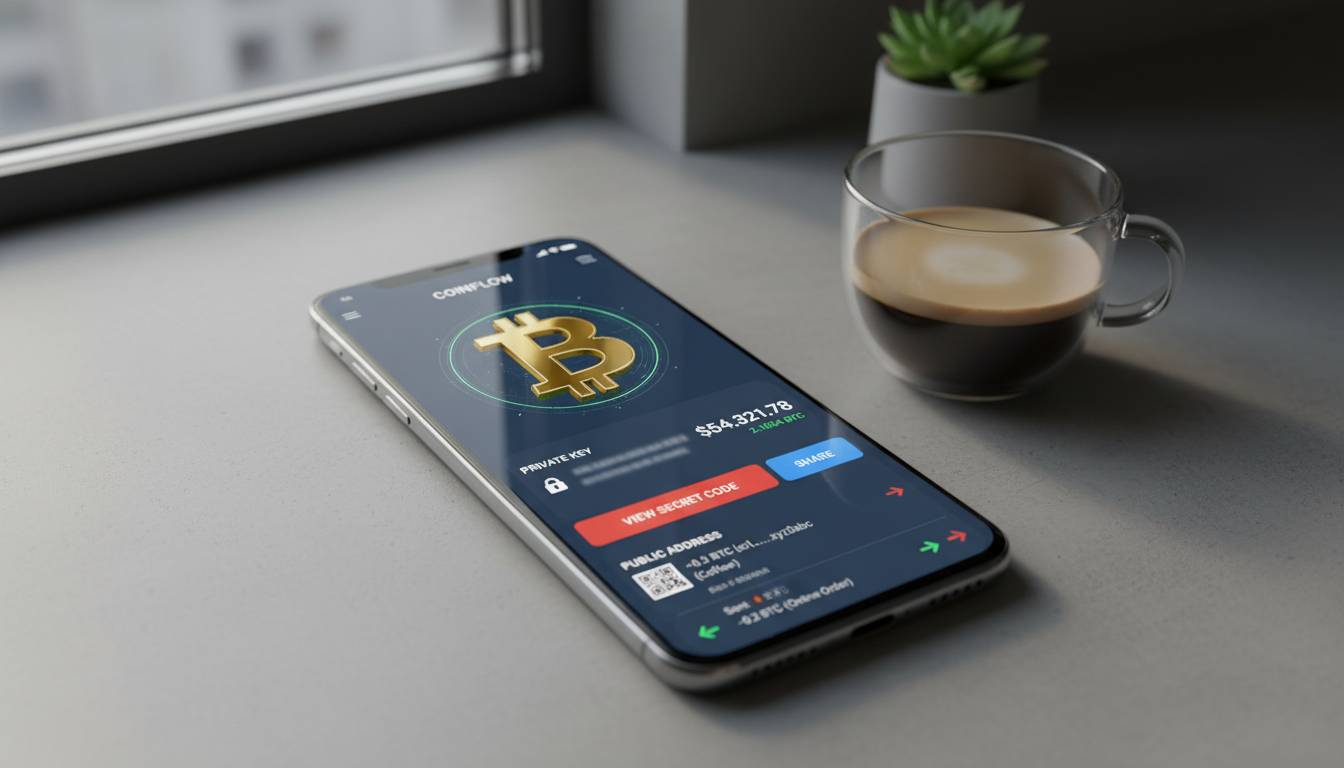
A Bitcoin wallet is a digital tool that allows you to store, send, and receive Bitcoin. Unlike a traditional wallet that holds physical currency, a Bitcoin wallet doesn’t actually store Bitcoin itself—instead, it holds the cryptographic keys (your private key and public key) that grant you access to your Bitcoin on the blockchain. These keys prove ownership of your Bitcoin and authorize transactions. Understanding how Bitcoin wallets work is essential for anyone looking to enter the cryptocurrency space, as choosing the right wallet directly impacts the security and accessibility of your digital assets.
📊 STATS
• Over 420 million people globally use cryptocurrency wallets
• Bitcoin wallets processed over $1.2 trillion in transactions in 2023 (Chainalysis)
• 87% of crypto beginners struggle with understanding wallet security initially
• Hardware wallets hold approximately 7% of all Bitcoin but represent the fastest-growing segment
Key Takeaways
• Private keys are the most critical element—anyone with your private key controls your Bitcoin
• Hot wallets (connected to internet) offer convenience; cold wallets (offline) provide superior security
• Bitcoin wallets don’t store Bitcoin; they store keys that access your Bitcoin on the blockchain
• Recovery phrases (seed phrases) allow you to restore access if you lose your wallet
• The type of wallet you choose depends on your security needs and transaction frequency
What Is a Bitcoin Wallet?
A Bitcoin wallet is software or hardware that interacts with the Bitcoin blockchain to enable users to manage their Bitcoin holdings. At its core, a wallet contains two essential pieces of cryptographic information: a public key (similar to a bank account number) that others can use to send you Bitcoin, and a private key (similar to a PIN or password) that allows you to spend or transfer your Bitcoin. The private key must be kept absolutely secret—anyone who obtains it can transfer your Bitcoin to their own wallet.
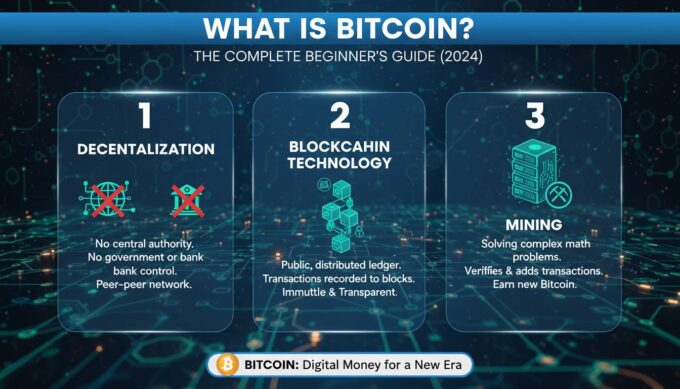
When someone sends you Bitcoin, the transaction is recorded on the blockchain, which is a decentralized, distributed ledger that maintains a permanent record of all Bitcoin transactions. Your wallet doesn’t actually “hold” the Bitcoin; instead, it monitors the blockchain for transactions associated with your public key and calculates your balance by adding up all incoming transactions that haven’t been spent yet (these are called “unspent transaction outputs” or UTXOs).
The innovation behind Bitcoin wallets lies in their ability to generate and manage these cryptographic keys without requiring you to understand the complex mathematics behind public-key cryptography. Modern wallets handle this automatically, generating a random private key, deriving a public key from it, and creating a Bitcoin address (a shortened version of your public key) that you can share with others to receive funds.
Components of a Bitcoin Wallet
Private Key:
Your private key is a 256-bit number that serves as the ultimate proof of ownership for your Bitcoin. This key allows you to sign transactions, authorizing the transfer of Bitcoin from your address to another. Private keys are typically displayed as a string of 64 hexadecimal characters. Never share your private key with anyone—loss of your private key means permanent loss of access to your Bitcoin.
Public Key:
Derived mathematically from your private key using elliptic curve cryptography, the public key can be shared freely. It’s used by others to verify that your signed transactions are authentic. The public key is also used to generate multiple Bitcoin addresses, enhancing privacy.
Bitcoin Address:
A Bitcoin address is a shorter, hashed version of your public key, typically starting with “1”, “3”, or “bc1” (for SegWit addresses). This is what you share with others to receive Bitcoin. You can generate unlimited addresses from a single wallet for privacy purposes.
Recovery Phrase (Seed Phrase):
Most modern Bitcoin wallets generate a recovery phrase of 12 or 24 words. This phrase contains all the information needed to restore your wallet and keys on any compatible device. Write this down and store it securely—it’s your ultimate backup.
💡 FACT: The probability of guessing a Bitcoin private key is approximately 1 in 2^256—that’s roughly the same as the number of atoms in the observable universe
How Bitcoin Wallets Work
When you want to send Bitcoin, your wallet constructs a transaction that includes the recipient’s address, the amount to send, and a transaction fee. Your wallet then uses your private key to digitally sign this transaction, proving that you authorize it. The signed transaction is then broadcast to the Bitcoin network, where miners verify and include it in a block on the blockchain.
The process works like this: your wallet scans the blockchain for all transactions sent to your address and calculates your current balance. When you initiate a transaction, your wallet selects appropriate UTXOs (unspent Bitcoin from previous transactions), creates the new transaction details, signs it with your private key, and broadcasts it to the network. Once confirmed by miners (usually requiring 6 confirmations for large amounts), the transaction becomes permanent.
Types of Bitcoin Wallets
Bitcoin wallets come in several forms, each offering different balances of security, convenience, and functionality. Understanding the differences between wallet types helps you choose the right solution for your needs.
| Wallet Type | Security Level | Best For | Cost | Example |
|---|---|---|---|---|
| Hardware | ⭐⭐⭐⭐⭐ | Long-term storage, large amounts | $50-$200 | Ledger, Trezor |
| Software (Desktop) | ⭐⭐⭐⭐ | Regular trading, moderate amounts | Free | Electrum, Bitcoin Core |
| Mobile | ⭐⭐⭐ | Everyday transactions | Free | Trust Wallet, Coinbase Wallet |
| Web | ⭐⭐ | Quick access, small amounts | Free | Coinbase, Blockchain.com |
| Paper | ⭐⭐⭐⭐⭐ | Cold storage, maximum security | $0-$20 | Printable templates |
Hardware Wallets
Hardware wallets are physical devices designed specifically to store private keys offline. These devices connect to your computer or phone only when you need to make a transaction, and even then, the private keys never leave the device. This “cold storage” approach provides the highest level of security against hacking and malware.
Pros:
• Private keys never exposed to internet-connected devices
• Resistant to computer viruses and malware
• Supports multiple cryptocurrencies
• Recovery phrase backup provides redundancy
Cons:
• Costs between $50-$200
• Less convenient for frequent transactions
• Physical device can be lost or damaged
• Requires learning curve for setup
💰 Price Range: $50 (basic models) to $250+ (premium models)
🎯 Best For: HODLers, investors storing significant amounts, security-conscious users
Software Wallets
Software wallets are applications that run on your computer or mobile device. They offer a balance between security and convenience, making them popular for users who transact frequently.
Desktop Wallets: Installed on your computer, desktop wallets like Electrum or Bitcoin Core give you full control over your keys. They’re more secure than web wallets but require you to maintain your computer’s security.
Mobile Wallets: Designed for smartphones, mobile wallets like Trust Wallet or Coinbase Wallet offer the ultimate convenience for everyday transactions. You can pay merchants by scanning QR codes or using NFC. However, mobile devices are vulnerable to malware and physical theft.
Web Wallets
Web wallets operate through browser-based platforms, meaning your private keys may be held by a third party. While convenient for quick access, this introduces counterparty risk—you’re trusting the service provider to secure your keys properly.
Examples: Coinbase Wallet, Blockchain.com, MetaMask
⚠️ WARNING: Never store large amounts in web wallets. Use them only for small amounts you plan to transact with regularly.
Paper Wallets
A paper wallet is a physical document containing your Bitcoin address and private key, usually printed as QR codes. Since it’s completely offline, it’s immune to digital theft. However, it’s vulnerable to physical loss, damage, and human error in creation.
Benefits of Using a Bitcoin Wallet
Using a Bitcoin wallet provides several advantages over traditional financial systems, particularly regarding financial sovereignty and efficiency.
| Benefit | Impact | Details |
|---|---|---|
| Full Control | 100% | No bank or government can freeze your funds |
| Lower Fees | 30-70% | International transfers cost a fraction of bank fees |
| 24/7 Access | Always | Send and receive Bitcoin any time, anywhere |
| Privacy | Variable | Better than banks; optional with new addresses |
| Speed | Minutes | Cross-border transactions settle in minutes, not days |
Financial Sovereignty
Perhaps the most significant benefit of a Bitcoin wallet is complete financial control. Unlike traditional bank accounts, which can be frozen, closed, or restricted by financial institutions or governments, your Bitcoin wallet gives you direct control over your funds. As long as you maintain possession of your private keys, no third party can access or seize your Bitcoin.
This feature is particularly valuable in regions with unstable currencies, restrictive capital controls, or histories of financial institution failures. According to a 2023 report from the World Bank, over 1.4 billion adults globally remain unbanked—Bitcoin wallets provide these individuals with access to the global financial system using only a smartphone and internet connection.
Lower Transaction Costs
Bitcoin transactions typically cost a fraction of traditional wire transfers, especially for international payments. While bank wire transfers can cost $25-$50 or more for international transactions, Bitcoin transactions often cost under $5—even during periods of normal network congestion. During low-activity periods, transaction fees can be less than $1.
Global Accessibility
Bitcoin operates on a decentralized network that functions 24 hours a day, 7 days a week, across borders without requiring permission from any financial institution. This makes Bitcoin particularly useful for freelancers receiving payments from international clients, families sending money across borders, or anyone needing immediate access to funds outside traditional banking hours.
📈 CASE: A freelance graphic designer in Argentina reduced payment processing costs by 68% after switching from PayPal to a Bitcoin wallet for international client payments. The average PayPal fee of 4.5% plus currency conversion costs was replaced by Bitcoin transaction fees averaging 1-2%.
How to Set Up a Bitcoin Wallet
Setting up a Bitcoin wallet involves several important steps that directly impact the security of your funds. Follow this guide to create and secure your wallet properly.
Prerequisites:
– [ ] Smartphone or computer with internet access
– [ ] Reliable storage for recovery phrase (paper or metal)
– [ ] Understanding of basic Bitcoin concepts
– [ ] Small amount of Bitcoin to test (optional)
Time: 15-30 minutes | Cost: $0-$200 (if hardware wallet)
Steps
1. Choose Your Wallet Type
Determine your needs: frequent transactions (mobile/web), large holdings (hardware), or balance of both (desktop). Research reputable wallet providers—avoid downloading wallets from unknown sources.
2. Download from Official Sources
Only download wallets from official websites or app stores. Verify the developer’s identity and check reviews. Malicious wallets impersonating legitimate ones are a common attack vector.
⏱ 5 minutes | 💡 Tip: Search for the wallet name and verify the official website through multiple sources
3. Create Your Wallet
Open the application and select “Create New Wallet.” Write down your recovery phrase when presented—do this before anything else. Never take screenshots or store digitally.
⚠️ Avoid: Typing your recovery phrase into any device connected to the internet
→ Fix: Write on paper or use a metal backup plate
4. Verify Your Recovery Phrase
Most wallets ask you to confirm your recovery phrase by selecting words in order. This ensures you recorded it correctly. If you skip this step and your phrase is wrong, you could lose access permanently.
5. Add Bitcoin to Your Wallet
To receive Bitcoin, click “Receive” or similar option and share your Bitcoin address (or QR code) with the sender. Start with a small test amount to ensure everything works before transferring larger sums.
6. Enable Security Features
Activate all available security features: PIN codes, biometric authentication (fingerprint/face), and two-factor authentication if available. These provide layers of protection beyond your private key.
Troubleshooting
| Problem | Fix |
|---|---|
| Transaction pending for hours | Check network congestion; increase fee if urgent |
| Wallet sync issues | Verify internet connection; try restarting app |
| Forgotten PIN | Use recovery phrase to restore wallet on new device |
| Sent Bitcoin to wrong address | Transactions cannot be reversed; contact recipient |
Common Bitcoin Wallet Mistakes
Avoiding these critical mistakes can mean the difference between safely holding Bitcoin and losing it permanently.
| Mistake | Impact | Solution |
|---|---|---|
| Not backing up recovery phrase | 📉 Total loss if device is lost/stolen | Write down 12/24-word phrase and store in multiple secure locations |
| Storing recovery phrase digitally | 📉 Hacking risk | Use paper or metal storage, never digital |
| Using weak PINs | 📉 Brute force vulnerability | Use 6+ digit PIN, avoid obvious numbers |
| Keeping all Bitcoin in hot wallet | 📉 Hacking exposure | Move large holdings to hardware/cold storage |
| Not verifying addresses | 📉 Irreversible loss | Always double-check first 4-4 characters of address |
| Ignoring software updates | 📉 Security vulnerabilities | Update wallet software promptly |
⚠️ CRITICAL: Never share your private key or recovery phrase with anyone—not even customer support. Legitimate wallet providers will NEVER ask for this information. Over $4 billion in Bitcoin has been lost to scams since 2011 .
Prevent:
• Use a hardware wallet for holdings over $1,000
• Enable two-factor authentication on any associated accounts
• Verify all addresses character-by-character before sending
• Test with small amounts first when using new wallets
Expert Insights
👤 Jameson Lopp, Chief Security Officer at CasaHODL
“Bitcoin security is fundamentally about risk management. The trade-off between convenience and security is real, but it’s a sliding scale, not binary. Most people would benefit from a tiered approach: small spending amounts in mobile wallets, medium amounts in desktop wallets, and large holdings in hardware wallets with multisig for added protection.”
👤 Andreas Antonopoulos, Bitcoin Author and Speaker
“Your keys, your Bitcoin. Not your keys, not your Bitcoin. This is the fundamental principle that every Bitcoin holder must understand. When you use a hosted wallet (where the exchange holds your keys), you’re essentially trusting a third party with your funds. The only way to truly own Bitcoin is to control your own private keys.”
📊 BENCHMARKS
| Metric | Average User | Advanced User |
|——–|————–|—————|
| Recovery backup | 47% have written it down | 94% have multiple backups |
| Hardware wallet ownership | 12% | 67% |
| Transaction verification | Double-check address | Verify full address + test transaction |
Best Bitcoin Wallets for Different Needs
| Tool | Cost | For | Rating |
|---|---|---|---|
| Ledger Nano X | $149 | Maximum security, multiple coins | ⭐⭐⭐⭐⭐ |
| Trezor Model T | $219 | Maximum security, touchscreen | ⭐⭐⭐⭐⭐ |
| Electrum | Free | Desktop power users | ⭐⭐⭐⭐ |
| Trust Wallet | Free | Mobile, DeFi integration | ⭐⭐⭐⭐ |
| Coinbase Wallet | Free | Beginners, exchange integration | ⭐⭐⭐⭐ |
| BlueWallet | Free | Lightning Network users | ⭐⭐⭐⭐ |
Top Picks:
• Ledger Nano X: Best overall balance of security and convenience with mobile Bluetooth connectivity
• Electrum: Best for desktop power users who want full control and custom fee settings
• Trust Wallet: Best mobile experience with built-in DApp browser for Web3 interaction
• Trezor Model T: Best open-source hardware wallet with full touchscreen interface
Frequently Asked Questions
What is a Bitcoin wallet and how does it work?
A Bitcoin wallet is a digital tool that stores your private and public keys, allowing you to send and receive Bitcoin. It doesn’t store actual Bitcoin—instead, it holds the cryptographic keys that prove ownership of Bitcoin recorded on the blockchain. When you want to send Bitcoin, your wallet uses your private key to sign the transaction, which is then broadcast to the Bitcoin network for verification.
Should I use a hot wallet or cold wallet?
Hot wallets (connected to the internet) are best for small amounts you plan to transact frequently, as they offer convenience. Cold wallets (offline storage like hardware wallets) are best for holding large amounts long-term, as they provide superior security against hacking. Many users employ both: a hot wallet for daily transactions and a cold wallet for savings.
What happens if I lose my Bitcoin wallet?
If you lose access to your wallet, you can recover your Bitcoin using your recovery phrase (seed phrase) on any compatible wallet. This is why writing down and securely storing your recovery phrase is absolutely essential. Without your recovery phrase or private key, lost Bitcoin becomes permanently inaccessible—there’s no “forgot password” option in Bitcoin.
Are Bitcoin wallets anonymous?
Bitcoin wallets provide pseudonymity, not full anonymity. All transactions are publicly visible on the blockchain, and addresses can potentially be linked to real-world identities through exchange KYC requirements, spending patterns, or IP addresses. Using a new address for each transaction improves privacy but doesn’t make Bitcoin completely untraceable.
Can I have multiple Bitcoin wallets?
Yes, you can have unlimited Bitcoin wallets. Many users maintain multiple wallets for different purposes—such as a spending wallet, savings wallet, or separate wallets for different investments. Most wallets can generate unlimited addresses, all derived from the same private key or recovery phrase.
How do I keep my Bitcoin wallet secure?
Secure your Bitcoin wallet by: (1) writing down your recovery phrase and storing it securely offline, (2) using a hardware wallet for large holdings, (3) enabling all available security features like PIN and biometrics, (4) keeping your wallet software updated, (5) never sharing your private keys or recovery phrase with anyone, and (6) verifying addresses before sending transactions.
Conclusion
Understanding Bitcoin wallets is fundamental to participating safely in the cryptocurrency ecosystem. The type of wallet you choose directly impacts your security, convenience, and control over your digital assets. For beginners, starting with a reputable mobile or web wallet from a trusted provider offers the easiest entry point, while more advanced users and those holding significant amounts should strongly consider hardware wallets for their superior security features.
The most critical takeaway is that you control your Bitcoin through your private keys and recovery phrase. These elements are the keys to your financial sovereignty—no bank, government, or third party can access your funds without them. However, this also means the responsibility for security falls entirely on you. Take time to understand wallet security, create proper backups, and follow best practices.
As the cryptocurrency ecosystem continues to evolve, wallet technology will advance alongside it. Features like multisignature security, decentralized identity integration, and improved user interfaces will make Bitcoin more accessible while maintaining its core security principles. By understanding the fundamentals outlined in this guide, you’re equipped to make informed decisions about managing your Bitcoin holdings securely.
Start with a wallet that matches your current needs, prioritize learning proper security practices, and only invest what you can afford to lose. Bitcoin represents a paradigm shift in how we think about money and financial control—and understanding wallets is your first step into this new financial landscape.






Leave a comment