


The cryptocurrency market reached a total capitalization of over $3 trillion at its peak in 2021, drawing millions of new traders into digital asset markets. Yet research from the University of Cambridge estimates that approximately 100 million people worldwide now hold some form of cryptocurrency, with a significant portion trading actively. Despite this explosive growth, studies consistently show that roughly 70-80% of retail crypto traders lose money, primarily due to lack of fundamental knowledge and poor risk management. This guide provides the foundational understanding you need to navigate crypto markets intelligently, minimize unnecessary losses, and build a sustainable approach to digital asset trading.
Understanding Cryptocurrency Fundamentals
Before executing your first trade, you must grasp what you’re actually buying. Cryptocurrencies are digital assets secured by cryptography and typically operate on decentralized networks using blockchain technology—a distributed ledger that records all transactions across thousands of computers simultaneously.
Bitcoin, created in 2009, remains the largest cryptocurrency by market capitalization, serving as a store of value and digital gold. Ethereum, launched in 2015, introduced smart contracts—self-executing programs that run on the blockchain and enable decentralized applications. Beyond these giants, thousands of alternative cryptocurrencies (altcoins) exist, each serving different purposes: some function as utility tokens, others as governance tokens, and many as speculative assets.
The crypto market operates 24 hours a day, 7 days a week, unlike traditional stock markets with fixed trading hours. This round-the-clock market means prices can move significantly while you sleep, creating both opportunities and risks. Understanding this fundamental difference from traditional finance sets the foundation for developing appropriate trading strategies.
How Crypto Exchanges Work
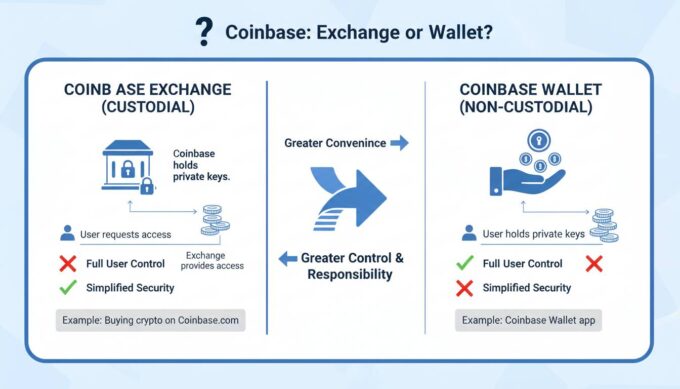
Centralized exchanges (CEXs) like Coinbase, Binance, and Kraken function as intermediaries, matching buyers with sellers and holding user funds. These platforms offer user-friendly interfaces, liquidity, and customer support but require you to trust them with your assets. Decentralized exchanges (DEXs) like Uniswap and Raydium allow peer-to-peer trading without intermediaries, giving you full control of your funds but requiring more technical knowledge to operate safely.
For beginners, starting with a reputable centralized exchange makes sense. When selecting an exchange, prioritize these factors: regulatory compliance in your jurisdiction, security track record, insurance protections, trading fees, and available customer support. Coinbase, founded in 2012 and publicly traded on NASDAQ, offers robust regulatory compliance and insurance coverage for custodial holdings—a safer starting point despite potentially higher fees.
Most exchanges offer two order types essential for beginners: market orders execute immediately at the current price, while limit orders only execute when the price reaches your specified level. Understanding the distinction matters enormously—market orders guarantee execution but not price, while limit orders guarantee price but not execution.
Building Your First Portfolio Strategy
Successful crypto trading begins before you purchase your first coin—it begins with strategy. The cryptocurrency market’s extreme volatility means prices can swing 20-50% in single days, making position sizing critically important. Never invest money you cannot afford to lose entirely.
The most recommended approach for beginners involves dollar-cost averaging (DCA)—investing a fixed amount at regular intervals regardless of price. This strategy removes emotional decision-making from the equation and naturally buys more coins when prices are low and fewer when prices are high. Research from the Financial Planning Standards Board suggests systematic investing outperforms attempts to time markets across most asset classes, and crypto’s volatility makes timing attempts particularly dangerous.
Diversification across different cryptocurrency categories provides another layer of risk management. Rather than concentrating entirely in Bitcoin, consider allocating positions across large-cap assets (Bitcoin and Ethereum), promising layer-1 blockchains, and perhaps small allocations to higher-risk altcoins you’re willing to research thoroughly. Each category carries different risk profiles and growth potential.
Technical Analysis Basics for Crypto Trading
Technical analysis involves studying price charts and trading volumes to predict future price movements. While no analysis method guarantees success, understanding basic chart patterns and indicators helps you make more informed trading decisions.
Candlestick charts display four key price points for each time period: open, high, low, and close. Green (or white) candles indicate price increases, while red (or black) candles show decreases. Learning to read these visual patterns provides immediate insight into market sentiment—long green candles suggest strong buying pressure, while long wicks (the thin lines extending above and below the candle body) indicate rejection of certain price levels.
Support and resistance levels represent price points where buying or selling pressure historically accumulates. When a cryptocurrency’s price repeatedly bounces off a specific level from below, that level becomes support. When prices repeatedly fail to break above a level from below, it becomes resistance. These psychological price points often guide entry and exit decisions for traders.
Moving averages smooth price data to reveal underlying trends. The 50-day and 200-day moving averages are particularly watched in crypto markets. When the 50-day crosses above the 200-day (a “golden cross”), many traders view it as bullish; when it crosses below (a “death cross”), it’s considered bearish. However, in crypto’s volatile environment, these signals produce false positives regularly.
Risk Management Principles Every Trader Must Know
The golden rule of crypto trading: never invest more than you can afford to lose. This isn’t hyperbole—cryptocurrency prices have collapsed 80-90% multiple times in market cycles. Setting strict position limits prevents a single bad trade from devastating your portfolio.
Stop-loss orders automatically sell your position when prices fall to a specified level, limiting potential losses. For most positions, setting stop-losses 10-20% below your entry price provides downside protection without being triggered by normal market volatility. Trailing stop-losses, which follow price upward as the position becomes profitable, lock in gains while allowing winners to run.
Position sizing directly impacts survival. Many experienced traders risk no more than 1-2% of their total portfolio on any single trade. If you have $1,000 to invest, this means limiting any individual position to $10-20. While this seems conservative, it ensures that even a series of losing trades won’t destroy your capital. Trading requires capital to participate—preserving that capital through disciplined risk management matters more than any individual winning trade.
Common Mistakes Beginners Should Avoid
FOMO-driven purchases near market tops consistently destroy retail portfolios. When Bitcoin reaches new all-time highs and dominates financial news, newcomers rush in exactly when prices are most inflated. The cryptocurrency market’s 24/7 nature and social media hype cycles create powerful psychological pressure to chase prices higher. Learning to recognize these emotional traps and waiting for calmer entry points saves enormous amounts of capital.
Neglecting security practices leads to devastating losses. Cryptocurrency exchanges have been hacked repeatedly over the years—Mt. Gox lost 850,000 bitcoins in 2014, and countless smaller exchanges have suffered breaches. Use two-factor authentication on every exchange account, consider hardware wallets for significant holdings, and never share your private keys. Anyone who asks for your private keys is attempting to steal your funds.
Ignoring transaction fees erodes returns significantly, especially on smaller portfolios. Crypto exchanges charge trading fees typically ranging from 0.1% to 0.6% per trade, and blockchain networks charge network fees (gas) for transactions. On a $100 trade, even a 0.5% fee represents $0.50—but that same 0.5% on a $10,000 trade is $50. For active traders, these fees compound substantially.
Storing Your Cryptocurrency Safely
Cryptocurrency wallets come in two main categories: hot wallets (connected to the internet) and cold wallets (offline storage). Hot wallets offered by exchanges provide convenience for active trading but remain vulnerable to hacking. Cold wallets—physical devices like Ledger or Trezor—store your private keys offline, providing substantially stronger security for long-term holdings.
Hardware wallets cost $50-200 but represent the single best investment for anyone holding more than a few hundred dollars in cryptocurrency. These devices generate and store your private keys internally, never exposing them to your computer or the internet. Even if your computer is compromised with malware, your keys remain secure. For maximum security, hardware wallets should be purchased directly from manufacturers, not resellers, to avoid potential tampering.
For very small amounts or frequent trading, mobile wallet apps like Trust Wallet or MetaMask provide acceptable convenience with reasonable security, provided you enable all available protection features. Never store large amounts in hot wallets—use them for small trading balances only.
Tax Implications and Legal Considerations
The IRS treats cryptocurrency as property, not currency, meaning capital gains and losses apply to every transaction. Every trade—whether between cryptocurrencies or converting crypto to fiat—potentially creates a taxable event. Failing to track transactions accurately leads to problems when tax season arrives, and crypto’s pseudonymity doesn’t protect you from legal consequences.
Several software platforms like CoinTracker, Koinly, and TaxBit integrate with exchanges and automatically calculate your tax obligations based on trading history. Starting from day one with proper tracking prevents massive headaches come April. Keep detailed records of every transaction including date, amount, value in USD at the time, and purpose (trading vs. earning vs. purchasing).
Regulatory uncertainty remains significant in the cryptocurrency space. The SEC, CFTC, and various state regulators have taken enforcement actions against exchanges and token issuers. Staying informed about regulatory developments in your jurisdiction helps you make better decisions and avoid platforms operating in legally gray areas.
Developing a Long-Term Trading Plan
Professional traders operate from written plans specifying entry criteria, exit strategies, position sizes, and maximum daily losses. Without a written plan, emotions dominate decisions—fear causes premature selling, greed leads to overtrading, and revenge trading after losses destroys accounts.
Your trading plan should answer these questions before every trade: What’s my thesis for this trade? What’s my entry price? What’s my exit price if this goes wrong? What’s my exit price if this goes right? How much am I risking? What would make me abandon this thesis? Writing down answers creates accountability and prevents reactive decisions.
Backtesting—testing your strategy against historical data—provides confidence in your approach before risking real money. Most trading platforms offer paper trading modes allowing you to practice with fake money. Spending months in paper trading, documenting your decisions and results, reveals whether your strategy has positive expectancy before you commit capital.
Frequently Asked Questions
How much money do I need to start trading crypto?
You can start trading with as little as $10-50 on most exchanges. However, starting with at least $100-500 allows you to meaningfully diversify positions while accounting for transaction fees. Never invest money you cannot afford to lose entirely.
Is crypto trading legal in the United States?
Yes, cryptocurrency trading is legal in the United States. However, exchanges must comply with federal and state regulations, and certain activities like trading certain altcoins may have legal restrictions depending on how securities laws apply. Always use regulated exchanges operating legally in your state.
What’s the difference between trading and holding cryptocurrency?
Trading involves actively buying and selling to profit from price fluctuations, typically over short timeframes. Holding (or “HODLing”) involves purchasing cryptocurrency for long-term appreciation regardless of short-term price movements. Both strategies can be profitable; trading requires more time, knowledge, and risk tolerance.
Can you lose all your money in crypto trading?
Yes, cryptocurrency trading can result in total loss of your investment. Prices can collapse, exchanges can fail, hackers can steal funds, and poor trading decisions can deplete your capital. Using stop-losses, secure storage, position sizing, and reputable exchanges reduces but doesn’t eliminate these risks.
How do I know when to sell my crypto?
Selling decisions should follow your predetermined trading plan rather than emotions. Common exit strategies include reaching a target profit percentage, the trade thesis invalidating (price drops below support), or rebalancing your portfolio allocation. Panic selling during crashes and greed-driven holding during bubbles both destroy returns.
Should I start with Bitcoin or other cryptocurrencies?
For beginners, starting with Bitcoin and Ethereum provides exposure to the two largest, most established cryptocurrencies with the deepest liquidity and most developed infrastructure. These assets have survived multiple market cycles and carry lower risk of total failure compared to smaller altcoins.








Leave a comment