

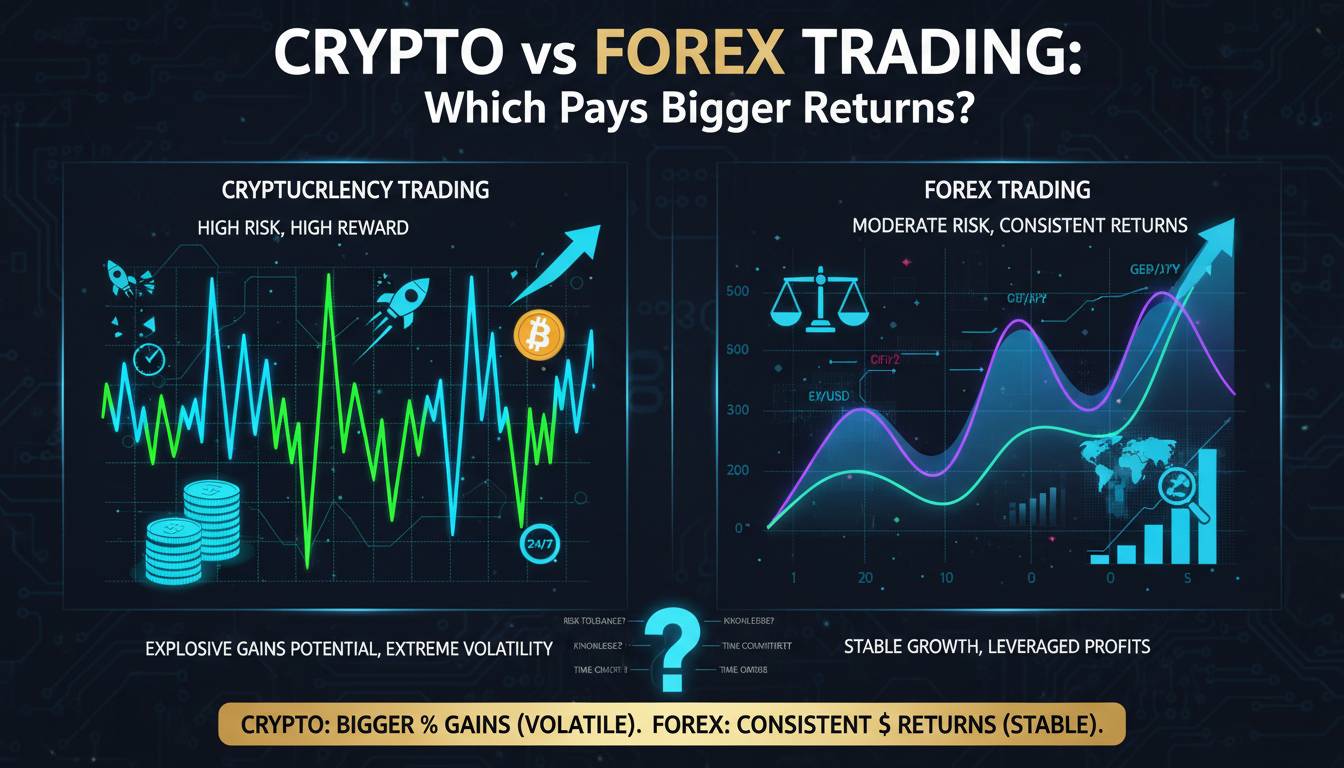
The question on every aspiring trader’s mind is simple: where can I make more money—cryptocurrency markets or foreign exchange? The answer isn’t straightforward. Crypto offers explosive single-day gains that forex simply cannot match, while forex provides consistent, lower-volatility returns that professional traders have relied on for decades. Understanding which market serves your financial goals, risk tolerance, and trading style requires examining the fundamental differences between these two massive financial markets.
Understanding the Fundamentals
Cryptocurrency trading involves buying and selling digital assets like Bitcoin, Ethereum, and thousands of altcoins on decentralized exchanges or broker platforms. The crypto market operates 24 hours a day, 365 days a year, with no central authority controlling most cryptocurrencies. The total crypto market capitalization has fluctuated from over $3 trillion in 2021 to approximately $1.2 trillion in recent years, demonstrating the massive scale and ongoing maturation of this market.
Forex trading, on the other hand, involves trading currency pairs like EUR/USD, GBP/JPY, and USD/CHF. The forex market is the largest financial market globally, with daily trading volumes exceeding $7 trillion according to the Bank for International Settlements (2022). This market has existed for decades, operates Monday through Friday, and is heavily regulated in developed markets including the United States.
The fundamental distinction lies in what you’re actually trading. When you trade forex, you’re speculating on the relative value of national currencies—essentially betting on economic conditions, interest rate differentials, and geopolitical events affecting countries. Crypto trading involves digital assets that derive value from scarcity, utility, network effects, and market sentiment rather than traditional economic indicators.
Return Potential: The Numbers Don’t Lie
Let’s examine the raw return potential that draws traders to each market.
Cryptocurrency returns have historically dwarfed forex returns in percentage terms. Bitcoin, the largest cryptocurrency, has generated returns exceeding 12,000% from its 2010 launch price to its 2021 all-time high. Even more dramatic, lesser-known altcoins have produced returns of 100x, 1000x, or more for early investors. However, these gains come with devastating downside risk—many cryptocurrencies have lost 90% or more of their value from peak prices.
The average daily volatility in Bitcoin hovers around 3-5%, compared to typical daily moves of 0.5-1% for major forex pairs. This amplified volatility creates opportunities for substantial gains but also catastrophic losses.
Forex returns appear modest by comparison but remain impressive when considered in proper context. Professional forex traders targeting 1-3% monthly returns are considered skilled performers. Yearly returns of 20-50% for consistent forex traders represent strong performance in this market. The EUR/USD pair, the most traded currency pair, moves approximately 8-10% annually on average—modest compared to crypto but substantially more predictable.
The key insight isn’t which market offers bigger returns in isolation, but which offers returns that align with your risk profile and capital preservation goals.
Risk Factors and Volatility Comparison
📊 VOLATILITY COMPARISON
| Metric | Cryptocurrency | Forex |
|---|---|---|
| Daily Volatility (BTC/major pairs) | 3-5% | 0.5-1% |
| Average Annual Range | 60-100%+ | 8-15% |
| Flash Crash Risk | High | Low-Medium |
| Weekend Gaps | Common | None |
Risk in trading isn’t simply about potential loss magnitude—it’s about probability, recoverability, and psychological burden.
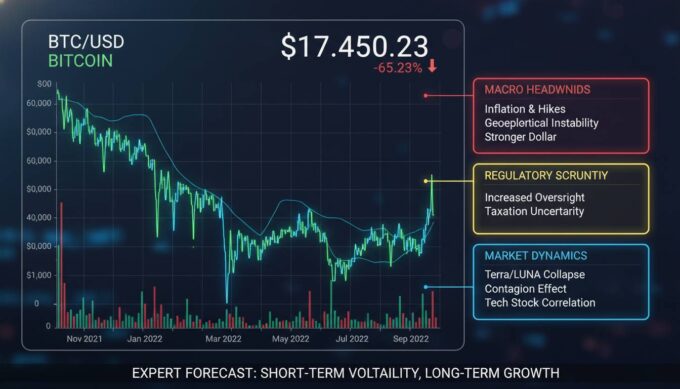
Crypto market risks include extreme volatility that can wipe out portfolios in hours, exchange hack vulnerabilities despite improved security, regulatory uncertainty that can crash entire sectors overnight, and liquidity risks with smaller altcoins that may be impossible to exit at desired prices. The 2022 crypto market collapse saw approximately $2 trillion in market value disappear, with major exchanges filing for bankruptcy and retail investors suffering catastrophic losses.
Forex market risks differ fundamentally. Currency values don’t typically go to zero because nations don’t disappear (though economic collapses like Argentina’s have created near-zero currencies). Leverage in forex trading—often 50:1 or higher in the US (50:1 is the maximum per CFTC regulations)—creates substantial risk even with smaller price moves. The primary forex risks involve interest rate shifts, geopolitical events, and central bank policy changes that can create rapid reversals.
A trader losing 50% in crypto faces a 100% gain needed to recover. A forex trader losing 5% on a leveraged position faces a much shorter path to recovery, assuming they haven’t been completely wiped out by margin calls.
Market Hours and Accessibility
The accessibility differences between these markets significantly impact who can trade and how.
Cryptocurrency markets never sleep. Trading occurs 24 hours daily, including weekends and holidays. This creates constant opportunities but also continuous stress for active traders. Anyone with internet access can open a crypto account in minutes, deposit funds, and begin trading. Many exchanges offer fractional trading, allowing purchases of $10 or less in Bitcoin or other assets.
Forex markets operate Sunday evening through Friday afternoon EST, with peak liquidity during overlapping sessions between New York, London, and Tokyo. US forex traders must use CFTC-regulated brokers, which provide stronger investor protections but often require larger minimum deposits and more documentation. Retail forex brokers in the US limit leverage to 50:1 for major pairs and 20:1 for others, designed to protect retail traders from excessive risk.
For the active trader seeking flexibility, crypto offers obvious advantages. For the trader preferring structured hours and regulatory oversight, forex presents a clearer framework.
Regulation and Security in the US Market
US regulatory environments differ dramatically between these markets, directly affecting your legal protections and trading experience.
Forex regulation in the US is robust and well-established. The Commodity Futures Trading Commission (CFTC) regulates forex brokers, requiring segregation of customer funds, regular auditing, and compliance with strict capital requirements. The National Futures Association (NFA) provides additional oversight. US traders enjoy substantial protections against broker fraud and manipulation, with clear legal recourse through established regulatory channels.
Cryptocurrency regulation in the US remains fragmented and evolving. The SEC, CFTC, and state regulators have all asserted varying degrees of jurisdiction, creating uncertainty for traders and exchanges. Some cryptocurrencies may be classified as securities, while others function as commodities—determinations that affect which exchanges can legally offer them to US customers.
The 2023-2024 period has seen increased enforcement actions against crypto exchanges, with major platforms like Coinbase and Binance facing SEC lawsuits. This regulatory uncertainty creates additional risk for crypto traders that doesn’t exist in the heavily regulated forex space.
The Psychological Reality of Returns
Raw return percentages tell only part of the story. The psychological experience of pursuing returns differs enormously between these markets.
Cryptocurrency trading often produces extreme emotional swings. The possibility of 20% daily gains creates a dopamine-driven feedback loop that many traders describe as addictive. The reverse—losing 20% in a day—produces devastating psychological impact. Studies of crypto traders show alarmingly high rates of anxiety, depression, and financial stress compared to traditional financial market participants.
Forex trading, while still stressful, tends to produce more measured emotional experiences. The smaller, more predictable price movements allow for calmer decision-making. Professional forex traders emphasize discipline, patience, and systematic approaches—qualities that align with sustainable wealth building rather than get-rich-quick mentalities.
Ask yourself whether you can psychologically tolerate watching your portfolio swing 20% in a single day. If not, forex’s more measured movements may serve you better regardless of theoretical return potential.
Making Your Decision: A Strategic Framework
The question “which pays bigger returns” ultimately misses the point. The correct question is “which market aligns with my financial situation, risk tolerance, and trading objectives?”
Choose cryptocurrency if:
– You have high risk tolerance and can afford to lose your entire investment
– You’re interested in emerging technologies and decentralized finance
– You prefer 24/7 market access and rapid position changes
– You understand technical analysis and can react quickly to news
– You have capital you’re willing to allocate to speculative positions
Choose forex if:
– You prioritize capital preservation alongside returns
– You prefer fundamental analysis (economic data, central bank policy)
– You want regulatory protection and established broker relationships
– You’re building long-term wealth through consistent, lower-risk strategies
– You prefer structured market hours that allow for other commitments
Consider both by allocating a small percentage (5-10%) of your portfolio to crypto for potential upside while maintaining the majority in more stable forex or traditional investments. This hybrid approach captures crypto’s return potential while limiting catastrophic loss scenarios.
The Real Return on Investment
True return on investment encompasses far more than percentage gains. Your time investment, emotional energy, tax implications, and learning curve all factor into actual ROI.
Time investment differs substantially. Successful crypto trading often requires constant market monitoring given the 24/7 nature and rapid movements. Forex trading allows more predictable schedules, though successful traders still dedicate significant hours to analysis and strategy refinement.
Tax implications favor forex in certain respects. The CFTC regulates forex brokers to report transactions in ways that simplify tax reporting. Cryptocurrency tax treatment remains complex, with the IRS treating most crypto as property subject to capital gains rules—creating enormous reporting burdens for active traders.
Learning curve considerations favor forex’s established educational resources. Decades of forex trading have produced comprehensive educational materials, proven strategies, and professional mentorship programs. Crypto education, while abundant, often lacks the depth and tested methodologies found in forex literature.
Frequently Asked Questions
Can I make a living trading crypto or forex?
Yes, it is possible to generate income through trading either market, but both require substantial skill, capital, and psychological discipline. Statistics consistently show that 70-90% of retail traders lose money in both markets. The path to profitability typically requires years of learning, substantial initial capital, and realistic expectations about consistent returns versus get-rich-quick fantasies.
Which is easier to learn for beginners?
Forex generally offers an easier learning curve due to more established educational resources, predictable market behavior, and regulatory protections that ensure fair trading conditions. However, neither market is “easy”—successful trading requires dedicated learning, practice with demo accounts, and gradual position sizing. Starting with forex fundamentals before exploring crypto’s additional complexities represents a common successful path.
How much money do I need to start trading?
Forex brokers in the US typically allow account opening with $500-$1,000, though professional trading requires substantially more capital to generate meaningful returns after accounting for living expenses. Crypto exchanges allow starting with as little as $10, making it more accessible but also more dangerous for undisciplined traders. Never trade with money you cannot afford to lose completely.
Which market has lower transaction fees?
Forex typically has lower direct trading costs, with most brokers making money through the spread (the difference between buy and sell prices) rather than explicit commissions. Cryptocurrency exchange fees vary widely but generally run 0.1-0.5% per trade plus withdrawal fees. For frequent traders, forex’s lower spread costs can significantly impact overall profitability.
Is crypto more profitable than forex?
Crypto has produced higher percentage returns historically but with dramatically higher risk. A $10,000 investment in Bitcoin at various points would have grown substantially, but the same investment could also have lost 80% of its value. Forex provides more modest but consistent returns with lower volatility. The “more profitable” answer depends entirely on your definition of profit—percentage gains versus sustainable wealth building.
What happens if I lose all my money in either market?
In forex trading with regulated US brokers, your losses are limited to your account balance—you cannot lose more than you deposited due to margin call protections. In crypto, losses are limited to your invested capital unless you trade on leverage. Neither market creates debt obligations for retail traders using regulated platforms, though leveraged trading in either market can result in total account loss.





Leave a comment