

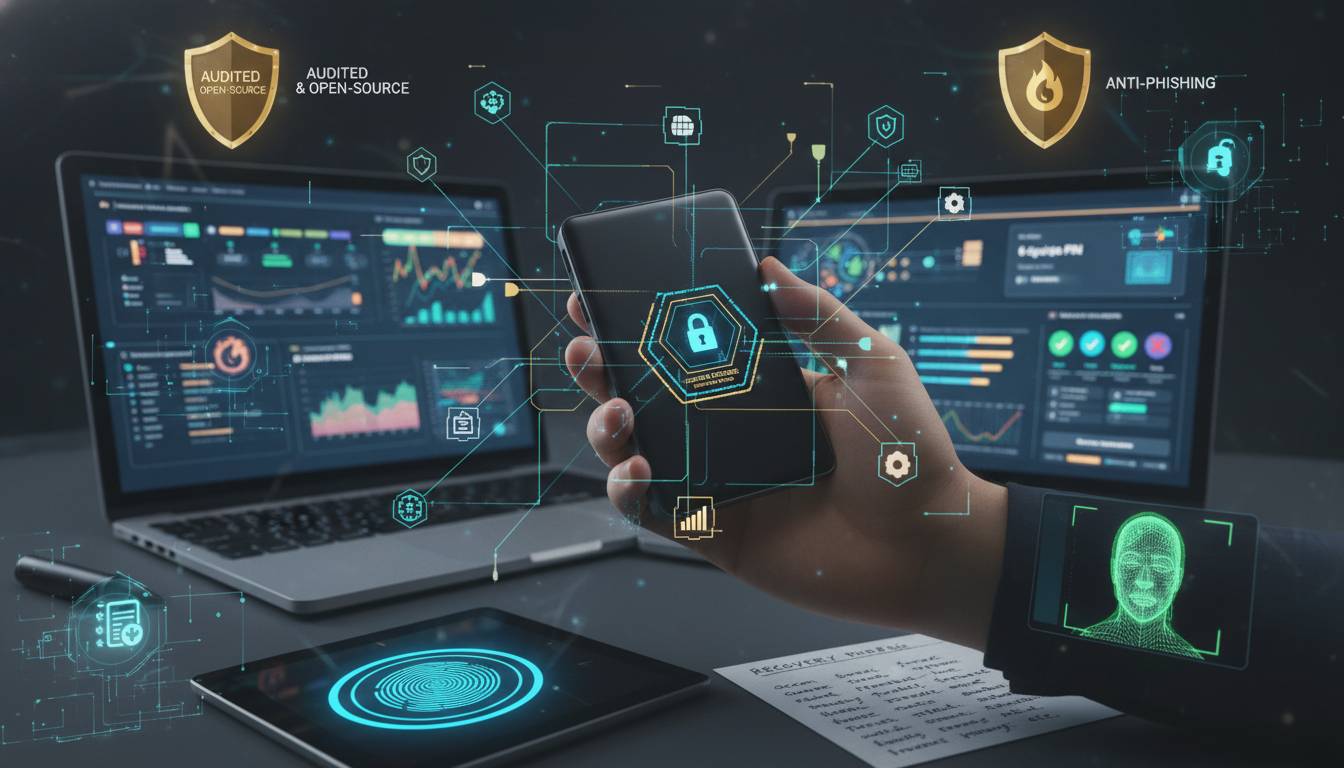
Securing your cryptocurrency requires understanding the specific security features that protect digital assets from theft, unauthorized access, and loss. A crypto wallet’s security architecture determines whether your funds remain safe or become vulnerable to hackers, phishing attacks, or simple user error. This comprehensive guide examines every critical security feature, explains how each protection mechanism works, and provides actionable steps to maximize your digital asset security.
Key Insights
– Over $3.8 billion in cryptocurrency was stolen in 2022 through wallet vulnerabilities and scams
– 95% of crypto theft involves hot wallets connected to the internet (Security.org, 2023)
– Hardware wallets have prevented an estimated $2 billion in theft since their introduction
– Multi-signature wallets have reduced single-point-of-failure breaches by 80% among institutional holders
Understanding Crypto Wallet Security Fundamentals
A cryptocurrency wallet does not actually store your coins—it stores cryptographic keys that prove ownership of your digital assets on the blockchain. The private key functions as your password, allowing you to sign transactions and transfer funds. Without proper security measures, anyone who obtains your private key can transfer your entire holdings. This fundamental architecture explains why wallet security focuses primarily on protecting these cryptographic keys rather than the assets themselves.
Wallet security operates on three primary principles: authentication (verifying you are who you claim to be), authorization (determining what actions you can perform), and integrity (ensuring transactions cannot be altered). Every security feature addresses one or more of these principles. The most secure wallets implement defense-in-depth strategies, layering multiple security mechanisms so that compromising one layer does not grant complete access to your funds.
The cryptocurrency security landscape has evolved dramatically since Bitcoin’s inception in 2009. Early wallets offered minimal protection, but modern wallets incorporate sophisticated cryptographic techniques, hardware integration, and multi-party computation protocols. Understanding these features enables you to make informed decisions about which wallet solutions best match your security requirements and risk tolerance.
Hot Wallet vs. Cold Wallet Security Comparison
Hot Wallets: Convenience with Trade-offs
Hot wallets connect to the internet, enabling quick transactions but exposing keys to online threats. Software wallets, exchange wallets, and mobile wallets fall into this category. The primary security advantage of hot wallets lies in their convenience for frequent trading and smaller holdings.
| Feature | Hot Wallet | Cold Wallet |
|---|---|---|
| Internet Connection | Always online | Offline storage |
| Transaction Speed | Instant | Requires signing, then broadcasting |
| Vulnerability Surface | Exposed to hackers | Minimal remote attack vector |
| Best For | Trading, small amounts | Long-term storage, large holdings |
| Typical Insurance | None or limited | Full control |
Security research indicates that hot wallet breaches account for the majority of individual crypto thefts. Attackers employ sophisticated phishing campaigns, malware, exchange hacks, and social engineering to compromise these connected wallets. However, modern hot wallets incorporate significant security improvements including rate limiting, IP whitelisting, and anomaly detection systems.
Cold Wallets: Maximum Protection Through Isolation
Cold wallets store private keys entirely offline, eliminating the primary attack vector of internet-connected devices. Hardware wallets and paper wallets represent the two main cold storage categories. By keeping cryptographic keys isolated from online systems, cold wallets dramatically reduce the attack surface available to remote attackers.
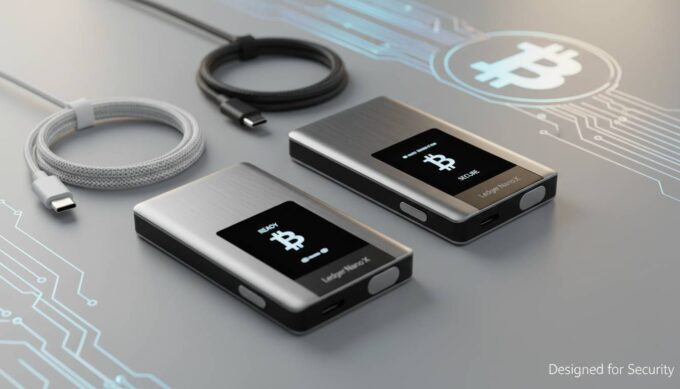
Hardware wallets use specialized secure elements—dedicated chips designed to resist physical and logical attacks. These devices generate and store private keys within the secure element, never exposing them to the connected computer or smartphone. When signing transactions, the hardware wallet performs all cryptographic operations internally, transmitting only the signed transaction to the connected device.
The security benefits of cold storage come with practical considerations. Transaction signing requires physical access to the hardware device, adding steps to the transfer process. Additionally, hardware wallets represent physical objects that can be lost, stolen, or damaged, making backup and recovery procedures essential.
Essential Authentication Security Features
Multi-Factor Authentication Integration
Multi-factor authentication (MFA) adds additional verification layers beyond simple password protection. The most secure wallet implementations require multiple authentication factors: something you know (password or PIN), something you have (hardware device or phone), and something you are (biometric verification). Cryptocurrency attacks increasingly target authentication layers, making robust MFA implementation critical.
Time-based one-time passwords (TOTP) generated through authenticator apps provide stronger protection than SMS-based codes, which attackers can intercept through SIM-swapping attacks. Hardware security keys like YubiKey offer the highest authentication assurance, requiring physical possession of the device to authorize transactions. Leading exchanges and wallet providers increasingly mandate hardware key authentication for large withdrawals or sensitive operations.
Biometric authentication—including fingerprint scanners, facial recognition, and iris scanners—provides convenient authentication without requiring users to memorize complex passwords or carry additional devices. Modern smartphones integrate secure enclaves that store biometric data separately from regular device storage, making bypass extremely difficult. However, biometric authentication should supplement rather than replace other authentication factors, as physical characteristics can potentially be replicated or bypassed under certain circumstances.
PIN and Password Protection Standards
Strong PIN and password requirements form the foundation of wallet access control. Best practices mandate minimum lengths (typically 8-12 characters for passwords), complexity requirements (mixing uppercase, lowercase, numbers, and symbols), and prohibition of common patterns or previously compromised credentials.
Wallet developers should implement secure password storage using salted hashes rather than storing plaintext passwords. This means even if attackers compromise the wallet’s database, they cannot easily recover user passwords. Additionally, rate limiting on login attempts prevents brute-force attacks by temporarily locking accounts after multiple failed attempts.
Many wallets now implement hierarchical deterministic (HD) key generation, deriving all addresses from a single master seed. This approach simplifies backup procedures—you only need to record the seed phrase rather than individual private keys for each address. HD wallets also improve privacy by generating new addresses for each transaction, preventing address reuse that enables blockchain analysis.
Private Key and Seed Phrase Security
Understanding Private Key Protection
Private keys represent the ultimate authority over cryptocurrency holdings. Anyone who possesses a private key can transfer associated funds without restriction. Consequently, protecting private keys ranks among the most critical security considerations for any cryptocurrency holder.
Software wallets typically store encrypted private keys on the device file system, protected by the user’s password. However, malware can potentially capture these keys during decryption or exploit vulnerabilities in the encryption implementation. Hardware wallets store private keys in dedicated secure elements that resist physical and logical extraction attempts, providing substantially stronger protection.
Secure key generation requires genuine randomness rather than pseudo-random number generators that attackers might predict. Quality hardware wallets incorporate true random number generators drawing from environmental noise, ensuring each key pair remains unique and unpredictable. When generating keys in software environments, always use cryptographically secure random number generators and adequate entropy sources.
Seed Phrase Backup and Recovery
Seed phrases—typically 12 or 24 words generated from the BIP-39 wordlist—provide a human-readable backup mechanism for wallet recovery. Understanding proper seed phrase handling proves essential, as these words represent direct access to all funds in a wallet.
The fundamental rule: never store seed phrases digitally. Hackers scanning for cryptocurrency-related files specifically target digital seed phrase backups. Instead, write seed phrases on paper or engrave them on metal plates designed for long-term storage. Multiple secure backups stored in separate locations protect against fire, flood, or other physical loss.
Geographic distribution of backups introduces trade-offs between security and accessibility. Storing all backups in one location creates a single point of failure, while distributing backups across multiple locations increases exposure to physical theft. Many security experts recommend three backups: one in a home safe, one in a bank safe deposit box, and one with a trusted family member in a different location.
Seed phrase security also requires protection against physical observation when entering words. Recording devices, shoulder surfing, and even subtle observation can compromise backup security. Enter seed phrases only in private locations, and consider using metal seed phrase storage solutions that include masking features for individual words.
Advanced Security Features for Enhanced Protection
Multi-Signature Authorization
Multi-signature (multi-sig) wallets require multiple private keys to authorize transactions, eliminating single points of failure. A 2-of-3 multi-sig configuration, for example, requires any two of three designated keys to approve a transaction. This approach provides redundancy (losing one key doesn’t lose access) and security (an attacker needs multiple keys rather than just one).
Institutional cryptocurrency holders widely adopt multi-sig configurations to separate security responsibilities across multiple stakeholders. Corporate treasury management uses multi-sig to require approval from multiple executives before transferring significant funds. Family offices and high-net-worth individuals use similar configurations to prevent any single compromised device from enabling theft.
Setting up multi-sig requires careful key management. Keys should reside on separate devices in different locations, and signers should understand recovery procedures if key availability becomes problematic. Some multi-sig implementations include time-locks, requiring a waiting period between transaction initiation and execution, providing opportunity to cancel suspicious transfers.
Address Whitelisting and Transaction Limits
Address whitelisting restricts withdrawals to pre-approved addresses only, protecting against attacks that redirect funds to attacker-controlled addresses. Even if attackers compromise your wallet credentials, they cannot transfer funds to addresses you have not explicitly approved.
Transaction limits add another protective layer by requiring additional authentication for amounts exceeding specified thresholds. A daily limit of $10,000 might allow normal trading activity while preventing massive drain attacks in a single incident. Some wallets implement progressive authentication requirements, with higher amounts requiring hardware key verification or multi-sig approval.
Smart contract-based transfer restrictions can enforce additional rules beyond simple address whitelisting. Time-locked vaults release funds only after predetermined periods, creating cooling-off periods that allow detection of unauthorized access. Geolocation restrictions prevent transactions from unexpected geographic locations, adding protection against SIM-swapping and remote account compromise.
Hardware Wallet Security Architecture
Secure Element Technology
Hardware wallets rely on secure element chips—specialized hardware designed to resist physical and logical attacks. These chips implement isolated execution environments where cryptographic operations occur without exposing sensitive data to the main processor. Secure elements used in financial hardware must meet Common Criteria or FIPS 140-2 security certifications.
The secure element architecture prevents extraction of private keys even with physical device compromise. Advanced attacks including power analysis, electromagnetic emissions analysis, and fault injection become substantially more difficult against properly certified secure elements. While no security measure provides absolute protection, secure elements represent the highest practical standard for consumer hardware security.
Quality hardware wallets also implement secure boot processes, verifying firmware integrity before each operation. This prevents attackers from installing modified firmware that might extract keys or manipulate transaction signing. The combination of secure element storage and verified boot creates defense-in-depth that addresses multiple potential attack vectors.
Firmware Integrity and Update Security
Regular firmware updates address newly discovered vulnerabilities and improve security features. However, the update process itself represents a potential attack surface if not properly implemented. Secure hardware wallets verify firmware signatures before installation, ensuring updates originate from the manufacturer and haven’t been tampered with during distribution.
Understanding update security requires awareness of potential downgrade attacks, where attackers could reinstall vulnerable firmware versions after initial compromise. Quality wallet implementations maintain secure bootloader configurations that refuse to install outdated firmware versions, preventing rollback attacks. When evaluating hardware wallets, verify that the manufacturer implements signature verification and anti-rollback protection.
Common Security Mistakes and How to Avoid Them
User Error Vulnerabilities
Human error accounts for a substantial portion of cryptocurrency losses, often exceeding losses from technical vulnerabilities. Phishing attacks trick users into revealing recovery phrases or private keys through fake websites, emails, or social media messages. Attackers frequently impersonate support personnel from exchanges or wallet providers, preying on users’ fears about account security.
| Common Mistake | Impact | Prevention |
|---|---|---|
| Sharing seed phrase | Complete fund loss | Never share with anyone, including support |
| Using weak passwords | Account takeover | Use unique, complex passwords with password manager |
| Clicking phishing links | Credential theft | Verify URLs carefully, use bookmarked links |
| Storing seeds digitally | Mass theft potential | Use physical backup on paper or metal |
| Ignoring software updates | Vulnerability exploitation | Enable automatic updates, install promptly |
| Publicizing holdings | Targeted attacks | Maintain privacy about crypto holdings |
Falling for romance scams, investment fraud, and “rug pulls” also results in significant losses, with victims transferring funds to attacker-controlled wallets. These social engineering attacks exploit trust, greed, or fear, making technical security measures irrelevant. Education and skepticism toward unsolicited investment opportunities provide the best defense.
Exchange vs. Personal Wallet Decisions
Keeping cryptocurrency on exchanges places trust in third-party security while offering convenience. Exchange wallets suit small trading amounts, but holding significant wealth in exchange-controlled wallets creates counterparty risk. Exchange failures, hacks, or insolvency have resulted in billions in losses, with Mt. Gox, FTX, and Celsius representing prominent examples.
Self-custody—holding your own keys in a personal wallet—eliminates counterparty risk but places full responsibility on you. There is no customer support to call, no insurance to reclaim funds, and no password recovery option. The security features discussed throughout this guide become your sole protection. For significant holdings, most security experts recommend self-custody using hardware wallets with proper backup procedures.
Future of Crypto Wallet Security
The cryptocurrency security landscape continues evolving with new threats and protective technologies. Multi-party computation (MPC) enables splitting key management across multiple parties without any single party holding complete keys. MPC implementations offer security properties similar to multi-sig while appearing as single keys on-chain, potentially improving privacy while maintaining security.
Biometric integration continues advancing, with some implementations exploring voice recognition, behavioral biometrics, and continuous authentication. Hardware security modules designed specifically for cryptocurrency are becoming more accessible, bringing institutional-grade security to consumer price points. Additionally, social recovery systems are developing to help users recover access without creating single points of failure.
Regulatory developments may require certain security features for wallet providers serving particular markets. These requirements could standardize baseline security while potentially impacting privacy and self-custody options. Staying informed about regulatory developments helps you anticipate changes affecting your security options and choices.
Frequently Asked Questions
What is the most secure type of crypto wallet?
Hardware wallets using secure elements provide the highest security for most users. They store private keys offline, require physical button confirmation for transactions, and resist both remote and physical attacks. Popular options include Ledger and Trezor devices, which have established track records and undergo regular security audits.
Should I keep my crypto on an exchange or in a personal wallet?
For amounts exceeding what you would comfortably carry in cash, personal wallets provide better security. Exchange wallets suit small trading balances where convenience outweighs maximum security. The decision involves trade-offs between convenience, counterparty risk, and self-custody responsibility.
How do I recover my crypto if I lose my hardware wallet?
Your 12 or 24-word seed phrase provides full recovery capability. Purchase a new hardware wallet or compatible software wallet, select the recovery option, and enter your seed phrase in the correct order. Your complete transaction history and balances will restore from the blockchain using the derived keys.
Can someone hack my crypto wallet if they know my public address?
No. Your public address functions like a bank account number—sharing it enables others to send you cryptocurrency but provides no capability to withdraw funds. Private keys or seed phrases enable theft; public addresses alone pose no security risk.
What happens if I lose my seed phrase and my hardware wallet breaks?
Unfortunately, without the seed phrase, you lose access to your cryptocurrency permanently. The blockchain operates without central authority, so no recovery mechanism exists for lost keys. This underscores the critical importance of secure, redundant seed phrase backups stored in multiple locations.
Are paper wallets still secure?
Paper wallets can be secure if generated properly using offline computers with verified software and high-quality randomness. However, they require careful handling to avoid physical observation, degradation over time, and loss. Modern hardware wallets provide superior security with better usability for most users.
Conclusion
Protecting cryptocurrency requires understanding the specific security features that safeguard digital assets. The most effective approach combines appropriate wallet selection, robust authentication, proper key management, and awareness of common attack vectors. Hardware wallets provide the strongest protection for significant holdings, while hot wallets serve legitimate purposes for trading amounts you can afford to lose.
Security in cryptocurrency ultimately rests on personal responsibility. No insurance, customer support, or institutional protection exists for self-custodied funds. Implementing the features discussed in this guide—multi-factor authentication, seed phrase backups, address whitelisting, and transaction limits—creates layered protection that addresses most realistic threat scenarios. Start with the highest security tier you can comfortably manage, and regularly reassess your security posture as your holdings and the threat landscape evolve.







Leave a comment