

If you’re new to cryptocurrency, you’ve probably asked yourself whether you actually need a crypto wallet. The short answer is: it depends on what you want to do with your digital assets. But that simple question deserves a much more detailed explanation, because understanding when and why you need a wallet is fundamental to navigating the crypto space safely.
This guide breaks down everything beginners need to know about crypto wallets—from the absolute basics to practical steps you can take today. Whether you’re just curious about Bitcoin, planning to make your first purchase, or wondering how to keep your investments secure, you’ll find clear answers here.
What Exactly Is a Crypto Wallet?
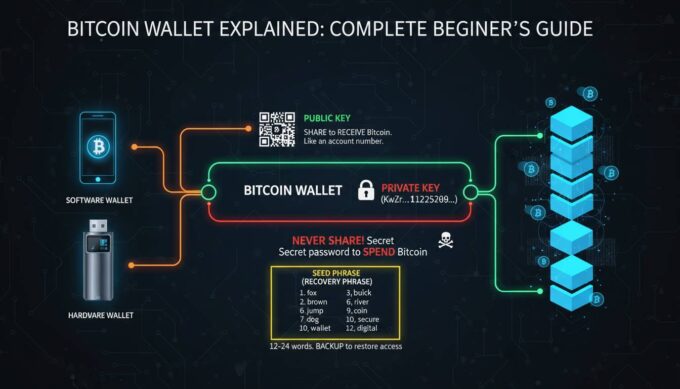
A crypto wallet is a software program or hardware device that allows you to store, send, and receive cryptocurrency. Despite the name, crypto wallets don’t actually store your coins or tokens directly. Instead, they store your private keys—the secret codes that prove you control a certain amount of cryptocurrency on the blockchain.
Think of it this way: your cryptocurrency lives on the blockchain (a distributed digital ledger), and your private key is like the password that proves that cryptocurrency belongs to you. Without that key, you cannot access your funds, regardless of what anyone tells you.
Key Insight: The phrase “not your keys, not your crypto” is a foundational principle in the cryptocurrency community. It means that if you don’t control your private keys, you don’t truly own your crypto.
The Two Main Categories: Hot Wallets vs. Cold Wallets
Understanding the difference between hot and cold wallets is essential for making an informed decision.
Hot Wallets
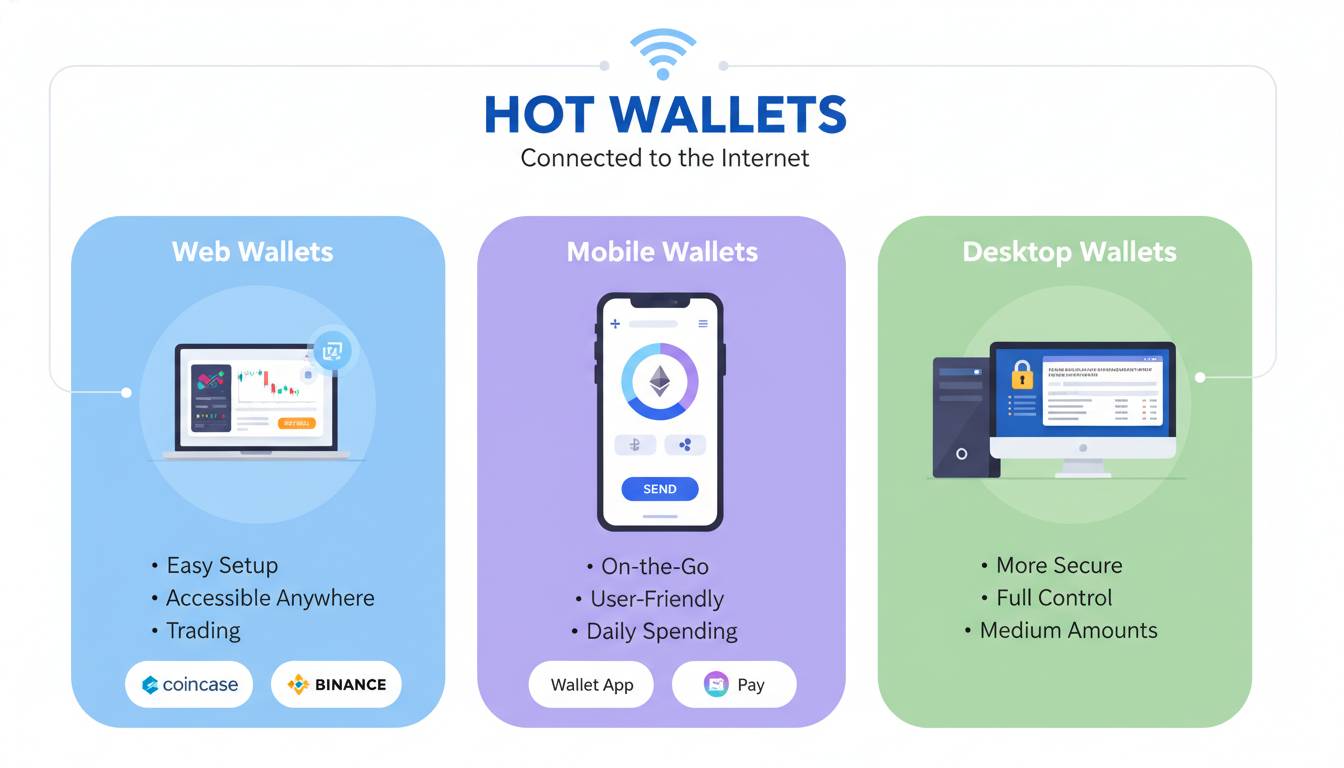
Hot wallets are connected to the internet, making them convenient for frequent transactions. They’re typically software-based and include:
- Mobile wallets: Apps on your smartphone (Trust Wallet, Coinbase Wallet)
- Browser extensions: Add to your web browser (MetaMask, Phantom)
- Web wallets: Hosted by exchanges (Coinbase, Binance)
Pros:
– Easy to set up and use
– Convenient for daily transactions
– Often free to download and use
Cons:
– More vulnerable to hacking and malware
– Private keys stored online
– Not ideal for holding large amounts
Cold Wallets
Cold wallets are offline storage devices that never connect to the internet unless explicitly needed. They’re considered the gold standard for security.
- Hardware wallets: Physical devices like Ledger or Trezor
- Paper wallets: Physical documents containing your private keys
Pros:
– Maximum security against online threats
– Private keys never exposed to the internet
– Best for long-term storage
Cons:
– Cost money (typically $50-$200)
– Less convenient for frequent trading
– Can be lost or damaged
Do I Actually Need a Crypto Wallet? Here’s When the Answer Is Yes
If any of the following apply to you, you’ll need a crypto wallet:
You Want to Buy Cryptocurrency
Every purchase requires a destination address—a wallet. When you buy Bitcoin, Ethereum, or any other cryptocurrency, it has to go somewhere, and that “somewhere” is a wallet you control.
You Plan to Hold Crypto Long-Term
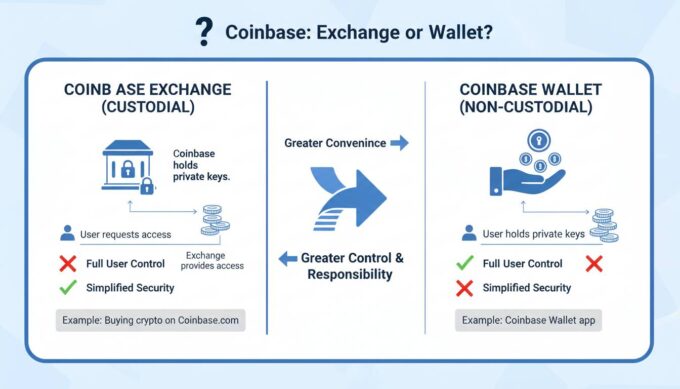
If you’re investing for the future, a secure wallet is non-negotiable. Keeping large amounts on exchanges exposes you to counterparty risk—the possibility that the exchange could be hacked, go bankrupt, or freeze your funds.
According to a 2023 report from Chainalysis, approximately $3.8 billion in cryptocurrency was stolen through hacks and exploits, with exchanges being primary targets. The majority of these losses occurred because users kept their funds in hot wallet configurations rather than secure cold storage.
You Want True Ownership and Control
Centralized exchanges can limit your ability to transact freely. They may freeze accounts, require extensive verification, or restrict certain cryptocurrencies. With a personal wallet, you’re in complete control.
You’re Using DeFi or Web3 Applications
Decentralized finance (DeFi) platforms, NFT marketplaces, and Web3 applications require you to connect a wallet directly. Without one, you cannot participate in these ecosystems.
When You Might Not Need a Personal Wallet
There are situations where a wallet might not be necessary—at least not immediately:
You’re Just Getting Started with Small Amounts
If you’re learning the ropes with a tiny investment ($50-$100), using an exchange wallet temporarily makes sense. Many beginners find it easier to understand concepts first before managing their own keys.
You Only Plan to Use One Exchange
Some users never need to move their crypto off the platform where they bought it. If you only trade occasionally and trust the exchange’s security, this approach works for small amounts.
Important Caveat: This is a calculated risk. The collapse of FTX in 2022 demonstrated that even major exchanges can fail, leaving users unable to access their funds. Industry experts consistently recommend not keeping more on exchanges than you’re willing to lose.
Comparing the Most Popular Wallets for Beginners
Here’s a practical breakdown of wallet options based on different needs:
| Wallet | Type | Cost | Best For | Security Level |
|---|---|---|---|---|
| MetaMask | Hot (Browser/Mobile) | Free | DeFi, beginners | Medium |
| Trust Wallet | Hot (Mobile) | Free | Mobile users, beginners | Medium |
| Coinbase Wallet | Hot (Mobile) | Free | Coinbase users | Medium |
| Ledger Nano S Plus | Cold (Hardware) | $79 | Security priority | High |
| Trezor Model One | Cold (Hardware) | $69 | Maximum security | High |
For most beginners, starting with a free hot wallet like MetaMask or Trust Wallet makes sense. These wallets provide an excellent learning environment where you can send, receive, and explore the crypto ecosystem without financial risk.
How to Set Up Your First Crypto Wallet (Step-by-Step)
Ready to get started? Here’s what the process actually looks like:
Step 1: Choose Your Wallet
Based on your goals, select a wallet that fits your needs. For most beginners, MetaMask (browser extension) or Trust Wallet (mobile app) are excellent starting points.
Step 2: Download from Official Sources
Critical security step: Only download wallets from official websites or app stores. Scammers create fake wallet apps that steal your keys. Verify the developer’s website and check reviews.
Step 3: Create Your Account
Follow the on-screen instructions to create your wallet. You’ll be asked to create a password and will receive a “seed phrase” (also called a recovery phrase or mnemonic phrase).
Step 4: Write Down Your Seed Phrase
This is the most important step. Your seed phrase is a 12 or 24-word list that gives access to your wallet. Write it down on paper—never store it digitally—and keep it in a secure location.
Expert Warning: No legitimate wallet support team will ever ask for your seed phrase. Anyone who does is attempting to scam you.
Step 5: Fund Your Wallet
Once set up, you can receive cryptocurrency by sharing your wallet address (a long string starting with 0x for Ethereum or 1/3 for Bitcoin). You can also buy crypto directly within many wallet apps.
Common Mistakes Beginners Make (And How to Avoid Them)
The cryptocurrency space has a steep learning curve, and mistakes can be expensive. Here are the most frequent errors:
Mistake #1: Not Writing Down Seed Phrases
Approximately 20% of Bitcoin (around 3.7 million BTC) is estimated to be lost forever due to forgotten keys and lost seed phrases. Don’t become another statistic.
Mistake #2: Sending Crypto to the Wrong Network
If you send Ethereum to a Bitcoin address, your funds are gone forever. Always double-check that the network matches—for example, you cannot send ETH to a Solana address, even if the wallet supports both currencies.
Mistake #3: Falling for Phishing Scams
Fake websites, emails, and social media accounts impersonating legitimate projects are everywhere. Always verify URLs carefully and never click suspicious links.
Mistake #4: Keeping All Funds in One Wallet
A more advanced strategy involves using multiple wallets for different purposes. Keep your trading funds separate from long-term holdings.
What the Experts Say About Wallet Security
Security practices in the cryptocurrency industry continue to evolve. Here’s what professionals emphasize:
Michael Saylor, Executive Chairman of MicroStrategy, has consistently advocated for cold storage solutions for large Bitcoin holdings, stating that “the best security for Bitcoin is cold storage, with hardware wallets being the most practical solution for individuals.”
Pavel Nosov, former Chief Security Officer at Bitmain, recommends a “tiered security” approach: use hot wallets for small, active amounts (no more than you’d carry in cash) and cold wallets for the majority of holdings.
Industry surveys consistently show that security concerns remain the primary barrier to cryptocurrency adoption. A 2024 Pew Research Center study found that 46% of Americans who don’t use cryptocurrency cite security concerns as their main reason for staying away.
The Future of Crypto Wallets
Wallet technology is advancing rapidly. Several trends are shaping the future:
Account Abstraction : This Ethereum upgrade allows for more flexible wallet recovery options, meaning you could potentially recover your wallet without just the seed phrase.
Multi-Party Computation (MPC): This technology splits private keys across multiple parties, adding security without the complexity of hardware devices.
Social Recovery: New wallet designs allow you to designate trusted contacts who can help recover your wallet if you lose access—without compromising security.
Conclusion
So, do you need a crypto wallet? The honest answer is: if you’re serious about cryptocurrency—whether for investing, trading, or using decentralized applications—you will eventually need one. Starting with a free hot wallet is an excellent way to learn the ropes, but moving significant funds to a cold wallet is the responsible approach for long-term holders.
The key takeaways are straightforward: understand the difference between hot and cold storage, start with a reputable wallet from official sources, never share your seed phrase, and only keep amounts you’re willing to lose on connected devices.
Cryptocurrency gives you unprecedented control over your finances—but with that control comes personal responsibility. A wallet is your first step toward exercising that control safely.
Frequently Asked Questions
Can I use crypto without a wallet?
Technically, you can keep crypto on an exchange, but this carries significant risks. Exchanges can fail, be hacked, or freeze your account. For any meaningful amount, a personal wallet is strongly recommended.
What happens if I lose my crypto wallet?
If you lose access to a hot wallet, you can recover it using your seed phrase. If you lose your seed phrase and your wallet, the funds are permanently unrecoverable. This is why securely storing your seed phrase is absolutely critical.
Are crypto wallets free?
Hot wallets (software-based) are typically free. Cold wallets (hardware devices) cost between $50-$200. While there’s no cost to download the software, you’ll need to purchase a hardware device for cold storage.
Can I have multiple crypto wallets?
Yes, and many users do. Common strategies include using different wallets for different purposes—perhaps a mobile wallet for daily transactions and a hardware wallet for long-term storage.
Do I need a wallet to just buy Bitcoin?
You need a destination address to receive Bitcoin, which a wallet provides. However, when buying through an exchange, you can initially keep your Bitcoin in the exchange’s custodial wallet before transferring it to your personal wallet.
Is a hardware wallet worth it for beginners?
For beginners with small amounts, a free hot wallet is sufficient while learning. Once your holdings grow beyond what you’d be comfortable losing, upgrading to a hardware wallet (typically $50-$150) becomes worthwhile for the significantly enhanced security.






Leave a comment