

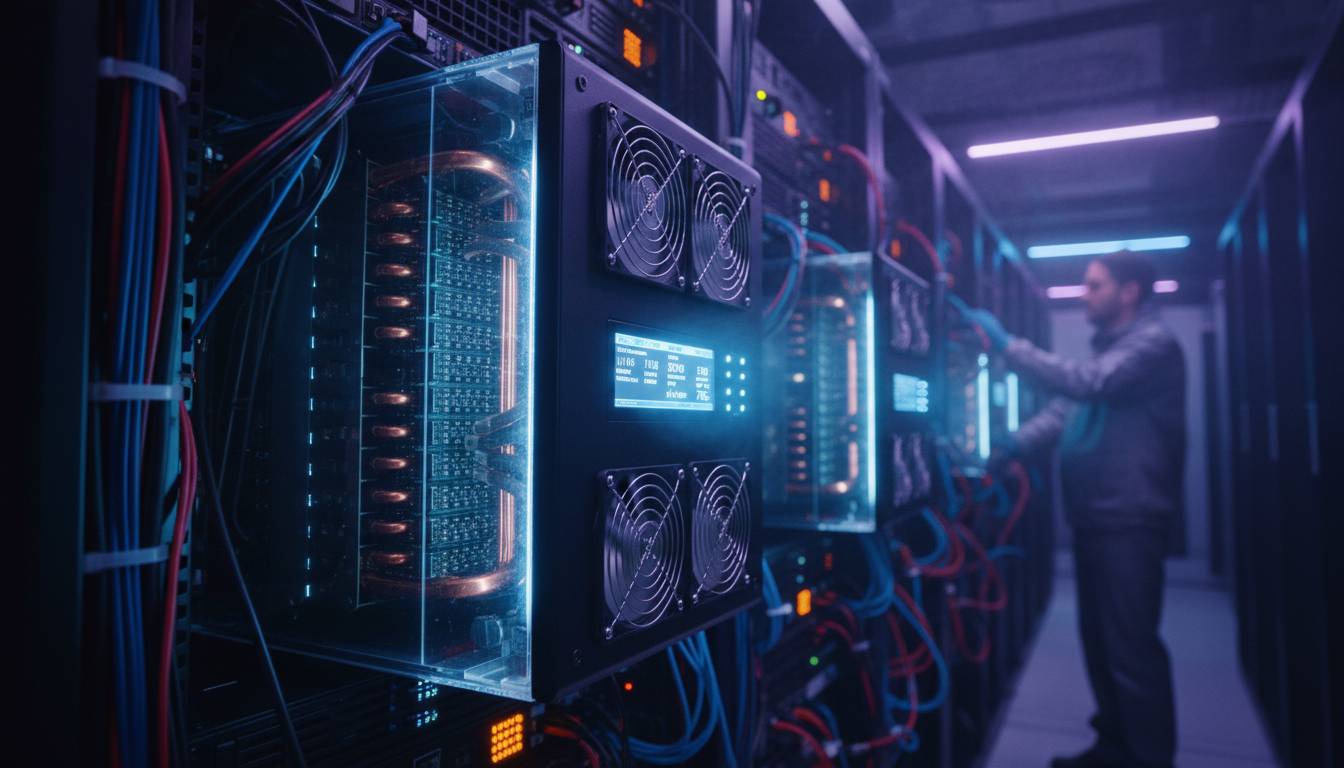
Crypto mining profitability is not a simple yes-or-no question—it depends heavily on your electricity costs, hardware efficiency, chosen cryptocurrency, and market conditions. In 2024, individual profitability for most home miners has declined significantly due to increased network difficulty and reduced block rewards, though industrial operations with cheap power continue generating returns. Understanding the math behind mining profitability requires examining your specific cost structure before investing in any equipment.
The cryptocurrency mining landscape has transformed dramatically since its early days when anyone with a laptop could mine Bitcoin profitably. Today, the industry operates as a professionalized sector dominated by massive data centers with access to low-cost electricity, leaving individual miners to carefully calculate whether participation makes financial sense. This guide cuts through the hype to provide realistic expectations and actionable calculations you can apply to your specific situation.
Understanding How Crypto Mining Generates Revenue
Crypto mining serves as the backbone of blockchain networks that rely on proof-of-work consensus mechanisms. Miners contribute computational power to solve complex mathematical puzzles, and the first successful solver receives newly minted cryptocurrency as a reward plus transaction fees from the blocks they validate. This process secures the network while simultaneously introducing new coins into circulation.
The revenue side of mining depends on two primary components: block rewards and transaction fees. Block rewards represent the fixed amount of new cryptocurrency awarded for solving a block—currently 3.125 BTC per block for Bitcoin miners following the most recent halving event. Transaction fees vary based on network congestion, sometimes comprising a significant portion of total revenue during periods of high activity.
For example, Bitcoin transaction fees spiked to over $50 per transaction during the 2021 bull market, though they typically range from $1-10 in normal conditions. This fee variability means mining revenue fluctuates not just with cryptocurrency prices but also with network usage patterns, adding another layer of complexity to profitability calculations.
The Math Behind Mining Profitability
Profitability in crypto mining follows a straightforward formula: revenue minus costs equals profit. However, accurately projecting these figures requires careful attention to multiple variables that constantly shift in real-time.
Your primary costs include hardware depreciation, electricity consumption, cooling expenses, pool fees, and potential facility overhead. Hardware typically depreciates over 2-4 years, though technological advancements can render older equipment obsolete faster. Electricity costs vary dramatically across the United States, ranging from approximately $0.07 per kilowatt-hour in some regions of Texas to over $0.30 in Hawaii or northeastern states.
Consider a concrete example: a single Bitmain Antminer S19 XP, one of the most efficient ASIC miners available, consumes approximately 3,010 watts and produces about 140 terahashes per second. At current Bitcoin prices around $67,000 and difficulty levels, this machine might generate approximately $12-18 per day in revenue before electricity costs. With U.S. average electricity rates of $0.16 per kWh, daily electricity costs would run roughly $11.50, leaving a gross daily profit of $0.50-6.50 before accounting for hardware depreciation, pool fees, and other expenses.
This calculation demonstrates why location dramatically impacts profitability—a miner paying $0.08 per kWh in Washington State would enjoy significantly better returns than someone paying $0.25 per kWh in California, all other factors being equal.
Hardware Options: ASICs vs. GPU Mining
The cryptocurrency mining hardware market divides primarily between application-specific integrated circuit (ASIC) miners designed for single algorithms and graphics processing unit (GPU) miners that offer flexibility across multiple cryptocurrencies.
ASIC miners dominate Bitcoin and other SHA-256 algorithm cryptocurrencies due to their superior hash rate efficiency. Leading models from Bitmain and MicroBT cost between $2,000-10,000 new, with the most efficient units commanding premium prices. The advantage lies in pure computational power—the Antminer S21 Hydraton produces 335 terahashes while consuming 5,360 watts, delivering substantially better efficiency than GPU alternatives.
GPU mining allows miners to switch between different cryptocurrencies based on profitability, providing flexibility during market shifts. A quality GPU mining rig using cards like the NVIDIA RTX 4090 can mine various coins including Ethereum Classic, Ravencoin, or Kaspa. However, Ethereum’s transition to proof-of-stake in 2022 eliminated the most profitable GPU mining option, significantly reducing returns for GPU miners.
For most individual miners, ASIC mining for established cryptocurrencies offers more predictable (though modest) returns, while GPU mining carries higher risk but potentially higher reward if you successfully mine an appreciating altcoin.
Electricity: The Make-or-Break Factor
Electricity costs consistently prove the most critical factor determining mining profitability, often accounting for 70-90% of total operating costs for professional operations. This reality explains why mining facilities cluster in regions with abundant cheap power, including parts of Texas, Washington, Kazakhstan, and rural areas with hydroelectric resources.
The U.S. Energy Information Administration reports average residential electricity rates of approximately $0.16 per kWh, though commercial and industrial rates often run 10-20% lower. Some mining operations secure even better rates through direct agreements with power providers or by locating near industrial facilities with excess generation capacity.
Renewable energy sources have become increasingly attractive for mining operations seeking to reduce costs while addressing environmental concerns. Solar and wind power can deliver electricity costs below $0.05 per kWh in favorable locations, though intermittency requires backup solutions or strategic scheduling. Hydroelectric power provides consistent baseload generation at competitive rates in regions like upstate New York and the Pacific Northwest.
For prospective miners, calculating your specific electricity cost should be the first step in any profitability analysis. If your rates exceed $0.12 per kWh, Bitcoin ASIC mining will likely struggle to generate meaningful returns without expecting significant Bitcoin price appreciation.
Cloud Mining: Lower Barriers but Reduced Returns
Cloud mining services offer an alternative to purchasing and maintaining physical hardware, allowing users to rent computing power from remote data centers. This approach eliminates upfront hardware costs and ongoing maintenance responsibilities, making mining accessible to those without technical expertise or capital for equipment purchases.
However, cloud mining typically offers worse economics than self-mining for several reasons. Service providers must cover their own costs and generate profit, meaning they retain a portion of the revenue your rented hash rate would otherwise produce. Contract terms often disadvantage users, with duration limitations, increasing maintenance fees, or decreasing hash rate allocations over time.
Reputable cloud mining providers include Hashflare, Genesis Mining, and various newer platforms, though the industry has seen significant fraud over the years. If considering cloud mining, thoroughly research any provider, verify their operating history, and carefully read contract terms before committing capital. The lower barrier to entry comes at the cost of reduced profit margins compared to operating your own hardware.
Calculating Your Personal Profitability
Creating an accurate profitability projection requires gathering specific data points relevant to your situation and plugging them into reliable calculation tools.
First, determine your electricity cost by reviewing your utility bills or contacting your provider for commercial rate information. Next, select your intended hardware, researching its hash rate and power consumption specifications. Online mining calculators like WhatToMine or NiceHash allow you to input these figures alongside current market data to generate revenue and profit estimates.
These calculators provide instantaneous snapshots based on current difficulty and price levels, but remember that all variables fluctuate constantly. Bitcoin’s price can swing 20% in a week, difficulty adjusts approximately every two weeks, and electricity rates may change with seasonal demand. Running scenarios with conservative assumptions—lower crypto prices and higher difficulty—provides more realistic expectations than best-case projections.
Most individual miners find that profitability requires electricity costs below $0.10 per kWh, efficient modern hardware, and willingness to hold mined cryptocurrency through market volatility rather than immediately selling at spot prices.
Risks and Considerations Beyond Profitability
Beyond pure financial calculations, several additional factors deserve consideration before entering crypto mining.
Regulatory uncertainty presents ongoing risk, with some jurisdictions restricting or banning cryptocurrency mining operations. The U.S. has seen proposed legislation targeting energy-intensive mining operations, and environmental concerns continue generating policy discussions that could affect the industry’s viability in certain areas.
Hardware obsolescence represents another significant risk, as newer generations of miners consistently outperform older models. Equipment purchased today may generate lower returns within two years as network difficulty increases faster than hardware improvements, potentially stranding capital in depreciated assets.
Market volatility affects both cryptocurrency revenues and equipment resale values. When crypto markets decline, mining revenue drops proportionally while electricity costs remain fixed, sometimes turning profitable operations unprofitable overnight. Conversely, hardware values tend to track cryptocurrency prices, falling during bear markets and limiting exit options.
Is Crypto Mining Profitable for You?
The honest answer depends entirely on your specific circumstances. For the majority of U.S. residents paying average electricity rates, solo Bitcoin mining as an individual offers minimal profitability without substantial Bitcoin price appreciation. The math simply doesn’t work with $0.15+ per kWh electricity costs against current difficulty and reward levels.
However, profitability remains achievable under certain conditions. Access to cheap electricity below $0.08 per kWh dramatically improves outcomes. Joining mining pools provides more consistent (though smaller) returns compared to solo mining lottery odds. Purchasing efficient modern hardware rather than used equipment improves your competitive position. Holding mined cryptocurrency rather than immediately selling can amplify returns if prices rise.
For those with access to industrial power rates, technical knowledge to maintain equipment, and tolerance for market volatility, crypto mining can generate supplementary income. For everyone else, purchasing cryptocurrency directly through exchanges typically delivers better risk-adjusted returns than attempting to mine it.
Frequently Asked Questions
How much money can you make crypto mining at home?
With average U.S. electricity costs ($0.16/kWh), a single efficient ASIC miner might generate $0-5 daily before hardware depreciation. Most home miners find that electricity costs nearly equal revenue, leaving minimal profit. Better electricity rates below $0.10/kWh can improve daily returns to $5-15, but significant profits require either much lower power costs or holding mined coins through substantial price appreciation.
Is it better to buy crypto or mine it?
For most people, purchasing cryptocurrency directly offers better value than mining. Mining requires upfront capital for hardware ($2,000-10,000+), ongoing electricity costs, technical knowledge for setup and maintenance, and tolerance for equipment obsolescence. Direct purchase eliminates these complexities and typically delivers superior returns unless you have exceptionally cheap electricity and mining expertise.
How long does it take to recoup mining hardware costs?
With current profitability levels, efficient ASIC miners typically require 2-4 years to recover initial hardware costs through revenue minus operating expenses. This timeline extends significantly if electricity costs are high or cryptocurrency prices decline. Some miners never recoup full hardware costs, particularly if they purchase used equipment or if network difficulty increases faster than projected.
Which crypto is most profitable to mine?
Bitcoin offers the highest absolute revenue for SHA-256 algorithms, though profitability depends heavily on electricity costs. Alternative cryptocurrencies like Kaspa, Ravencoin, and Ergo may offer better returns per unit of electricity cost for GPU miners, particularly those with mid-range equipment. Profitability rankings change constantly as prices, difficulty, and network rewards shift, requiring regular recalculation using mining calculators.







Leave a comment