

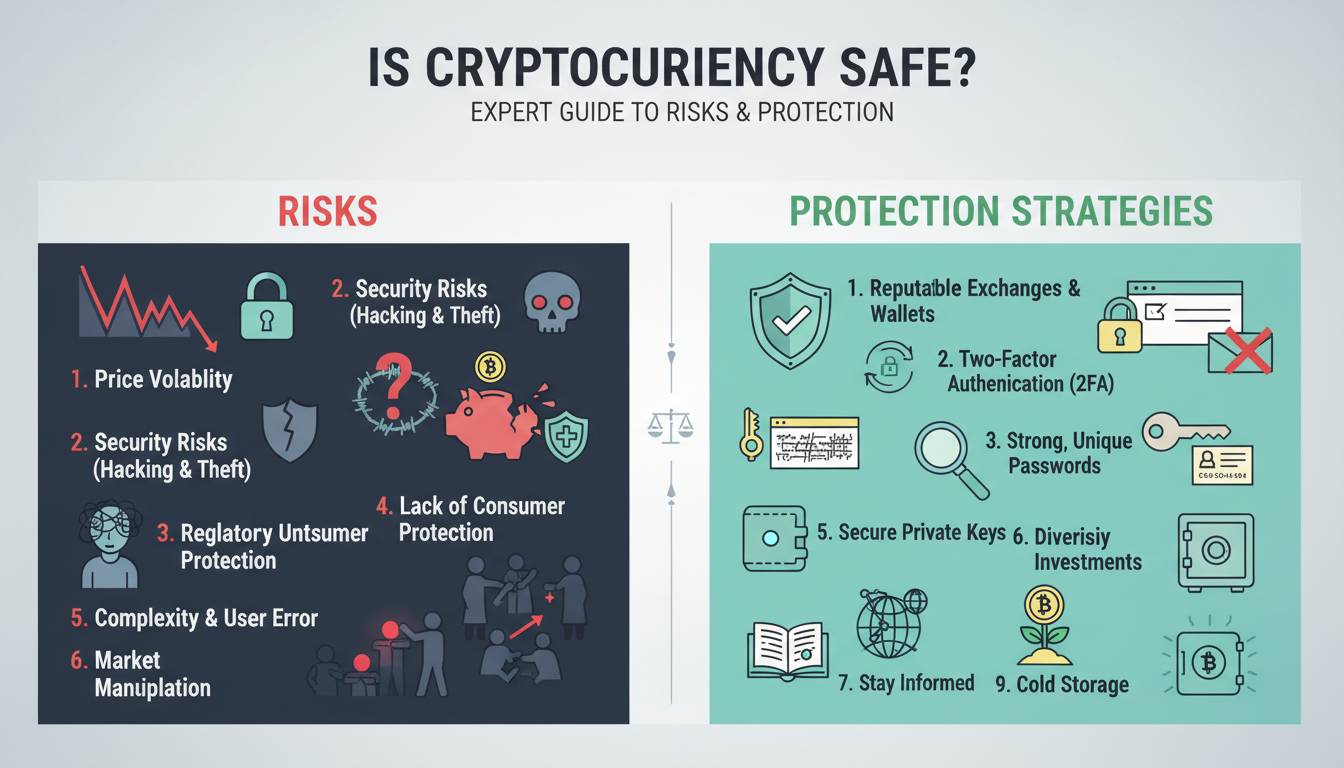
Cryptocurrency safety remains one of the most pressing questions for investors in 2024. The short answer: cryptocurrency is neither inherently safe nor inherently dangerous—its safety depends entirely on how you manage it. With over 420 million cryptocurrency users globally and market capitalization exceeding $2.5 trillion, understanding these risks has become essential for anyone considering digital asset investment.
Key Insights
– Cryptocurrency volatility averages 60-80% annually versus 15-20% for stocks
– Over $4 billion was lost to crypto hacks and scams in 2023
– Proper security practices can reduce risk by up to 95%
– Regulatory clarity continues to evolve across US jurisdictions
This guide examines the real risks of cryptocurrency, proven protection strategies, and how to determine whether crypto fits your financial situation.
Understanding Cryptocurrency Risk Fundamentals
Cryptocurrency operates on fundamentally different principles than traditional financial assets. Unlike bank accounts insured by the FDIC or securities protected by SIPC, cryptocurrency lacks centralized consumer protections. This absence of a safety net creates unique risk profiles that every investor must understand.
The decentralized nature of blockchain technology means transactions are irreversible. Once you send crypto to the wrong address or fall victim to a scam, recovery is virtually impossible. This permanence stands in stark contrast to credit card chargebacks or bank fraud protections that traditional finance offers.
Volatility Risk
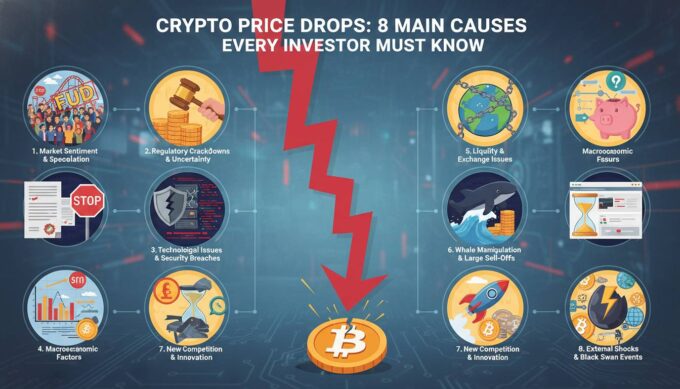
Cryptocurrency prices fluctuate dramatically more than traditional assets. Bitcoin, the largest cryptocurrency, has experienced single-day drops exceeding 30% on multiple occasions. This volatility stems from relatively thin trading volumes, speculative trading, and sensitivity to social media sentiment. A 2023 analysis by CoinGecko found that average daily price swings for major cryptocurrencies ranged from 3-7%, compared to 0.5-1% for major stock indices.
Counterparty Risk
When you hold cryptocurrency on an exchange, you assume counterparty risk—the risk that the exchange itself fails, is hacked, or engages in fraudulent behavior. The collapse of FTX in November 2022 demonstrated this risk dramatically, with billions in customer funds mysteriously disappearing. Unlike traditional brokerage accounts, your crypto holdings on exchanges may not be segregated from company assets.
Technical Risk
Blockchain technology, while innovative, remains relatively immature. Smart contract bugs, network forks, and protocol升级 (upgrades) can unexpectedly affect your holdings. The 2022 collapse of Terra’s UST stablecoin wiped out approximately $40 billion in value within days, exposing how algorithmic stablecoins can fail catastrophically.
Major Security Threats in the Cryptocurrency Space
Understanding specific threats enables effective protection. The cryptocurrency ecosystem faces three primary categories of security risks: external hacks and theft, internal fraud and scams, and user error.
Hacks and Exchange Breaches
Cryptocurrency exchanges remain prime targets for hackers. According to blockchain security firm Certik, over $1.8 billion was stolen from crypto platforms through hacks in 2023 alone. Major breaches have included:
- Ronin Network (2022): $620 million stolen through compromised private keys
- FTX (2022): Estimated $400-475 million potentially stolen following bankruptcy
- Poly Network (2021): $611 million stolen in largest DeFi hack (most later recovered)
These attacks exploit weaknesses in hot wallets (internet-connected wallets), compromised employee access, and smart contract vulnerabilities. Even major exchanges with robust security have experienced breaches.
Cryptocurrency Scams and Fraud
The Federal Trade Commission reported that consumers lost over $1 billion to cryptocurrency scams between January 2021 and March 2022—a figure that has continued growing. Common scam types include:
Rug Pulls: Developers create cryptocurrency projects, attract investment, then abandon the project and带走 (take) investor funds. These typically represent 75% of all crypto scam revenue.
Phishing Attacks: Fraudsters send emails, texts, or social media messages impersonating legitimate crypto services to steal wallet credentials. Fake websites and browser extensions specifically target cryptocurrency holders.
Ponzi and Pyramid Schemes: Schemes like BitConnect and PlusToken promised unrealistic returns and collapsed when new investor money could no longer pay earlier investors.
Fake Exchanges and Wallets: Scammers create fraudulent platforms that appear legitimate, accept deposits, but never allow withdrawals.
User Error and Loss
Human error accounts for significant cryptocurrency losses. The Chainalysis 2023 report estimated that approximately 20% of all Bitcoin in circulation—worth billions—has been lost through forgotten passwords, hardware failures, or sending funds to incorrect addresses. Unlike bank accounts, there is no password recovery process for self-custody wallets.
Protection Strategies That Actually Work
Despite significant risks, cryptocurrency can be held safely through proven security practices. The key is understanding that security is a spectrum, and the most effective measures require trade-offs between convenience and protection.
Self-Custody vs. Exchange Storage
Where you store your cryptocurrency fundamentally affects its security profile.
Exchange Storage (Hot Wallets)
– Convenient for trading
– Protected by exchange security measures
– Counterparty risk exists
– Insurance coverage varies significantly
– Best for: Small amounts, active trading
Self-Custody (Cold Storage)
– Complete control over private keys
– Eliminates counterparty risk
– Requires technical knowledge
– Lost keys = lost funds permanently
– Best for: Long-term holdings, large amounts
Hardware wallets from manufacturers like Ledger and Trezor provide the strongest security for self-custody. These devices store private keys offline, requiring physical button confirmation for any transaction. Studies indicate hardware wallet users experience theft rates approximately 90% lower than exchange users.
Essential Security Practices
Implementing multiple security layers creates defense-in-depth against threats:
Strong, Unique Passwords: Every exchange and wallet account requires unique passwords of at least 16 characters. Password managers like 1Password or Bitwarden enable secure storage without memorization.
Two-Factor Authentication (2FA): Enable 2FA on all cryptocurrency accounts, but never use SMS-based 2FA—SIM swapping attacks have compromised numerous crypto accounts. Use authenticator apps (Google Authenticator, Authy) or hardware security keys (YubiKey) instead.
Multi-Signature Wallets: Require multiple private keys to authorize transactions. Even if an attacker compromises one key, they cannot access funds. This approach is standard for institutional cryptocurrency custody.
Address Verification: Always verify receiving addresses character-by-character before sending. Sophisticated malware can modify clipboard contents, replacing your intended address with an attacker’s address.
Regular Security Audits: Periodically review account activity, connected devices, and withdrawal whitelist settings. Remove unnecessary access permissions.
The Regulatory Landscape in the United States
Cryptocurrency regulation in the United States remains fragmented and evolving, creating both protection mechanisms and new risks for investors.
Current Regulatory Framework
Multiple federal agencies claim jurisdiction over different aspects of cryptocurrency:
- SEC (Securities and Exchange Commission): Asserts that many cryptocurrencies are securities requiring registration
- CFTC (Commodity Futures Trading Commission): Regulates Bitcoin and Ether as commodities
- FinCEN (Financial Crimes Enforcement Network): Requires cryptocurrency exchanges to implement anti-money laundering programs
- IRS (Internal Revenue Service): Treats cryptocurrency as property for tax purposes
This fragmented approach creates compliance uncertainty. Many projects operate in regulatory gray zones, meaning your investment could become worthless if regulators determine a project violated securities laws.
Consumer Protections Currently Available
Limited protections exist for cryptocurrency investors:
- Bankruptcy Protection: If an exchange goes bankrupt, your cryptocurrency may be considered an asset of the bankruptcy estate, potentially lost to creditors
- Securities Law: If purchased as an unregistered security, investors may have some recourse through SEC enforcement actions—but this rarely results in full recovery
- Fraud Recovery: Law enforcement can pursue criminal cases against fraudsters, but recovery rates remain low due to anonymity and cross-border complexity
The SEC has recently intensified enforcement actions against cryptocurrency exchanges and projects, with over 100 enforcement actions in 2023 alone. These actions often result in penalties but rarely return funds to harmed investors.
When Cryptocurrency Is—and Isn’t—Safe
Cryptocurrency safety depends heavily on specific circumstances. Understanding when risks are manageable versus excessive helps determine appropriate involvement.
Situations Where Cryptocurrency Carries Acceptable Risk
Long-Term Holdings with Self-Custody: Holding Bitcoin or Ethereum as a small percentage of a diversified portfolio using hardware wallet storage represents reasonable risk for those with high risk tolerance and long time horizons.
Small Amounts on Trusted Exchanges: Keeping small trading amounts on major regulated exchanges (Coinbase, Kraken, Gemini) for convenience while storing long-term holdings in self-custody balances security with usability.
DeFi with Researched Protocols: Using established DeFi protocols with verified smart contracts, limited to amounts you can afford to lose entirely, provides exposure to innovation without catastrophic risk.
Situations Where Cryptocurrency Risk Is Excessive
Money You Cannot Afford to Lose: Cryptocurrency remains highly speculative. Never invest funds needed for essential expenses, debt payments, or emergency savings.
Short-Term Financial Goals: The volatility makes cryptocurrency unsuitable for goals within 3-5 years. Planning to sell for a house down payment in 2024 and investing in crypto creates unacceptable timing risk.
Without Understanding: Investing in unfamiliar projects based on social media tips or influencer recommendations consistently leads to losses. Understanding what you own is non-negotiable.
Leveraged or Borrowed Money: Using margin, loans, or borrowed funds to purchase cryptocurrency amplifies both gains and losses. Forced liquidation during volatility can result in losing more than your initial investment.
Best Practices for Cryptocurrency Safety
Implementing a systematic approach to cryptocurrency security dramatically reduces risk. The following framework balances security with practical usability.
Tiered Storage Strategy
Tier 1 – Cold Storage (70-80% of holdings)
– Hardware wallets (Ledger, Trezor)
– Paper wallets for backup
– Safe deposit boxes for recovery phrases
– Multi-signature for large holdings
Tier 2 – Warm Wallets (15-25% of holdings)
– Software wallets on air-gapped devices
– Mobile wallets with limited funds
– Desktop wallets with encryption
Tier 3 – Hot Wallets (5-10% of holdings)
– Exchange balances for trading
– Small amounts forDeFi activities
– Only funds you can afford to lose
Due Diligence Before Any Investment
Before purchasing any cryptocurrency:
- Verify the team: Identifiable founders with track records indicate lower scam probability
- Check code audits: Published security audits from firms like Trail of Bits or Certik
- Examine token distribution: Tokenomics revealing excessive early investor allocation signal potential rug pull risk
- Review regulatory status: Projects with clear legal opinions and compliance structures carry less regulatory risk
- Assess community health: Active development communities with transparent communication suggest legitimate projects
Emergency Response Planning
Prepare for potential security incidents:
- Document all holdings and wallet addresses
- Register with exchange security features (withdrawal whitelabels, rate limiting)
- Establish alert systems for large transfers
- Create verified contact lists for exchanges and legal counsel
- Consider cryptocurrency-specific insurance through providers like Nexus Mutual
Conclusion
Cryptocurrency safety is achievable through informed, disciplined approaches—but it requires accepting that no investment is without risk. The key findings from this analysis:
Cryptocurrency lacks the consumer protections built into traditional finance. Volatility, irreversible transactions, and limited regulatory oversight create genuine dangers that cannot be eliminated, only managed.
However, cryptocurrency also offers unique benefits: global accessibility, 24/7 markets, transparency through blockchain, and portfolio diversification potential. For appropriate investors using appropriate security practices, these benefits can outweigh the risks.
The most important question isn’t whether cryptocurrency is “safe”—it’s whether you have the knowledge, resources, and risk tolerance to hold it securely. Start with small amounts while learning, implement proper security before accumulating significant holdings, and never invest more than you can afford to lose entirely.
Frequently Asked Questions
Is cryptocurrency safer than stocks?
Cryptocurrency is generally riskier than stocks due to higher volatility, less regulatory protection, and technical complexity. Stocks benefit from centuries of regulatory frameworks, established exchanges, and consumer protections. However, cryptocurrency offers different risk-return profiles and portfolio diversification potential that some investors find valuable.
Can cryptocurrency be hacked?
Yes, cryptocurrency exchanges, DeFi protocols, and individual wallets can all be hacked. However, using hardware wallets for self-custody, enabling two-factor authentication, and following security best practices can reduce hacking risk by over 95%. The majority of hacks target exchanges and DeFi protocols rather than individual hardware wallet users.
What happens if I lose my crypto wallet?
If you lose access to a self-custody wallet without your recovery phrase, your cryptocurrency is permanently lost—there is no password recovery system. This is why proper backup procedures are essential. If you lose access to an exchange-held wallet, the exchange’s customer support may be able to help if you pass identity verification.
Should I invest in cryptocurrency right now?
Whether to invest depends on your individual financial situation, risk tolerance, and knowledge. Never invest money you need for essential expenses. Only invest after understanding what you’re buying and implementing proper security. Consider starting with a small amount to learn before accumulating larger positions.
Are cryptocurrency exchanges regulated in the US?
Cryptocurrency exchanges operate in a complex regulatory environment with multiple federal agencies asserting jurisdiction. Major exchanges like Coinbase and Kraken are registered with FinCEN as money services businesses and comply with state money transmitter laws. However, regulatory clarity remains incomplete, and many exchanges operate with varying degrees of compliance.
How do I know if a crypto project is a scam?
Red flags include: anonymous developers, promises of guaranteed returns, token distribution heavily concentrated in early investor wallets, no published code audits, pressure to buy quickly, and lack of clear use case. Always research thoroughly, verify team identities, check security audits, and be skeptical of any investment opportunity that seems too good to be true.







Leave a comment