

Bitcoin has transformed from a niche digital experiment into a global financial phenomenon worth over $1 trillion in market capitalization. If you’ve ever wondered what all the fuss is about, this guide breaks down everything you need to know about the world’s first decentralized cryptocurrency—from its fundamental technology to how you can participate in this revolutionary financial system.
Key Takeaways
- Bitcoin is a decentralized digital currency operating without central authority
- The total Bitcoin supply is capped at 21 million coins, making it deflationary by design
- Blockchain technology records all transactions across thousands of computers worldwide
- As of 2024, Bitcoin has achieved over 50% year-over-year institutional adoption
- Mining rewards halve approximately every four years, impacting supply dynamics
What Exactly Is Bitcoin?
Bitcoin (BTC) is a decentralized digital currency that operates on a peer-to-peer network, allowing users to send and receive payments without intermediaries like banks or payment processors. Created in 2009 by an anonymous person or group known as Satoshi Nakamoto, Bitcoin introduced the concept of “digital scarcity”—the ability to create something digital that cannot be copied or counterfeited.
Unlike traditional currencies issued by governments (fiat currency), Bitcoin operates on a decentralized network of computers spread across the globe. This means no single entity controls Bitcoin, making it resistant to censorship and government interference. Transactions are verified through cryptographic algorithms rather than trusting a central authority.
📊 STATS
• 21 million is the maximum supply of Bitcoin that will ever exist
• 2009 is the year Bitcoin was launched by Satoshi Nakamoto
• Over 100 million people worldwide own Bitcoin as of 2024
• $1.2 trillion represents Bitcoin’s approximate market capitalization
How Bitcoin Works: The Technology Behind the Magic
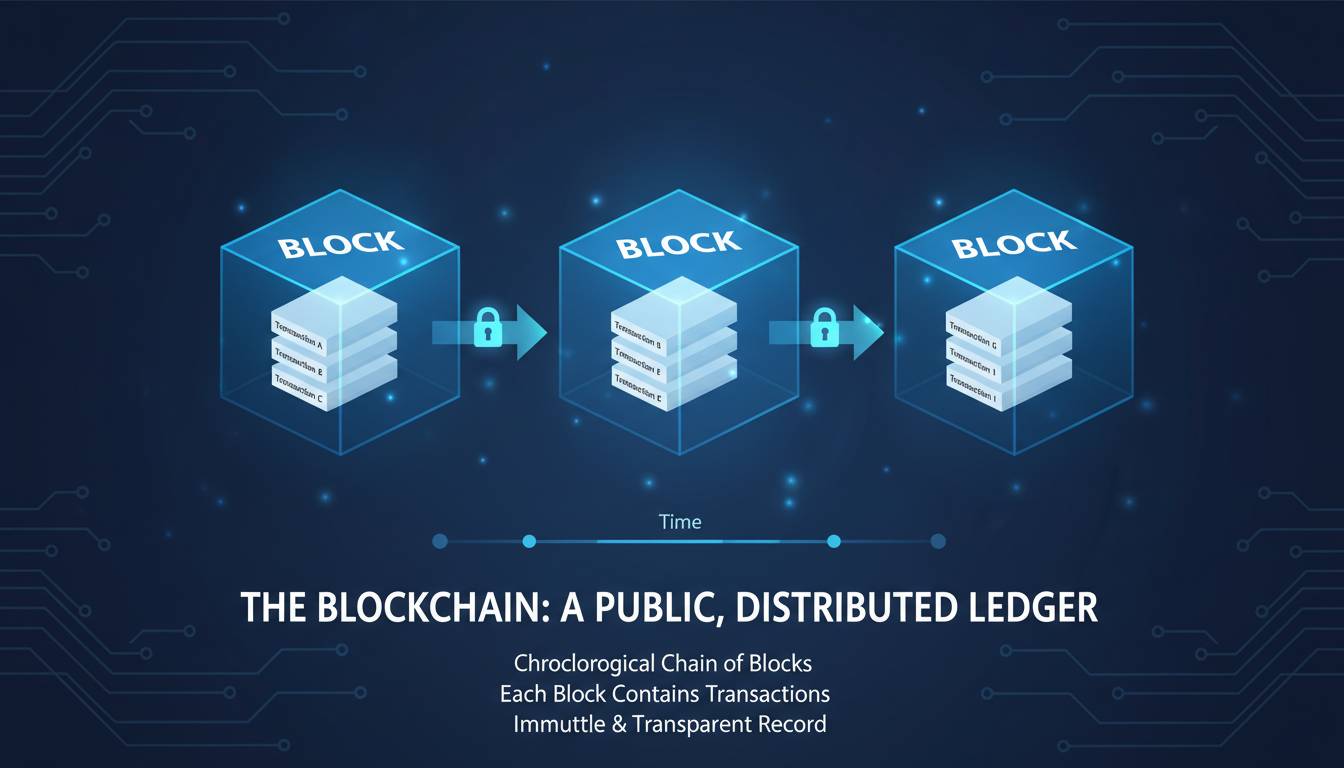
Bitcoin operates on a technology called blockchain—a distributed ledger that records every transaction ever made on the network. Think of it as a digital notebook that thousands of people share and can verify, making it nearly impossible to fraud the system.
The Blockchain Explained
The blockchain consists of “blocks” of transaction data chained together cryptographically. Each block contains:
- A group of verified transactions
- A unique code (hash) from the previous block
- A mathematical puzzle that must be solved to add the new block
This structure creates an immutable record—if someone tried to alter a past transaction, they’d need to change every subsequent block, which is computationally impossible on a network this large.
How Transactions Work:
1. You initiate a Bitcoin transfer from your wallet
2. The transaction broadcasts to the network
3. Miners verify the transaction is legitimate
4. The transaction groups with others into a block
5. The block adds to the blockchain permanently
💡 STAT: The Bitcoin network processes approximately 7 transactions per second, with each transaction verified by thousands of nodes globally.
What Is Mining?
Bitcoin mining is the process by which new bitcoins enter circulation and transactions get verified. Miners use powerful computers to solve complex mathematical puzzles—the first to solve the puzzle gets to add the next block to the blockchain and receives newly created bitcoins as reward.
This process serves two critical functions:
– Security: Making it computationally expensive to attack the network
– Emission: Introducing new bitcoins into circulation in a predictable, deflationary manner
The mining reward started at 50 BTC per block in 2009 and halves approximately every four years (every 210,000 blocks). As of 2024, the reward stands at 3.125 BTC per block. This “halving” mechanism ensures Bitcoin becomes increasingly scarce over time, mimicking the scarcity of precious metals like gold.
Benefits of Bitcoin
| Benefit | Impact | Details |
|---|---|---|
| Decentralization | No single point of failure | Network operates across thousands of nodes globally |
| Transparency | Public verification | All transactions viewable on the blockchain |
| Scarcity | Deflationary design | Only 21 million will ever exist |
| Accessibility | Financial inclusion | Anyone with internet can participate |
| Low fees (compared) | Cost efficiency | Especially for large international transfers |
Key Advantages
Top Benefits:
• Borderless transactions: Send money anywhere in the world without banks or currency conversion fees
• 24/7 availability: Markets never close, unlike traditional financial systems
• Pseudonymous privacy: Transactions don’t require personal identification
• Censorship resistance: No central authority can freeze or seize your funds
• Transparent supply: Anyone can verify the 21 million cap is being followed
📈 CASE: El Salvador became the first country to adopt Bitcoin as legal tender in 2021, enabling millions of unbanked citizens to access financial services through mobile phones.
How to Get Started with Bitcoin
Prerequisites:
– [ ] Government-issued ID (for exchanges)
– [ ] Bank account or payment method
– [ ] Smartphone or computer
– [ ] Secure internet connection
Time: 15-30 minutes | Cost: Varies by exchange ($0-$50 fees)
Steps
1. Choose a Bitcoin Wallet
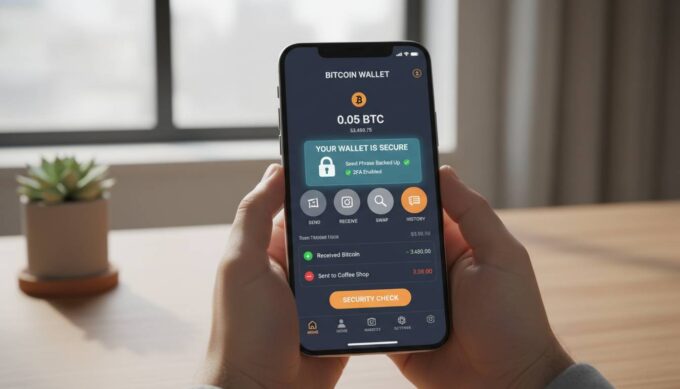
Your wallet doesn’t store actual bitcoin—it stores your private keys, which prove ownership of your bitcoin on the blockchain. Options include:
– Hot wallets: Software connected to the internet (convenient but less secure)
– Cold wallets: Hardware devices offline (most secure for large holdings)
⏱ Setup time: 5-10 minutes | 💡 Tip: Start with a reputable mobile wallet like Cash App or Coinbase Wallet for small amounts.
2. Select an Exchange
Popular U.S. exchanges include:
– Coinbase (easiest for beginners)
– Kraken (lower fees)
– Fidelity (traditional finance entry)
3. Verify Your Identity
Federal regulations require Know Your Customer (KYC) verification. This typically involves:
– Uploading a photo ID
– Providing social security number
– Taking a selfie for facial verification
⚠️ Avoid: Sending funds directly from exchanges to unknown addresses—always test with a small amount first.
4. Purchase Bitcoin
You can buy bitcoin with:
– Bank account (1-5 business days, lower fees)
– Debit card (instant, higher fees)
– PayPal or other payment apps
5. Transfer to Personal Wallet
For security, transfer purchased bitcoin to your personal wallet rather than leaving it on the exchange.
| Problem | Fix |
|---|---|
| Transaction pending | Wait 24-48 hours or check network congestion |
| Wrong address sent | Transactions cannot be reversed—double-check addresses |
| Exchange account locked | Contact support with verification documents |
| Lost private keys | Use recovery seed phrase if available; otherwise funds are lost permanently |
Understanding Bitcoin Prices and Market Dynamics
Bitcoin’s price is determined by supply and demand dynamics on cryptocurrency exchanges worldwide. Unlike stocks with trading hours, Bitcoin trades 24 hours a day, 365 days a year.
What Affects Bitcoin’s Price?
Several factors influence Bitcoin’s volatility:
Supply factors:
– Halving events reduce new supply
– Lost wallets permanently remove coins from circulation
– Mining difficulty adjustments
Demand factors:
– Institutional adoption (major companies and funds buying)
– Regulatory news and legal decisions
– Macroeconomic conditions (inflation, currency devaluation)
– Media sentiment and social media trends
Bitcoin vs. Traditional Investments
| Factor | Bitcoin | Gold | S&P 500 |
|---|---|---|---|
| Supply cap | 21 million | ~21,000 tonnes | Unlimited |
| 24/7 trading | ✅ | ❌ | ❌ |
| Digital/physical | Digital | Physical | Digital |
| Correlation to stocks | Moderate | Low | N/A |
| Store of value narrative | Emerging | Established | Growth |
⚠️ CRITICAL: Bitcoin remains highly volatile. Never invest more than you can afford to lose. Past performance doesn’t guarantee future results.
Prevent: Diversify your portfolio, use dollar-cost averaging, keep emergency funds separate from investments.
Common Mistakes to Avoid
| Mistake | Impact | Solution |
|---|---|---|
| Buying at all-time highs | Potential 50%+ losses | Use dollar-cost averaging |
| Not securing private keys | Complete fund loss | Use hardware wallet for large amounts |
| Falling for scams | Total financial loss | Verify URLs, never share seeds |
| Ignoring taxes | Legal penalties | Track all transactions for tax reporting |
| Panic selling | Locking in losses | Have a long-term investment thesis |
⚠️ CRITICAL: The biggest mistake is investing money you cannot afford to lose. Bitcoin has experienced multiple 80%+ drawdowns in its history. Only invest capital you’re willing to hold for at least 3-5 years.
Prevent:
– Start with small amounts while learning
– Never share your private keys or recovery phrases with anyone
– Use reputable exchanges and wallets
– Enable two-factor authentication on all accounts
Expert Insights
👤 Satoshi Nakamoto, Bitcoin Creator (from original whitepaper, 2008)
“Commerce on the Internet has come to rely almost exclusively on financial institutions serving as trusted third parties to process electronic payments. While the system works well enough for most transactions, it still suffers from the inherent weaknesses of the trust-based model.”
👤 Michael Saylor, CEO of MicroStrategy
“Bitcoin is a swarm of cyber hornets serving the goddess of wisdom, feeding on the fire of truth, spreading the honey of knowledge in a market that is inefficient, irrational, and incomplete.”
📊 BENCHMARKS
| Metric | Average | Top Performers |
|——–|———|—————-|
| HODL period | 4+ years | 7+ years |
| Annual return (since 2010) | 40%+ | 100%+ |
| Portfolio allocation (believers) | 1-5% | 10%+ |
Frequently Asked Questions
What is Bitcoin in simple terms?
Bitcoin is a digital currency that exists online without being controlled by any government or bank. It uses blockchain technology to verify transactions and limit supply to 21 million coins, making it similar to digital gold.
How does Bitcoin make money?
Bitcoin doesn’t “make money” on its own—the value increases or decreases based on market demand. You can profit by buying Bitcoin at a lower price and selling when it appreciated, similar to stocks or real estate.
Is it legal to buy Bitcoin in the US?
Yes, buying, selling, and holding Bitcoin is legal in the United States. However, the IRS treats Bitcoin as property for tax purposes, meaning you must report capital gains and losses on your tax returns.
Can Bitcoin be converted to cash?
Yes. You can sell Bitcoin on cryptocurrency exchanges like Coinbase or Kraken and withdraw funds to your bank account. The process typically takes 1-5 business days depending on your bank.
How does Bitcoin mining work?
Mining uses computers to solve complex mathematical puzzles that verify transactions on the network. Miners who solve the puzzle first earn newly created Bitcoin as a reward—this is how new Bitcoin enters circulation.
Is Bitcoin safe to invest in?
Bitcoin carries significant risk due to extreme volatility—it has crashed over 80% multiple times in its history. It should only represent money you can afford to lose entirely. Always research thoroughly and consider consulting a financial advisor.
Conclusion
Bitcoin represents a fundamental shift in how we think about money and financial systems. As the world’s first successful decentralized digital currency, it has proven that value can transfer securely across borders without intermediaries. With a capped supply of 21 million coins, built-in scarcity through halving events, and a globally distributed network of validators, Bitcoin continues evolving from a speculative asset into a legitimate store of value and potential hedge against inflation.
Whether you choose to invest or simply observe, understanding Bitcoin is increasingly essential in today’s financial landscape. Start small, prioritize security, and never invest more than you can afford to lose. The technology behind Bitcoin—blockchain—may eventually transform numerous industries beyond finance, making now the perfect time to learn the fundamentals.






Leave a comment