

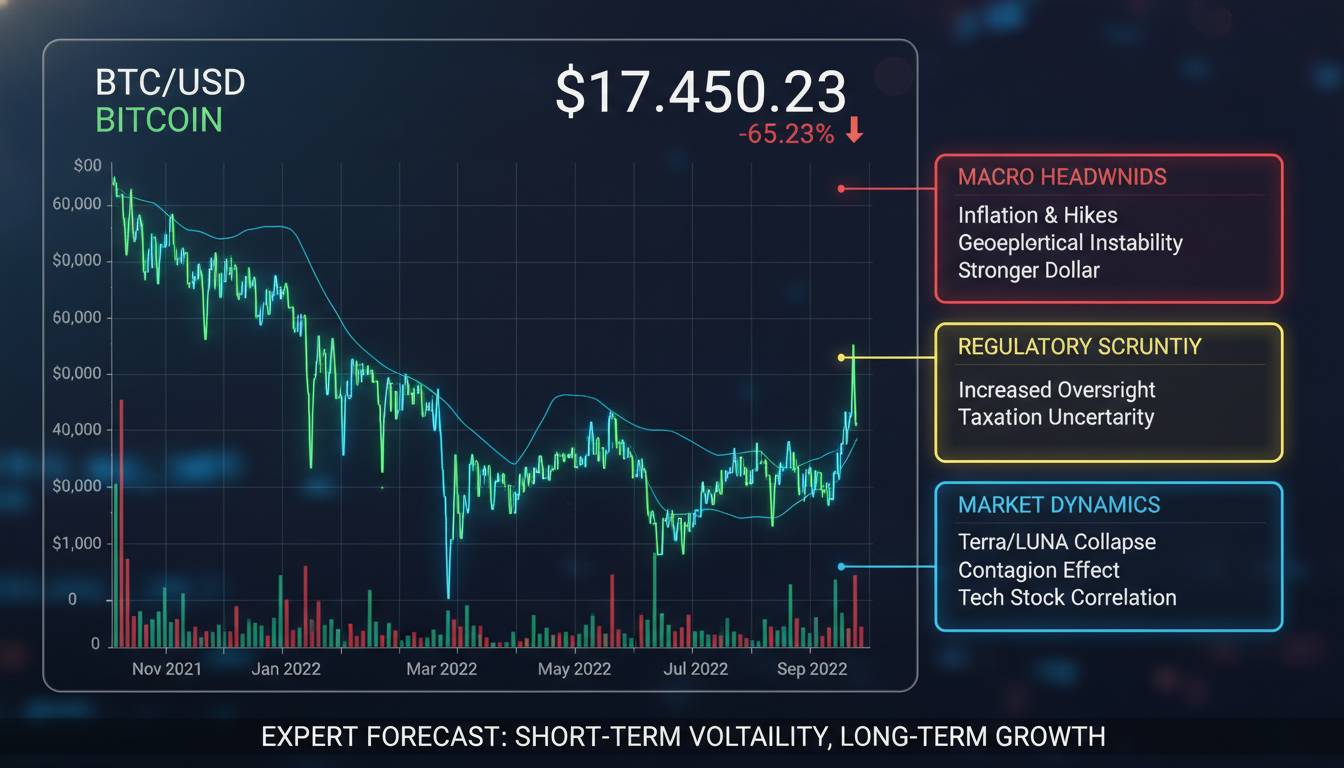
Bitcoin, the world’s largest cryptocurrency by market capitalization, has experienced significant price volatility throughout its history. When Bitcoin’s value declines, investors and market observers naturally seek explanations. Understanding why Bitcoin value goes down requires examining multiple interconnected factors ranging from macroeconomic conditions to market sentiment and regulatory developments. This comprehensive analysis breaks down the primary drivers behind Bitcoin’s price declines and provides context for navigating cryptocurrency market cycles.
Current Market Dynamics and Price Pressure
Bitcoin’s price movements are influenced by a complex interplay of factors that can trigger both bullish and bearish trends. In recent market cycles, several key dynamics have contributed to downward price pressure.
The cryptocurrency market operates with notably higher volatility than traditional financial markets. Bitcoin’s daily price swings often exceed 3-5%, compared to 1-2% for major stock indices. This heightened volatility stems from the market’s relatively small size—Bitcoin’s total market capitalization remains a fraction of gold or tech stocks—and the prevalence of leverage trading that amplifies both gains and losses.
Key Market Statistics
| Metric | Bitcoin | Traditional Markets |
|——–|———|———————|
| Daily Volatility | 3-5% | 1-2% |
| Market Cap | ~$1-1.5 trillion | N/A |
| 24hr Trading Volume | $30-50 billion | Varies |
| Correlation to S&P 500 | 0.3-0.6 | 1.0 |
The crypto market’s sensitivity to liquidity conditions represents another critical factor. When central banks tighten monetary policy or interest rates rise, risk assets—including Bitcoin—typically experience downward pressure. This relationship became particularly evident during 2022 and 2023 when the Federal Reserve’s aggressive rate hiking cycle contributed to broad market selloffs.
Macroeconomic Factors Affecting Bitcoin
Interest Rates and Federal Reserve Policy
The Federal Reserve’s monetary policy decisions significantly impact Bitcoin’s valuation. Higher interest rates make yield-bearing assets more attractive relative to non-yield-bearing assets like Bitcoin. When the Fed funds rate climbs above 5%, as it did in 2023-2024, investors often rotate from speculative assets into fixed-income securities offering guaranteed returns.
Research from the St. Louis Federal Reserve indicates that periods of monetary tightening historically correlate with reduced cryptocurrency valuations. The opportunity cost of holding Bitcoin increases when savings accounts and treasury bonds offer competitive yields without the same level of volatility risk.
Inflation and Safe Haven Narratives
Bitcoin’s narrative as “digital gold” and an inflation hedge has been tested during recent economic cycles. While some investors purchased Bitcoin as protection against currency debasement, the correlation between Bitcoin and traditional safe havens like gold remains inconsistent. During the 2022 market correction, Bitcoin declined alongside stocks rather than serving as an uncorrelated store of value.
The relationship between inflation数据和加密货币表现 varies significantly. When inflation expectations moderate—indicated by decreasing Consumer Price Index (CPI) readings—risk assets often benefit, but this doesn’t always translate to Bitcoin gains. The cryptocurrency market’s response to economic data releases demonstrates this complexity, with prices frequently experiencing sharp movements around major economic announcements.
Dollar Strength and Global Currencies
The U.S. Dollar Index (DXY) maintains an inverse relationship with Bitcoin in many market conditions. When the dollar strengthens against other currencies, Bitcoin denominated in dollars becomes more expensive for international buyers, potentially reducing demand. This dynamic proved particularly relevant during periods of dollar strength in 2022 and early 2023.
Emerging markets, which represent a significant portion of Bitcoin’s global user base, face increased pressure when the dollar appreciates. Countries experiencing currency devaluation—such as Argentina, Turkey, and Venezuela—have historically seen increased Bitcoin adoption as citizens seek alternatives to rapidly depreciating local currencies. However, dollar strength can temporarily dampen this demand source.
Regulatory Concerns and Market Uncertainty
United States Regulatory Environment
The regulatory landscape for cryptocurrency in the United States remains a significant source of uncertainty. The Securities and Exchange Commission (SEC) has taken enforcement actions against numerous crypto firms, citing concerns about securities violations. These actions, including the high-profile cases against major exchanges, create regulatory fear that impacts market sentiment.
The lack of clear regulatory frameworks for digital assets leaves institutional investors hesitant to allocate significant capital to the space. Many traditional financial institutions await regulatory clarity before offering cryptocurrency products to clients, limiting the influx of institutional capital that could provide price support.
Global Regulatory Developments
Beyond U.S. regulations, global regulatory movements affect Bitcoin’s valuation. The European Union’s Markets in Crypto-Assets (MiCA) regulation provides a comprehensive framework for crypto asset issuers and service providers. While some view clear regulation as positive for market legitimacy, others worry about compliance costs and operational restrictions.
China’s continued crackdown on cryptocurrency activities, including mining operations and trading, demonstrates how regulatory actions in major economies can impact global supply and demand dynamics. The migration of Chinese Bitcoin miners to other countries following the 2021 mining ban disrupted hash rate distribution and affected network sentiment.
Tax and Compliance Considerations
The Internal Revenue Service (IRS) classification of Bitcoin as property rather than currency creates compliance complexities for users and businesses. Reporting requirements for cryptocurrency transactions remain burdensome, potentially discouraging adoption among mainstream users and businesses seeking to integrate crypto payment options.
Market Sentiment and Technical Factors
Fear and Greed Index Dynamics
Cryptocurrency market sentiment oscillates between extreme fear and excessive greed, often creating self-fulfilling price movements. The Crypto Fear & Greed Index, which measures market sentiment across multiple dimensions including volatility, momentum, and social media activity, frequently serves as a contrarian indicator.
Periods of extreme greed—indicated by index readings above 75—often precede corrections as markets become overbought. Conversely, extreme fear readings below 25 sometimes signal buying opportunities as negative sentiment becomes overstated. This sentiment-driven volatility creates the dramatic price swings that characterize Bitcoin markets.
Leverage and Liquidations
The prevalence of leveraged trading in cryptocurrency markets amplifies price movements in both directions. Futures markets allow traders to open positions many times larger than their capital through margin borrowing. When prices move against leveraged positions, liquidations trigger forced selling that accelerates price declines.
During major corrections, cascading liquidations can create feedback loops where selling begets more selling. Data from various analytics platforms shows that single-day liquidation events exceeding $1 billion have occurred during periods of extreme volatility, demonstrating the scale of leverage-driven trading in the ecosystem.
Network Activity and On-Chain Metrics
On-chain analytics provide insights into network health and potential price movements. Metrics including active addresses, transaction volumes, and exchange flows offer perspectives beyond pure price action. Declining active address counts often precede or accompany price declines, while increasing exchange outflows can indicate accumulation.
The Bitcoin network’s hash rate—the computational power securing the network—fluctuates with mining economics. When price declines make mining less profitable, some miners cease operations, potentially reducing network security temporarily. However, hash rate typically recovers as more efficient miners enter the market or price conditions improve.
Institutional Versus Retail Dynamics
Institutional Adoption Barriers
Institutional investors represent a significant potential capital source for Bitcoin, yet several barriers limit their participation. Custody solutions, regulatory compliance, and investment policy constraints require substantial infrastructure development before institutions can allocate meaningfully to digital assets.
The approval of Bitcoin spot ETFs in early 2024 marked a significant milestone for institutional accessibility. These products allow investors to gain Bitcoin exposure through traditional brokerage accounts without directly managing cryptocurrency holdings. However, net inflows and outflows into these products directly influence Bitcoin’s price, creating a new institutional dynamics that wasn’t present in earlier market cycles.
Retail Sentiment and Social Media Influence
Retail investors remain a powerful force in cryptocurrency markets, with social media platforms serving as major sentiment drivers. Twitter/X discussions, Reddit forum activity, and YouTube content collectively shape market narratives and can trigger buying or selling cascades.
Influencer commentary and viral moments create unpredictable price movements that may not align with fundamental analysis. The phenomenon of “FOMO” (fear of missing out) drives buying frenzies during rallies, while “FUD” (fear, uncertainty, doubt) amplifies negative sentiment during declines. This emotional trading creates opportunities for more sophisticated participants but increases overall market volatility.
Common Bitcoin Decline Scenarios
Understanding typical patterns that precede Bitcoin price declines helps investors contextualize market movements.
| Scenario | Typical Characteristics | Historical Examples |
|---|---|---|
| Rate Hike Cycle | Rising yields, risk-off sentiment | 2022, 2023 |
| Exchange Collapse | Loss of confidence, regulatory scrutiny | FTX collapse (2022) |
| Regulatory Fear | Enforcement actions, bans | China mining ban (2021) |
| Macro Crisis | Global economic slowdown, liquidity crisis | COVID crash |
| Distribution Top | Long-term holder selling, declining momentum | Multiple cycle peaks |
Long-term Bitcoin holders—those who have held coins for more than 155 days—play a crucial role in price stability. When these holders begin distributing their holdings after periods of significant appreciation, supply pressure increases. Conversely, accumulation by long-term holders during price weakness often provides price floors.
Future Outlook and Factors to Monitor
Potential Catalysts for Recovery
Several factors could contribute to Bitcoin price stabilization or appreciation in coming periods. Continued institutional adoption through regulated products provides a steady demand source. Central bank digital currency (CBDC) development worldwide may increase cryptocurrency awareness and potentially normalize digital assets in traditional finance.
Network upgrades and technological developments, including the Lightning Network’s growing adoption for payments, could expand Bitcoin’s utility beyond speculation. These developments take time but represent fundamental improvements that may support long-term value.
Risk Factors to Consider
Investors should monitor several risk factors that could drive continued price weakness. Persistent inflation would keep Federal Reserve policy restrictive, maintaining pressure on risk assets. Regulatory clarity, if overly restrictive, could limit market growth. Economic recession would likely trigger broad risk asset selloffs.
Geopolitical tensions and macroeconomic instability create unpredictable market environments where Bitcoin’s safe haven properties may or may not perform as historical advocates suggest. The cryptocurrency’s relatively short history compared to traditional assets means its behavior during various economic scenarios remains partially unproven.
Frequently Asked Questions
Why does Bitcoin crash so dramatically?
Bitcoin experiences dramatic crashes due to several factors: the market’s relatively small size amplifies price movements, high leverage usage creates cascading liquidations, and the lack of fundamental value anchors makes prices highly sensitive to sentiment shifts. Unlike stocks, Bitcoin has no earnings or cash flows to establish intrinsic value, making it more susceptible to emotional trading and speculative cycles.
Is Bitcoin a safe investment during economic downturns?
Bitcoin’s performance during economic downturns has been inconsistent. While some investors treat it as a safe haven, Bitcoin has shown positive correlation with stocks during major market corrections, suggesting it hasn’t reliably served as a portfolio hedge during downturns. Its high volatility makes it a high-risk investment regardless of economic conditions.
How long do Bitcoin bear markets typically last?
Bitcoin bear markets have historically lasted between 12-24 months, though this varies significantly. The 2014-2015 bear market lasted approximately 410 days, while the 2017-2018 cycle extended over roughly 370 days. The 2022 bear market followed a similar pattern, with recovery phases extending into subsequent years.
Should I buy Bitcoin when the price is going down?
Buying during price declines involves substantial risk, as further declines are possible. Dollar-cost averaging—investing fixed amounts at regular intervals regardless of price—provides a strategy to mitigate timing risk. Every investor’s situation differs, and those considering cryptocurrency investments should only allocate capital they can afford to lose entirely.
What happens to Bitcoin when the stock market crashes?
Bitcoin has demonstrated correlation with stock markets during major crashes, often declining alongside equities rather than serving as a counter-cyclical asset. This correlation appears driven by investors reducing exposure to risk assets broadly, including cryptocurrencies, to meet margin calls or raise liquidity. However, the cryptocurrency market’s shorter history means this relationship may evolve.
Will Bitcoin recover from its current decline?
Bitcoin has recovered from every previous decline in its history, achieving new all-time highs after each major correction. However, past performance doesn’t guarantee future results. Recovery timelines vary significantly—some corrections resolve within months while others extend over years. Investors should maintain realistic expectations about volatility and recovery potential.
Conclusion
Bitcoin’s price declines result from a confluence of macroeconomic factors, regulatory uncertainty, market sentiment dynamics, and technical trading patterns. Understanding these interconnected influences helps investors navigate cryptocurrency markets more effectively, though no analysis eliminates the inherent volatility and risk that characterize digital assets.
The cryptocurrency market continues evolving, with institutional participation, regulatory frameworks, and technological developments all shaping future potential. Whether Bitcoin’s value trajectory follows previous cycles or establishes new patterns remains uncertain. For participants in this market, maintaining diversified portfolios, understanding personal risk tolerance, and avoiding emotional decision-making during volatile periods represent sound strategies regardless of short-term price movements.






Leave a comment